
Written by:

20 best performing investment trusts since the start of the Iran War
 Reading time: 7 minutes
Written by:
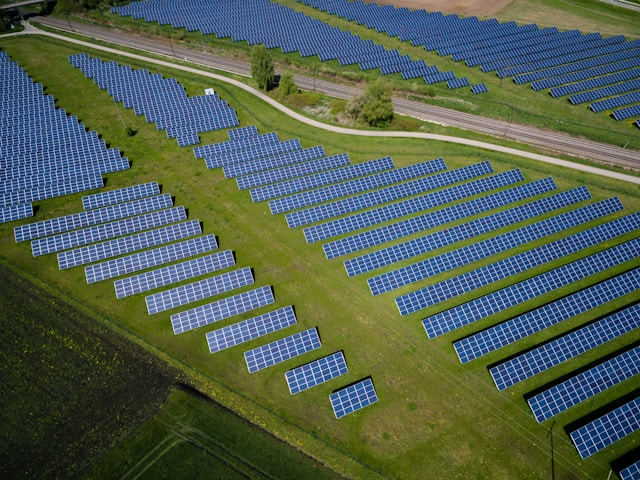
Renewables was one of the strongest performing sectors
Molten Ventures has topped the list of best-performing investment trusts since the start of the Iran War, delivering a share price total return of 53.0%, according to Association of Investment Companies (AIC).
Biotech Growth trust was the second-best performer, delivered a 38.5% return, followed by Allianz Technology Trust in third with 33.3%. Gresham House Energy Storage came in forth with a return of 32.2% and in fifth was Foresight Environmental Infrastructure at 31.0%.
The AIC found that the technology and technology innovation was the best performing sector delivering a 29.6%, with growth capital in second with a 21.9%, renewable energy infrastructure was third at 16.8%, healthcare and biotechnology at 15.8% in fourth and in fifth was global at 13.4%
Five renewable energy infrastructure trusts made the top 20 including Greencoat Renewables, Greencoat UK Wind and Renewables Infrastructure Group. technology and technology innovation and health and biotechnology each had three trusts.
Elsewhere, Athelney Trust at 28.3% and Odyssean Investment Trust at 20.9% offering exposure for UK smaller companies, while Baillie Gifford’s Scottish Mortgage Investment Trust at 20.9% and Baillie Gifford European Growth at 20.9% were joint 16th as one of the strongest performers.
Tufton Assets, which leases cargo ships has felt the direct operational impact of shipping disruption in the region, returned 23.3%, placing it 12th on the list.
Annabel Brodie-Smith, director of the Association of Investment Companies (AIC), said: “When the conflict started at the end of February, several investment sectors took an immediate hit as the shockwaves worked through markets. But markets quickly adapted, with many resilient investment trusts recovering and some even benefitting from the impact of the conflict.
“Investment trusts in the technology sector have continued to power ahead as the AI investment boom goes on. And the Growth Capital sector has thrived due to its big holdings in fast-growing private companies and potential IPOs such as Anthropic, ByteDance and Revolut.
“One sector that’s seen a real turnaround is Renewable Energy Infrastructure, which had a tough time over the past couple of years when interest rates were rising. Shares across the sector have bounced as investors have warmed to renewable energy during a war that has exposed the weaknesses of our oil and gas supply chains. The shipping sector has also profited from the conflict due to the longer distances ships need to travel to deliver goods.”
Ten best performing investment trust sectors since the start of the Iran war
| AIC sector | Share price total return % |
| Technology & Technology Innovation | 29.6 |
| Growth Capital | 21.9 |
| Renewable Energy Infrastructure | 16.8 |
| Healthcare & Biotechnology | 15.8 |
| Global | 13.4 |
| Global Smaller Companies | 11.9 |
| Asia Pacific | 11.8 |
| Infrastructure | 11.3 |
| Asia Pacific Equity Income | 9.8 |
| Global Emerging Markets | 9.6 |
Source: theaic.co.uk / Morningstar. Share price total return in % from 02/03/2026 to 31/08/2026. Excludes VCTs.

Annabel Brodie-Smith, director of the Association of Investment Companies
20 best performing investment trusts since the start of the Iran war
| Investment trust | AIC sector | Share price total return % |
| Molten Ventures | Growth Capital | 53.0 |
| Biotech Growth | Healthcare & Biotechnology | 38.5 |
| Allianz Technology Trust | Technology & Technology Innovation | 33.3 |
| Gresham House Energy Storage | Renewable Energy Infrastructure | 32.2 |
| Foresight Environmental Infrastructure | Renewable Energy Infrastructure | 31.0 |
| Manchester & London | Technology & Technology Innovation | 29.4 |
| Polar Capital Technology | Technology & Technology Innovation | 28.4 |
| Athelney Trust | UK Smaller Companies | 28.3 |
| International Biotechnology | Healthcare & Biotechnology | 24.9 |
| Seraphim Space Investment Trust | Growth Capital | 24.0 |
| Greencoat Renewables | Renewable Energy Infrastructure | 23.4 |
| Tufton Assets | Leasing | 23.3 |
| Schroder BSC Social Impact Trust | Flexible Investment | 22.8 |
| Greencoat UK Wind | Renewable Energy Infrastructure | 22.0 |
| Mobius Investment Trust | Global Emerging Markets | 21.1 |
| Odyssean Investment Trust | UK Smaller Companies | 20.9 |
| Scottish Mortgage | Global | 20.9 |
| Baillie Gifford European Growth | Europe | 20.9 |
| Renewables Infrastructure Group | Renewable Energy Infrastructure | 20.8 |
| RTW Biotech Opportunities | Healthcare & Biotechnology | 20.6 |
Source: theaic.co.uk / Morningstar. Share price total return in % from 02/03/2026 to 31/08/2026. Excludes VCTs and trusts in liquidation.
Nicolas Tirogalas, chief executive at Tufton Investment Management, which manages Tufton Assets, said: “The overriding effect of the conflict has been a big increase in chronic uncertainty for economies that relied on products that came from the region – oil, liquified natural gas and liquified petroleum gas, refined fuels, fertilisers and chemicals. Because those countries cannot expect reliable supplies they are seeking alternatives from suppliers in other regions, often the US – or alternative fuels.
“The net effect is that shipping is now having to go further, taking longer routes to avoid the Strait of Hormuz, and that means more of our fleet is in use more of the time, which obviously adds to demand.
“As Asian economies consider using coal instead of liquified natural gas for power generation this is adding to demand for bulker ships, worldwide. This impact is reflected in shipping earnings, such as with Tufton Assets, where Q2 2026 had the highest earnings in the last five years.
“If the Iranian conflict cools or is resolved the situation is unlikely to revert to the status quo before the war. History shows that economies faced with such disruption, once they have found new reliable places to source their vital raw materials, don’t tend to go back to the supply chains that failed in the past, even if that means going further afield to source their strategic raw materials.”
Why has renewable energy infrastructure bounced back so strongly?
Charlie Wright, co-lead investment manager of Foresight Environmental Infrastructure (FGEN), said: “The Iran conflict has perhaps prompted investors to reassess the strategic value of renewables and environmental infrastructure, reminding investors that an overreliance on volatile imported fuels is not a wise position to take.
“FGEN’s dividend yield of nearly 10% is a major attraction, and the fact that we’re seeing good performance across so many of the different assets in our portfolio is really driving demand. We are diversified across a whole range of sectors, from clean transport, waste and water management to wind, solar, biomass and anaerobic digestion, which produces gas from organic waste. So, if wind or solar underperform, we have other assets that can take up the slack.”
Minesh Shah, managing director of The Renewables Infrastructure Group (TRIG), added: “The war has focused minds on why renewables deserve a place in all portfolios, and we’ve seen two distinct groups of investors coming in. First, retail investors attracted to the 10% dividend yield, and second, traditional infrastructure investors who are now seeing the fantastic value in the investment company industry and are wanting to capitalise on it.
“TRIG is a particularly diversified play on renewable energy, and we are working to maximise cash generation by operating the assets as intelligently as possible, creating new opportunities to make money. For example, we have a large solar operation in Spain, a market which has been relatively insulated from power price increases because it has so much solar power. But what Spain is crying out for is batteries, to store the energy generated at lunchtime until around 8pm in the evening when everybody is home having dinner.
“So we are putting batteries into our big solar projects in Spain to take that cheap daytime energy and sell it for higher prices in the evening, and thus trade that big intra-day spread. Those are the opportunities that a good active manager can exploit when you have a diversified portfolio with strong balance sheet and money to invest.”

Share this article:

Subscribe to our newsletter to not miss articles like this one:
 SUBSCRIBE