

Written by:

Bank of England holds rates, flags surprise plan to sell gilts back to Treasury before Budget
 Reading time: 5 minutes
Written by:
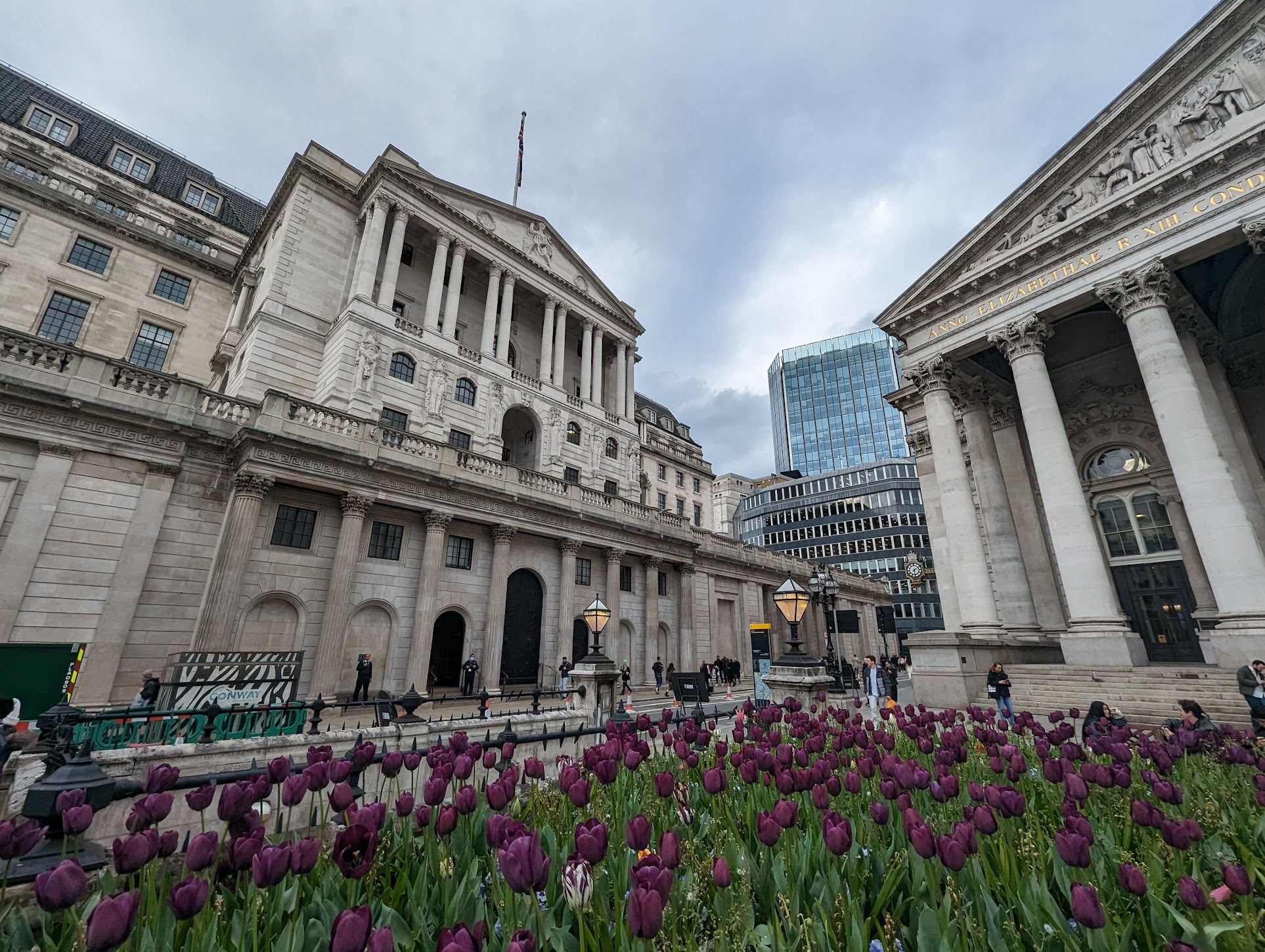
The Bank revealed surprise plans to sell gilts back to the Treasury
The Bank of England has kept interest rates on hold, warning that a continuation of the current conflict in the Middle East could force it to raise borrowing costs amid growing fears over inflation.
The Bank’s Monetary Policy Committee (MPC) also announced a surprise plan to sell billions of pounds in UK government bonds back to the Treasury to avoid fuelling volatility in the gilt market, a decision that could have major consequences for public finances ahead of Chancellor John Healey’s inaugural Budget.
The MPC voted by a majority of six to three to keep the base rate unchanged at 3.75%, warning that the war would likely fuel further turbulence in global markets, raising the chance of increasing borrowing costs in future.
Andrew Bailey, the Bank’s governor, said: “So far, higher global energy costs have had a limited effect on price and wage setting in the UK.
“But the longer this volatility persists, the bigger the impact it will have on inflation, and the more likely it is we will need to raise Bank rate to ensure that inflation falls back to our 2% target.”
The Bank warned inflation was on track to reach 4% by early next year, as the surge in energy prices hits households. Three members of the MPC wanted an immediate quarter-point increase to the base rate.
The MPC said it did not need to take action on borrowing costs because there had been “little evidence so far of material second-round effects”, which is when inflation forces businesses and workers to demand higher prices and pay settlements.
It added there were also signs of weaker food price inflation, despite the Iran war triggering a surge in energy prices.
As part of an update on its proposals to wind down quantitative easing, which saw it buy £895bn of UK government bonds at their peak, the Bank revealed plans to sell £146bn of bonds directly to the Treasury, at £20bn a year until 2034, a plan that would require agreement from the Chancellor.
The Bank confirmed it would retain around £120bn of bonds on its balance sheet in order to back the issuance of notes and coins circulating in the economy.
It revealed it would pause its process of selling gilts until a deal with the government could be reached on what to do with the remaining roughly £222bn of bonds, to be disposed of through a mix of debt maturing and active sales. If a deal was not agreed to sell them back to the Treasury, it would resume selling the bonds to institutional investors.
The US Federal Reserve raised interest rates on Wednesday for the first time since 2023, following the European Central Bank’s decision to raise eurozone borrowing costs.
Felix Feather, Economist, at Aberdeen said: “The Bank of England’s decision to hold rates steady at this meeting doesn’t come as any surprise to us. And the vote split of 6-3 was not as close as it might have been. The inflationary impulse from higher energy prices has deepened since the MPC last met in July, but no further members have come round to the hawks’ way of thinking as of yet.
“However, the Bank could well be hiking at its next meeting in November. The November meeting will see the Bank produce a full set of forecasts and hold a press conference, which would give it a better opportunity to explain a change of policy. So it is a natural starting point for a hiking cycle.
“Overall, we forecast two rate hikes, both of 25bps, the November hike and another three months later. More generally, the resilience of the economy to higher energy prices and rate expectations demonstrates that it can withstand tighter policy than previously thought. That makes it increasing unlikely that rates will fall very far back below their current level of 3.75% even after the energy cost shock abates.”
Emeritus Professor Joe Nellis is Head of Economic Research at MHA, the accountancy and advisory firm, said: “This situation creates an uncomfortable background for the Government’s Autumn Budget. Already high due to elevated gilt yields, inflation will push cost of servicing the national debt up even higher. With the interest bill for this financial year already likely to be around £115bn, this further squeezes an already limited fiscal headroom.
“The Chancellor will need to convince financial markets that the state of public finances remains credible. Any unfunded spending commitments or fiscal giveaways could create a vicious circle and push borrowing costs even higher. With the Bank of England next meeting after the Budget, the Government must act in anticipation of its decision.”
Matthew Amis, investment director of rates management, at Aberdeen Investments added: “A significant overhaul of the Bank of England’s QT model. The bank will no longer sell gilts under 2034s maturity or over 2049s maturity. In addition, locking in an annual pace of £20billion of sales until 2034. The final change sees gilt sales being moved to the DMO, ending the BoE QT auctions and thus centralising gilt issuance in one place.
“The reduction in long end sales will further decrease the pressure on long end gilts, a continuation of the trend started at the last Budget. The coordination of the sales in one place at the DMO should be also applauded. The DMO have shown how receptive they are to market conditions and have guided the gilt market well in recent years.
“These changes should be seen as gilt positive, in particular for long end maturities.”

Share this article:

Subscribe to our newsletter to not miss articles like this one:
 SUBSCRIBE