
Written by:

Bank of England sounds alarm over “circular” AI financing
 Reading time: 3 minutes
Written by:
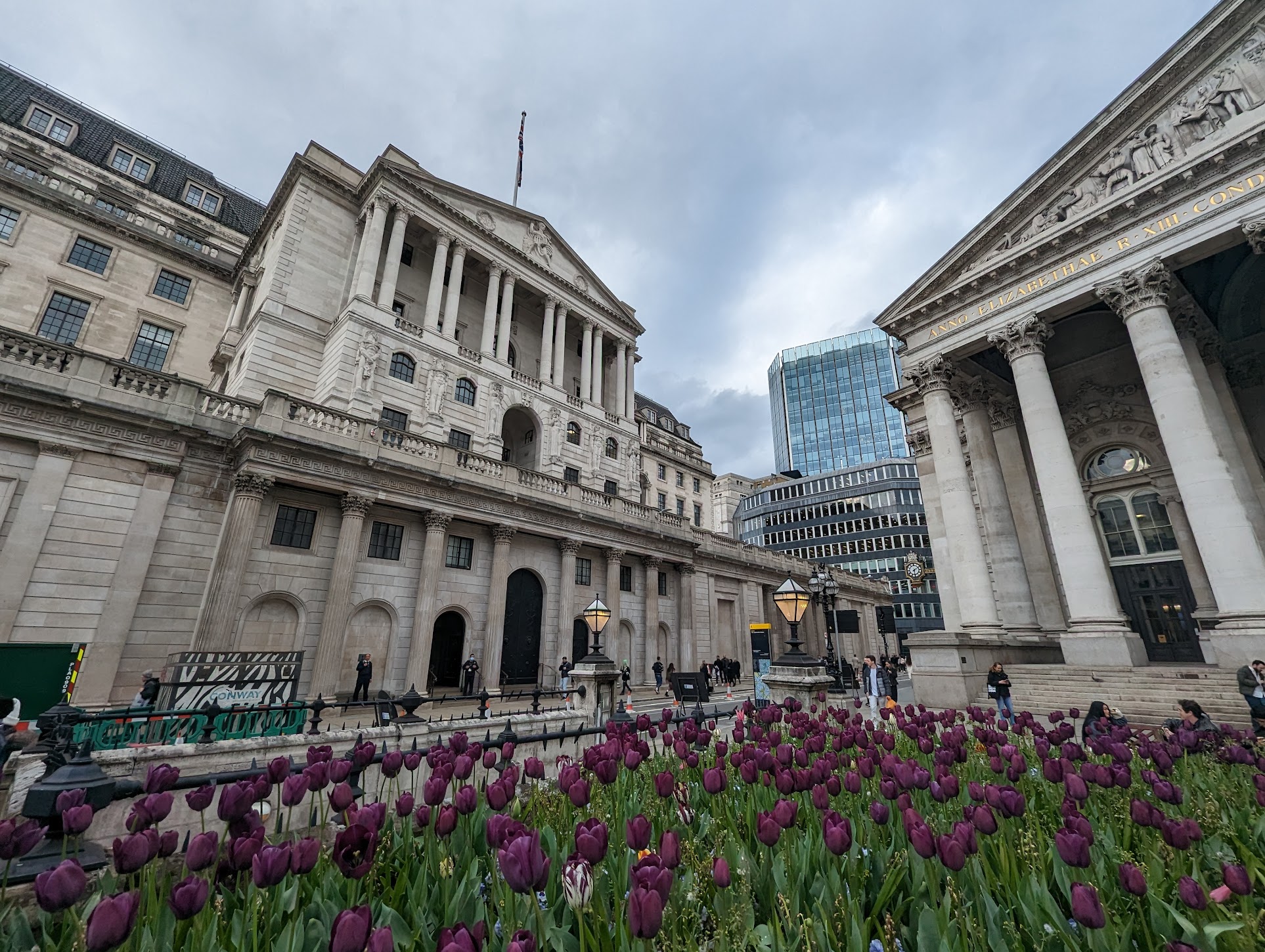
The warning comes from the Bank of England
The Bank of England has warned that the rapid, debt-fuelled expansion of artificial intelligence is making the global financial system more “complex” and tightly interconnected, increasing the odds that difficulty in one area of the market could quickly spread to others.
In its latest Financial Stability Report, the Bank’s Financial Policy Committee, said AI investment helped support growth globally but warned its financing is becoming “increasingly complex, circular and opaque”.
It added: “The rapid expansion and broadening of AI-related financing, alongside increasingly complex, circular and opaque financing arrangements, are deepening interconnections across the financial system, making it more likely for stress in one area to propagate to another.”
It said that hyperscaler bond issuance is set to exceed $305bn this year, and estimated the biggest tech firms’ total potential exposure, including off-balance sheet commitments, at just over $4 trillion.
The committee highlighted that the war in the Middle East has kept energy prices high, explaining that brent crude stands at $92 a barrel, up from $75 in July, increasing expectations of inflation and borrowing costs. It also pointed out that government bond yields in several advanced economies were near a two-decade highs, and the UK 10-year gilt yield has risen by 40 basis points since July.
The report highlighted how market turbulence can amplify shocks noting that AI-related shares fell sharply after the US midterms elections, with the Nasdaq 100 down around 13% from its peak in October, with hedge funds unwinding leverage positions impacting the sell-off in French Government bonds.
The Bank of England said that the data suggested spillovers into other markets were limited but stressed that the UK banking system remained resilient, explaining they are well capitalised with high levels of liquidity, noting lending to households and businesses was 9% higher in the third quarter than a year earlier.
It announced the conclusion of its bank capital review, which will cut Tier 1 requirements for major banks by around 50 basis points of risk-weighted assets in normal times but kept the countercyclical capital buffer at 2%.
It warned that “reducing capital requirements much further would risk financial instability”. The bank said successive shocks are eroding headroom for lower-income households, renters, small businesses and highly indebted firms. Around 6.5m mortgage holders are projected to face higher payments by the end of 2029, with the average increase at around £100 a month.
The committee also warned of the risks of cyber and operational security, noting advances in AI agents and open-weight models could help criminals find and exploit software weaknesses faster, while reliance on a handful of technology providers, such as Microsoft or Google, means a single outage can impact many firms at once.
It warned in its report: “The operational risk environment continues to evolve at pace as greater digitalisation, technological innovation, and interconnectedness in the financial system exacerbate existing vulnerabilities and create new ones.”

Share this article:

Subscribe to our newsletter to not miss articles like this one:
 SUBSCRIBE