
Written by:

Banking levy ‘treats the niggles, not the underlying problems, warns SFE boss Sandy Begbie
 Reading time: 4 minutes
Written by:

Sandy Begbie
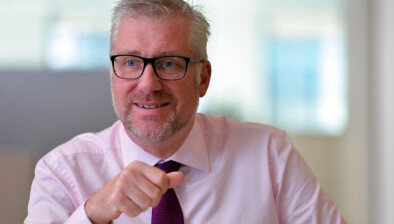
Sandy Begbie has blasted Chancellor John Healey over the temporary increase in the bank surcharge announced in his maiden Budget, warning it prioritised short-term politics over the UK’s long-term economic health.
The chief executive at Scottish Financial Enterprise acknowledged the “tough task” facing Mr Healey given the pressure on public finances, arguing the Budget failed to tackle the real issues facing the UK - low growth, high public spending and a record tax burden.
Mr Healey announced that banks would pay a 6% surcharge on profits above £100m, starting in January and running for 15 months to help fund energy support. He said banks faced an additional 3% surcharge on top of the 3% they already pay.
Shares in UK banks rose after the announcement that taxes on the sector would rise by less than expected and for a limited period only.Barclays’ share price was up by 2.5% while NatWest’s has risen by 2.4%. Lloyds Banking Group’s share price is also up 1.9%.
In an exclusive column for our sister title Daily Business, Mr Begbie warned placing extra burdens on “one of its most productive sectors” risked addressing the wrong problem, highlighting the UK has one of the highest-taxed banking sectors in Europe.
He said: “By treating the minor niggles rather than addressing the underlying problems affecting the economy, we risk allowing the patient’s condition to deteriorate further.
“If the objective is to improve the health of the economy, placing additional burdens on one of its most productive sectors risks addressing the wrong problem while making the underlying condition worse – and we already have the one the highest taxed banking sectors in Europe.
“Economic growth requires the right diagnosis, a clear treatment plan and the confidence to pursue it consistently. While we welcome the commitment to cutting red tape, the banking levy announced in this Budget risks damaging an industry that is vital to the health of the wider economy.
“Financial services are not an isolated part of the economic system. They provide the capital, expertise and infrastructure that allow businesses to invest, expand and create jobs. Compromising their competitiveness risks weakening the very foundations on which sustainable growth depends.
Financial and professional services in Scotland support 157,000 high-skilled, well-paid jobs and generate £17.7bn in gross value added, he said, calling the sector “a heartbeat of the Scottish economy”.
He added it was “difficult to comprehend the logic” of adding tax burdens when both the UK and Scottish governments have put growth at the centre of their ambitions. The concern, was not just the immediate cost but “the signal that policy decisions send to businesses and investors” deciding where to deploy capital and create jobs.
Mr Begbie warned the sector was not seeking exemption from contributing to the public finances. Instead, he called for taxation designed with an understanding of its wider consequences, so that revenue-raising measures do not “inadvertently undermine growth and future revenues”.
He said: “As we look ahead to the Scottish Budget in December, the Scottish Government has an opportunity to demonstrate that its commitment to growth translates into action. It means recognising the importance of a competitive tax environment and resisting measures that add unnecessary friction to the process of doing business.
“For example, one positive from the budget was the chancellor highlighting the importance of proper data infrastructure and the Scottish government should follow his lead in expediting a framework for data centres in Scotland or we risk falling even further behind.
“Scotland does not lack the talent, expertise or ambition to compete internationally. What it needs is a policy environment that enables those strengths to be fully realised. The priority should be to treat the underlying condition: weak productivity, insufficient investment and the barriers that prevent businesses from growing. That requires a sustained focus on competitiveness, skills, innovation and enterprise, rather than measures that risk constraining the sectors best placed to help deliver progress.
“If we want a healthier economy, we must stop treating the symptoms while ignoring the cause. The prescription should be clear: strengthen the conditions for growth, protect Scotland’s ability to attract investment and allow the industries that power our economy to do what they do best.”

Share this article:

Subscribe to our newsletter to not miss articles like this one:
 SUBSCRIBE