

Sandy Begbie warns Scotland’s tax divergence has hit “tipping point” as finance sector struggles to recruit
 Reading time: 3 minutes
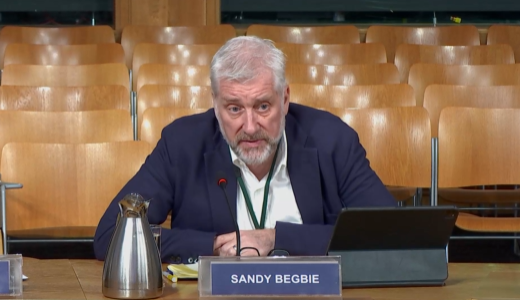
Sandy Begbie, chief executive at SFE
Scotland’s financial services sector has hit a “tipping point” on tax divergence, according to Sandy Begbie, chief executive of Scottish Financial Enterprise stating hybrid working has removed the practical need for new recruits to live in Scotland at all.
“We believe we’ve now got to a point at a tipping point,” Mr Begbie told Holyrood’s Finance and Public Administration Committee. “I think what you’re starting to see is that behaviours will change, start to come through.”
New hires are accepting Scotland-based roles while living elsewhere in the UK, commuting two or three days a week. Existing staff are adjusting too.
“I can speak for my own members: you’ll find people who will simply move to working four days a week to avoid going over the £100,000 threshold, because of the marginal rate of tax involved: there’s just no point in working the fifth day. Certainly for financial services, tax divergence is resulting in behavioural change.”
“There’s no obvious evidence of people leaving Scotland in significant numbers,” Mr Begbie said. “What we are saying is that it’s acting as a deterrent to firms who are actually looking to bring people to Scotland, and given that we’re one of the sectors growing at 3 to 3.5% a year, we think there’s further growth to be had, but the tax is acting as a degree of a barrier.”
Executive search firms within SFE’s membership report a “Scottish premium” now built into recruitment for senior roles.
“People are saying if they’re going to be asked to come and move here, then I’m going to have to be given a higher wage to compensate for the increase in tax, and not all firms can afford to do that,” he said.
“If you earn between roughly £43,500 and £50,000 in Scotland, you’re paying a marginal rate of tax well into 60%,”he added. A further cliff edge exists at UK level between £100,000 and £125,000.
Scotland needs to create and attract more jobs in the £50,000 to £100,000 bracket, he said. Financial services already pays average salaries of £50,000, “well above the average in Scotland.”
The traditional path in professional services, recruiting staff in Leeds or Manchester before moving them to Glasgow or Edinburgh after several years, has become “a far harder sell,” the SFE boss said. He pointed to Land and Buildings Transaction Tax on property purchases, student loan repayments eating into take-home pay, and hybrid working removing the need to relocate at all.
Firms with strict office attendance policies, such as JPMorgan’s five-day requirement, are not affected, he said. Most firms in the sector now expect around three days in the office, giving staff scope to base themselves elsewhere in the UK while serving Scottish or UK-wide clients.
Tax is “a factor, not the only factor,” Mr Begbie said, pointing to schooling, family circumstances and stage of life. But he said it is acting as a specific barrier to growth in a sector he believes has further room to expand.

Share this article:

Subscribe to our newsletter to not miss articles like this one:
 SUBSCRIBE