
Written by:

Economists predicts John Healey’s Budget will delay tough choices
 Reading time: 4 minutes
Written by:
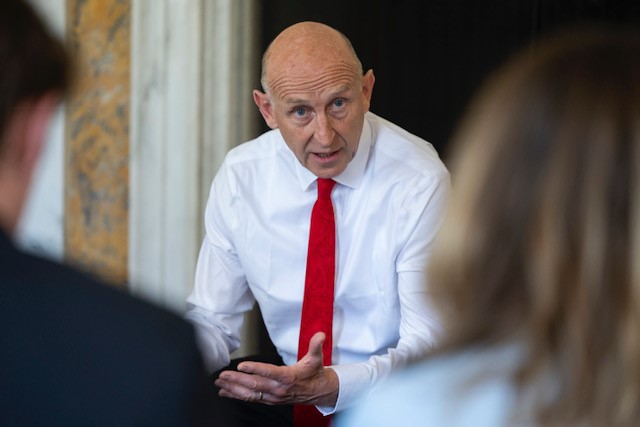
Chancellor John Healey
Economists have predicted that John Healey’s first-ever Budget will likely omit clear plans to reform taxes, curb the welfare bill and boost defence spending, in a move that would kick “tough decisions into the long grass”.
Mr Healey is expected to delay several major financial decisions until the 2027 Spending Review. The Chancellor resigned from Sir Keir Starmer’s government over the Treasury’s refusal to set out how it planned to increase military spending to 3% of GDP by 2030.
Defence spending is currently 2.7% of GDP, and an increase to 3% would cost the UK Government around £11bn more each year.
Economists in the City have predicted that the Chancellor will deliver a string of small policy measures to support households and businesses with cost pressures, and will maintain a fiscal buffer to avoid spooking the markets. One measure announced ahead of the Budget will be a cut to the standing charge on gas.
Pantheon Macroeconomics economists Rob Wood and Elliott Jordan-Doak told City AM that they expected the Chancellor to deliver “less headroom” and to “kick tough decisions on defence and other spending into the long grass”, which could push up government borrowing costs further as bond traders fret over the sustainability of the government’s finances.
“Markets would need to believe that a government politically unwilling, or unable, to tighten now could deliver even larger consolidation immediately before an election.”
The economists warned that the Budget will “fail to account for tens of billions of [spending that is] all but already committed”, highlighting that defence funding and public sector pay are likely to increase next year.
Peel Hunt economist Kallum Pickering noted that the government did not make a “serious commitment to fix either the UK’s distortive tax code or the perverse incentives caused by a bloated welfare system”, adding that Andy Burnham’s government suffered from a “credibility discount” given Labour’s struggles to rein in spending in the short term.
During the statement, the Chancellor is expected to announce small measures through energy subsidies and an extended freeze on fuel duty. The support package is designed to help ease pressures from rising inflation in the early part of 2027, caused by the continued disruption of trade across the Gulf.
In a video statement ahead of the Budget, Mr Healey said he would present a Budget that offered “breathing space” to businesses and households, promising to deliver long-term measures to “get energy costs down for good” and to “strengthen national security and our defences”.
He said: “We’ll do all of this responsibly, sticking within tight fiscal rules, and make sure every pound is well invested.” Mr Healey is predicted to have fiscal headroom of around £15bn and to raise taxes by about £5bn through an increase in the banking profit levy and taxes on online retailers.
ING economist James Smith said: “In delaying this process for 12 more months, the Treasury no doubt hopes lower borrowing costs will buy it some extra spending room. But if you’re also thinking of an early election, then a Spending Review is something you’d almost certainly want to do afterwards.”
Shadow chancellor Andrew Griffith urged Mr Healey to “take tough decisions instead of continuing to kick the can down the road”. He added: “If John Healey fudges defence spending rather than properly funding the three per cent by 2030 in his Budget, he must resign. Defence is the first duty of any government, and we cannot leave our armed forces waiting any longer.”

Share this article:

Subscribe to our newsletter to not miss articles like this one:
 SUBSCRIBE