
Written by:

Edinburgh and Glasgow named among UK’s strongest equity investment hotspots
 Reading time: 4 minutes
Written by:
David Hourican
Edinburgh and Glasgow named in the British Business Bank’s Nations and Regions Tracker 2026’s strongest equity investment hotspots.
The tracker revealed that some of the strongest hotspots for investment is now outside of London, with regional funding markets strengthening significantly over the past decade.
The report pointed to a broader shift in the UK’s equity landscape with the devolved nations and many English regions seeing an increase in the number of or value of announced equity deals over the decade, suggesting funding conditions for businesses have largely improved over time.
But London prevailed as the dominant equity centre of the UK accounting for 49% of smaller businesses equity deals and 59% of investment between July 2023 and June 2026.
Cambridgeshire and Peterborough Combined Authority recorded an annual average of 48 equity deals per 100 high-growth businesses, followed by Edinburgh and South East Scotland City Region at 39, ahead of Greater London Authority with 32.
Equity Investment was also concentrated in areas included the West of England, Greater Manchester and Glasgow with around 22 deals. Tay Cities recorded around 19 deals per 100.
It noted: “Strong deal activity extended beyond London, with several Local Authority District areas featuring in the top 5%.
This includes Edinburgh (199), Cambridge (135), Manchester (125), Glasgow (117), South Cambridgeshire (111), Bristol (90), Cardiff (88) and Leeds (86). This suggests the presence of distinct clusters of deal activity in Scotland and the East of England, alongside significant activity across other UK cities.”
Over the past three years, 990 announced deals were completed in the UK’s financial services sector. Westminster recorded the
highest number of deals (170), followed by City of London (169). Local deals across the UK authorities in the top 10% for deal activity, few were located outside London, including Cardiff (23 deals,) Manchester (15 deals), Edinburgh (14 deals) and Bristol (10 deals).
The British Business Bank said: “Distinct investment strengths are developing across the country. Life sciences activity is particularly strong around Cambridge, with further concentrations in Edinburgh, Glasgow and Oxford. Advanced manufacturing deals are more widely distributed, including in Sheffield, while digital and technology clusters extend to Edinburgh, Manchester, Cambridge, Glasgow and Cardiff.
“Despite that progress, the tracker reveals stark differences between local finance markets. 18 strategic authority areas averaged fewer than ten announced equity deals a year. The report also highlights a concentration of investors in the capital: London has 45 unique venture capital investors per 100 high-growth businesses, compared with four per 100 across the rest of the UK, although this has improved over time.
“Differences extend to follow-on funding among businesses that raised their first venture capital round between 2016 and 2019, 59% in northern England went on to raise a second round, compared with 71% across the UK. Scotland recorded the highest proportion, at 79% …
“The report also identifies a divide in business confidence about accessing finance. While overall use of finance was broadly similar, only 41% of businesses in the 20% most deprived areas were confident they could secure finance from their main bank, compared with 46% elsewhere.
“Plus 44% believed it was difficult for businesses like theirs to raise funding, compared with 39% elsewhere. This comes despite businesses in those areas reporting stronger expectations for turnover growth.”
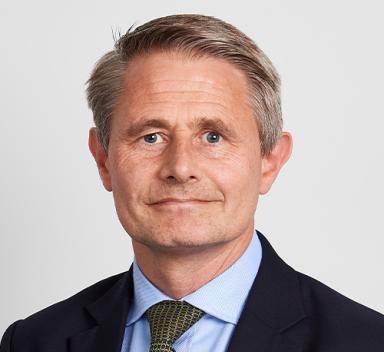
David Hourican, interim chief executive at the British Business Bank said: “The UK’s investment story increasingly reaches beyond London. Cambridge and Edinburgh are showing the strength of the high-growth clusters developing across the country, alongside centres of excellence in sectors from life sciences to advanced manufacturing.
“But this progress is not being felt everywhere. Too many businesses still face a very different funding landscape simply because of where they are based. Where a business is based should not limit its ambition. By building stronger local finance markets and backing areas with the potential to grow, we can help more businesses across the UK access the investment they need to succeed.”

Share this article:

Subscribe to our newsletter to not miss articles like this one:
 SUBSCRIBE