

Written by:

FCA chair Ashley Alder urged to resign over whistleblower handling after Simon Andreisz’s death
 Reading time: 10 minutes
Written by:
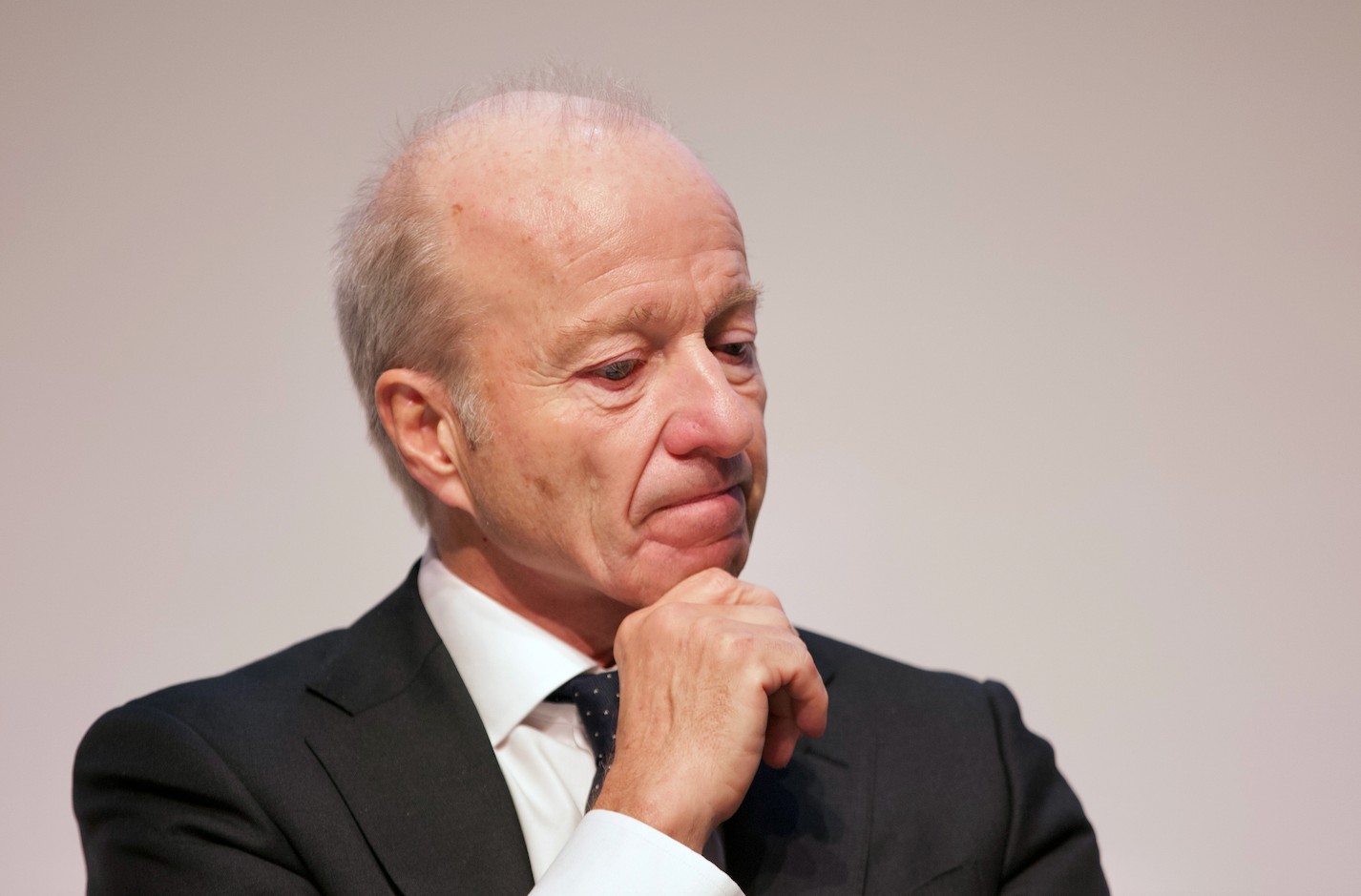
FCA Chair Ashley Alder (C) Terry Murden
The Financial Conduct Authority’s (FCA) chair, Ashley Alder, faced calls to resign at the regulator’s first public annual meeting in Edinburgh, as whistleblowers and campaigners challenged its decision to let one of its own non-executive directors investigate how it dealt with Simon Andreisz before his death.
The financial services watchdog faced intense questioning over its decision to appoint non-executive director Lea Paterson to lead the probe into the regulator’s communication with Mr Andreisz and its handling of whistleblowers.
The meeting, held at the Assembly Rooms, was the regulator’s first ever annual public meeting in Scotland. The FCA claimed it was also its largest, with more than 900 people attending online or in person.
Founder of the Transparency Taskforce Andy Agathangelou called for Mr Alder to resign during a heated exchange, which saw the board face intense scrutiny from whistleblowers and campaigners following news of the planned probe.
Mr Agathangelou said: “I personally feel this is wrong, but it’s also quite insulting to the memory of Simon, who was on record over many years expressing his reasons for distrusting the regulator, so the FCA wanting to control the narrative by managing the review. The FCA shouldn’t be allowed to have anything to do with it, and that, of course, includes setting the terms of reference, time frames and, most importantly, choosing the person.”
Mr Andreisz highlighted alleged links between the late sex offender Jeffrey Epstein and US commerce secretary Howard Lutnick.
The banker alleged wrongdoing at a Wall Street brokerage formerly run by Mr Lutnick, and the regulator has come under fire over whether it took his allegations of retaliation by his former employer sufficiently seriously.
A cross-party group of MPs warned that Mr Andreisz’s death raised “deeply troubling questions” and called for an external inquiry into the FCA’s handling of whistleblowers. The politicians said the regulator should not be “marking their own homework” on this issue.
The FCA noted that there had been a 20% increase in whistleblowing, acknowledging that some complaints have to be dropped, depending on how far the case has progressed, in order to manage its resources effectively.
Mr Agathangelou accused the FCA of “skewing” its whistleblower survey with a sample of 50 “carefully chosen people”, claiming they were “carefully selected by the whistleblower handlers themselves” despite there being thousands of whistleblowers a year. He claimed it was an exercise “riddled with conflicts of interest that were never properly managed”.
The meeting also heard about other high-profile cases, including Blackmore Bonds, Lonsdale and motor finance, as well as wider issues such as AI, consumer duty and prediction markets.
An independent financial adviser told the board he had blown the whistle on what he described as a glitch at a large investment platform that cost his client a significant amount of money. He asked for a contact at the regulator so it could be investigated.
Mr Agathangelou added: “It is clear to me and many others that you are clearly incapable of protecting the reputation and integrity of the FCA by allowing a conflicted party, an employee, to now, after his death, be in charge of a review, and on that basis, sir, I call for you to resign from this organisation. The reputation of the FCA is determined by how well this authority manages this organisation. You, sir, should step aside.”
Mr Alder said: “Firstly, all of the non-executive directors are appointed by government, not the FCA. Secondly, we will absolutely, in the circumstances, take our role as independent non-executive directors seriously. Seriously. We considered that independent role very, very carefully in coming to a conclusion to appoint Lea to conduct a review.
“The findings will be public, so you will be able to scrutinise what we have done. When she reports, she will report to the board, to the non-executive directors, and, of course, we would expect her to come up with a view on how the FCA communicates with whistleblowers and, in particular, with Mr Andreisz. I can guarantee that we will look at this with every ounce of seriousness it deserves.”
FCA chief executive Nikhil Rathi attempted to explain the extent of the “complex” work that the FCA has to confront and defended its handling of whistleblowing complaints.
“This is some of the most difficult, challenging work we face. We see around 1,300 cases a year. What I want to focus on is how we handle these matters in the context of our organisation, particularly how we provide counselling and support.
“Everyone in this organisation has a responsibility to provide appropriate support and counselling. We want to make sure that people who need counselling receive it, and, where necessary, we also refer our colleagues to those who are specially trained in this area so that they can receive the support they need.
“Sometimes people require very different levels of support, and one of the challenges for us as an organisation is ensuring that we can respond appropriately to the needs of the people who come to us. At times, we need to provide extensive support. In other cases, the organisation is able to secure a criminal justice outcome that provides a positive outcome for the victim.
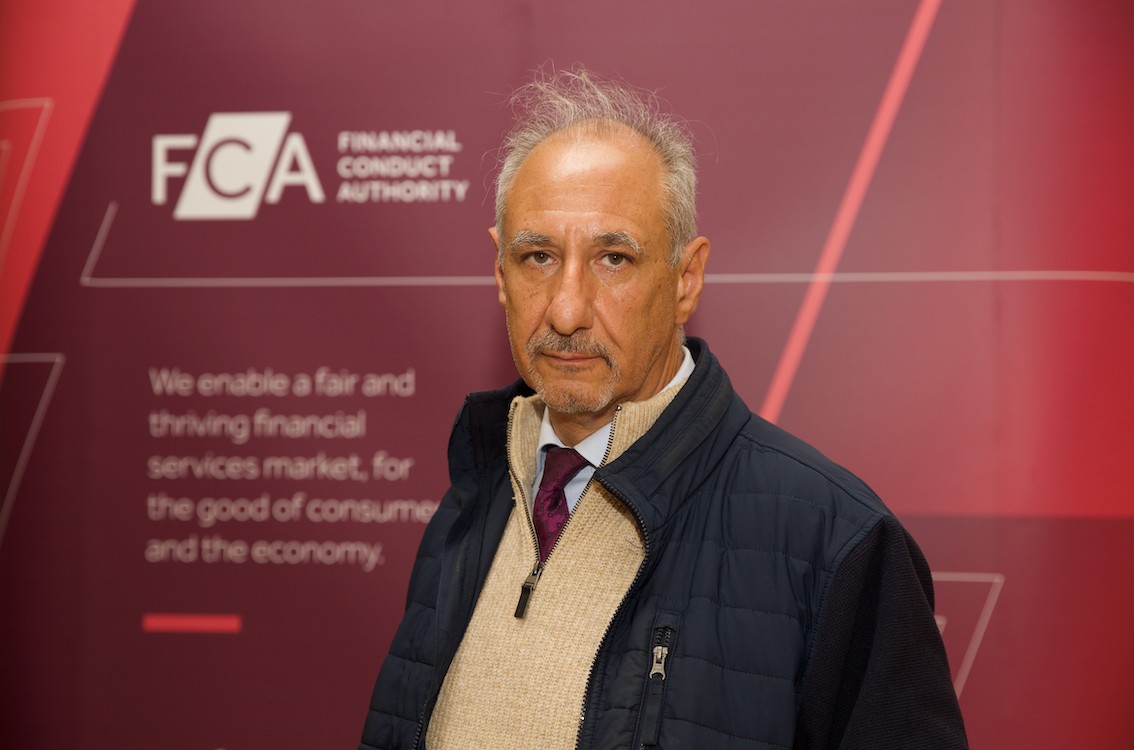
Transparency Taskforce founder Andy Agathangelou
“That does not mean that we do not take these matters extremely seriously. We absolutely do. I think that is what is sometimes misunderstood. Nationally, in these cases, we have to balance the use of our powers with our responsibility for accountability and the integrity of the legal process.
“As you can see from some of the cases we have been involved in, we are dealing with matters that are considered at the highest levels of the courts in the UK, and we take a great deal of care in how we respond to the individuals involved.
“I want to emphasise that context because I am extremely grateful for the work that everyone does. At the same time, we must always remain open to learning, improving our approach and responding to the human impact of these cases.”
Mr Agathangelou, unhappy with the answer, tried to press Mr Alder to answer yes or no after calling for him to resign, but the chair swiftly avoided the question, claiming he had answered it, and moved on to the next question.
The FCA said it is exploring options for paying whistleblowers who come forward, and that a change in policy would be required to pay sums similar to those offered in the US. It also confirmed it was looking at payments for criminal informants.
After the two-hour meeting, Mr Agathangelou said he was “flabbergasted, dismayed, frankly despondent by two things.
“First, the FCA chair has misled the audience by stating the non-executive director who will lead the review into the death of Mr Andreisz is independent.
“Mr Alder is presiding over what must look like a sham, a whitewash… whereby once again the FCA is looking to mark its own homework. The public needs a truly independent third party review exactly as requested by John McDonnell MP, chairman of the all-party parliamentary group.
“The second thing I am dismayed by is that despite the fact Wayne Johncock was practically begging for a meeting with Stephen Smart [joint executive director of enforcement and market oversight], he refused to agree to it.
“Mr Johncock was expressing how close he is to the edge. Only Ashley Alder stepped in at that point. This will continue to depress me for some time.”
Bank of America
Members of the media and public also heard moving testimony from Bank of America whistleblower Wayne Johncock, who exposed corporate fraudster and former Bank of America worker Rajesh Ghedia. Ghedia was jailed in 2022 for his $3.3m scam. Mr Johncock says he is now paying financially for blowing the whistle, and he pleaded with the board for help.
Mr Alder promised to meet Mr Johncock to discuss his case in more detail, including how the regulator can help him following the criminal case. He said he was “genuinely moved” as Mr Johncock opened up about the emotional toll and stress that followed his whistleblowing.
Mr Johncock said: “They’ve had all the details. They say they’ve spoken to them. I don’t know what they’ve said to them. I don’t see anything published about what they’ve done to them. I don’t think the FCA has really taken the time to understand my case. Perhaps talking to the chairman might change that. Let’s see what happens.
“I’ll meet with him in two weeks. It’s hopeful that something will happen then. Let’s see if something happens. We’ve got repossession orders on our home. I want all those things cleared.
“The short story is that the guy I met at a Christmas party, a neighbour, told me and others he was a high-flying exec at Bank of America, looking after derivatives in Europe.
“He changed all his photos. He changed all his emails to indicate this. He’d been doing it for a long time. I was the guy who eventually exposed him. He was ripping people off. He was a career criminal.
“I want someone to compensate me. My view is I should be rewarded for doing this. You want people to speak up. Look at the Post Office. I haven’t got 20 years to be dealing with this in my head. If they promote people to come forward, they’ll be stronger. Absolutely stronger.
“It’s what the world, it’s what this country needs: a little guy standing up to a big company and winning.”
Midas pressure
The watchdog also came under pressure over its handling of the Midas Financial Solutions scandal, an Aberdeen-based Ponzi scheme run by jailed financial adviser Alistair Greig.
Investors were told their money was being placed in high-interest short-term deposit accounts, but those accounts did not exist.
Midas collapsed in 2014 after around £13 million had been invested in the scheme. Greig was subsequently convicted of fraud and sentenced to 14 years in prison.
A group of 95 victims has continued to demand that the FCA cover around £2 million in legal costs they incurred while pursuing the case.
The FCA has previously apologised after an independent complaints commissioner upheld aspects of a complaint over its failure to act on warning signs surrounding Midas, although the commissioner concluded that compensation from the regulator was not appropriate.
Stephen Braviner Roman, the FCA’s general counsel and chief risk officer, told the meeting: “There were complaints into our approach to the issues, which went to the complaints commissioner, and we apologised for some specific shortcomings.
“But the the source of the fraud was not our actions; it was the actions of the director and the choice of individuals to pursue claims through the courts is an individual choice by those individuals. So the FCA will not be reconsidering its decision over the issue of compensation to cover those through the courts.”

Share this article:

Subscribe to our newsletter to not miss articles like this one:
 SUBSCRIBE