
Insolvencies rise as pressures mount
 Reading time: 2 minutes

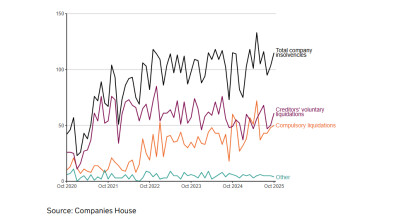
Despite overall levels of business distress remaining largely stable, insolvency-related activity increased across several key sectors during the third quarter of 2026.
According to the latest quarterly Business Health report from R3 - the association for the UK’s restructuring, turnaround and insolvency professionals - the latest stats highlight the uneven pressures facing companies.
The report, based on Creditsafe data, found there were 6,939 insolvency-related activities in Q3 2026, including administrations and voluntary and compulsory liquidations, similar to the previous quarter’s total of 6,854 and Q3 2025 (6,912).
However, sectors such as wholesale and retail, professional services, real estate and education saw significant increases in insolvency activity. Wholesale and retail rose from 885 cases in Q2 to 953 in Q3, an increase of 8%, making the sector the second most distressed behind construction.
Real estate insolvency activity increased by 7% quarter-on-quarter from 435 to 467 and by 29% compared with the same period last year (363) while professional services rose to 623, up 6% quarter-on-quarter and 4% year-on-year. These sectors have been affected by rising costs and the ripple effects of the collapse of mortgage provider Market Financial Solutions.
Meanwhile, education sector activity increased by 25% on the previous quarter and 15% on Q3 2025 increasing to 99 cases from 79 last quarter.
The report found that construction remained the sector with the highest level of insolvency-related activity, with 1,133 cases in Q3. The report also revealed there were more than 18 million overdue invoices recorded across UK businesses in Q3, an increase of 8% on the same period last year when there were 16.9m.
R3 President Sonia Jordan (pictured), said: “R3’s latest Business Health report suggests that while overall levels of business distress are stabilising, pressures are becoming more pronounced in certain sectors.
“Cashflow remains one of the most significant challenges facing businesses. Late payment continues to have a real impact on directors’ ability to invest, grow and meet their financial commitments.”

Share this article:

Subscribe to our newsletter to not miss articles like this one:
 SUBSCRIBE