

Written by:

John Swinney faces ‘demanding test’ at Scottish Budget on 3 December as Fraser of Allander flags real-terms squeeze
 Reading time: 5 minutes
Written by:
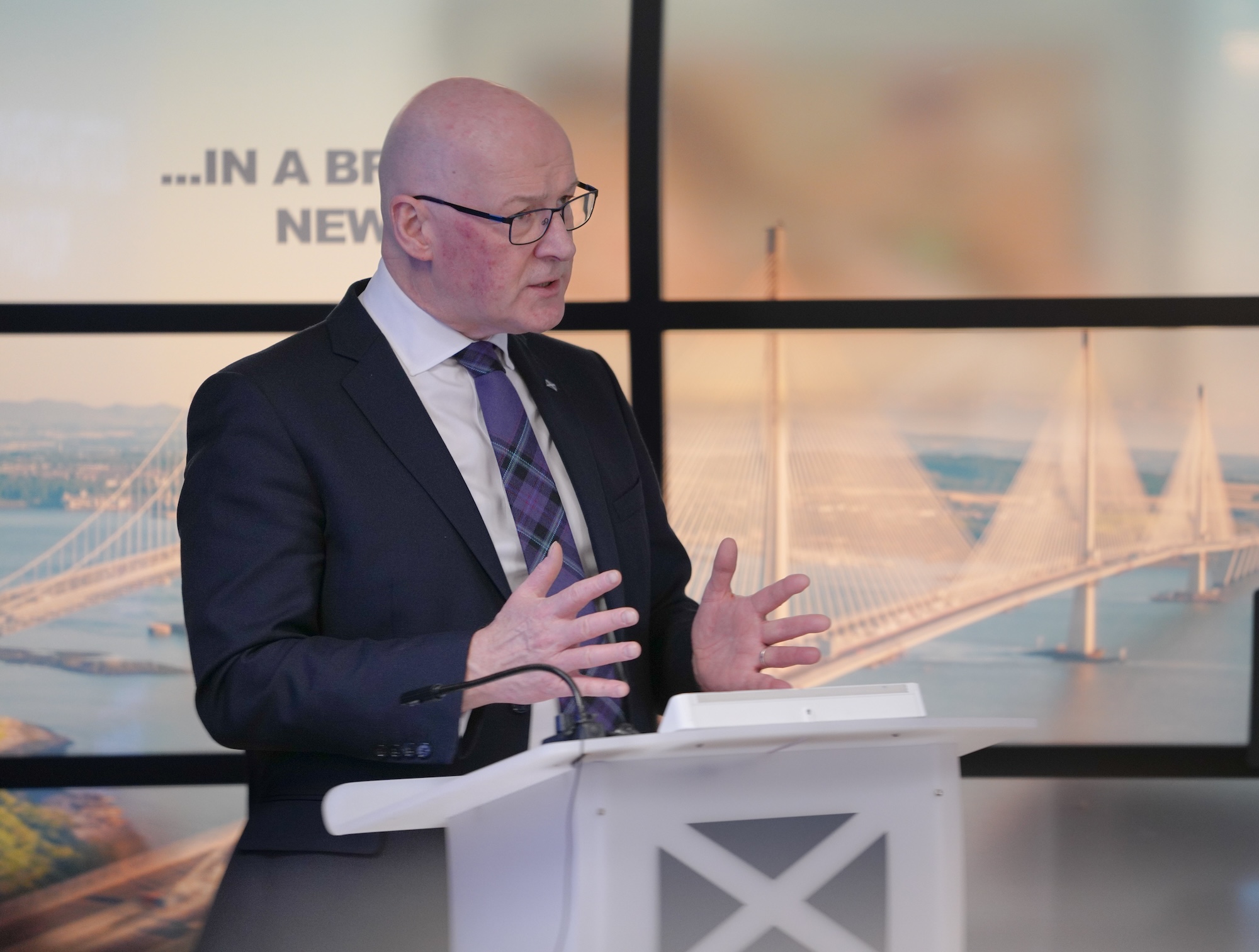
John Swinney is facing a 'demanding test' at the Scottish Budget
John Swinney is facing a ‘demanding test’ at the Scottish Budget on December 3 on whether the Scottish Government’s five-year ambitions can be met within a resource budget forecast to fall 1.2% in real terms in 2027-28, a figure that could change after the UK Budget, the Fraser of Allander Institute has said.
The First Minister set out a five-year Programme for Government on September 1, centred on public service reform, economic growth and tackling child poverty.
The economic think tank said spending will need to be prioritised and, in places, cut, adding that it is less clear what the government’s priorities are once trade-offs are required across its long list of policies.
The Fraser of Allander Institute said the Scottish economy grew 0.7% in the second quarter of 2026 and by 1.1% over the year to June, the same annual rate as the UK, showing resilience despite global pressures.
Revisions to earlier data mean there is no longer an unbroken run of quarterly growth, with no growth recorded in the final quarter of 2025. The think tank forecasts growth of 1.1% in 2026 and 2027 and 1.2% in 2028.
Beneath the headline figures, it found that the labour market is weakening. Early estimates show payrolled employment about 23,100 lower in July than in December 2023. Nine of Scotland’s 20 sectors have lost payrolled jobs, with retail and hospitality accounting for half of the losses, some 8,600 jobs. The proportion of 25 to 34-year-olds in payrolled employment has fallen by two percentage points since 2023, the sharpest drop of any age group.
It also found that Scotland had the lowest level of the working age population claiming benefit compared with the rest of the UK. After falling from 3.2% in July 2024 to 2.9% during 2025, it has risen modestly over the past year, reaching 3.1% in spring 2026 before easing to 3.0% in July. The UK rate stands higher at 3.8%, while Northern Ireland has experienced the sharpest decline and now has the lowest rate of the four nations.
The FAI also said the Programme for Government leaves key costs unanswered. It said a funding mechanism like the one used in the Highlands and Islands pilot, applied to the Strathclyde Partnership for Transport area to extend the £2 bus fare cap, would be a significant, open-ended commitment that the Programme does not cost.
It also said it is unclear whether the £4.1bn for affordable housing is new money. Only 35,368 of the 110,000 homes target for 2032 had been delivered by the first quarter of 2026.
The Scottish Budget will follow the UK Budget, which Chancellor John Healey delivers on October 28, amid high energy prices and elevated government borrowing costs, with 10 year gilt yields at their highest since 1999. Consumer Prices Index inflation rose to 3.1% in August, up from 2.9% in July. Mr Healey promised to restore hope in the UK through “fiscal discipline” at the Labour Party conference.
It is estimated that the current fiscal headroom, the financial buffer under the government’s self-imposed fiscal rules to increase spending or to cut taxes without breaking the target, is around £10bn to £15bn, a significant drop from the £23.6bn Office for Budget Responsibility (OBR) estimate in March 2026.
Economists warned that the Chancellor is likely to increase taxes, such as capital gains, or cut spending in response to the rising spending pressures. The Prime Minister announced plans to reform the state pension triple lock to fund a new national care service.
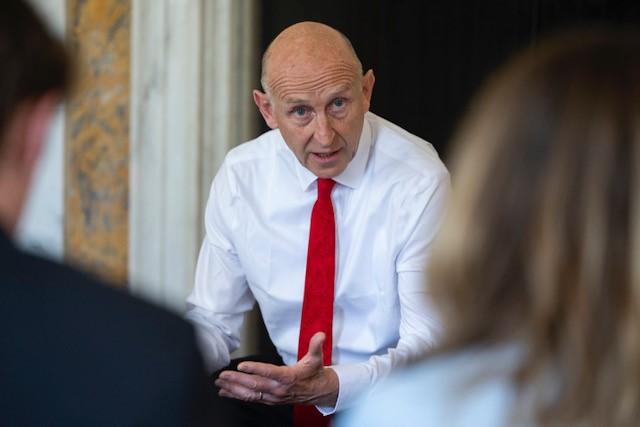
Chancellor John Healey
Mr Swinney pledged during his speech in September setting out the government’s ambition that he wants to “deliver the investment needed to achieve Scotland’s economic growth ambitions across the country” and bring in private capital to help Scottish innovation over the next five years.
Scottish Government ministers are hoping the introduction of a £1.5bn bond programme will help diversify capital funding sources and support long-term infrastructure investment to support its priorities.
Mr Swinney also promised to increase “private capital investment by accelerating and coordinating strategic projects, engaging with investors, including pension funds, and championing Scotland’s strengths on the global stage”.
The FAI said the government has leaned on economic growth as the enabling objective behind the Programme, but there is not a huge amount of detail on how growth will be supported.
It also claimed in its latest economic commentary that the Scottish Government’s “track record raises real questions about how deliverable this Programme will prove if the growth underpinning it does not materialise.
“As we look ahead to the end of the year, two events will determine how quickly these ambitions are tested against fiscal reality: the UK Autumn Budget on 28 October, and the Scottish Budget on 3 December. The key questions will be how the fiscal outlook for Scotland in 2027-28 shifts following the UK Autumn Budget, and which policies the Scottish Government actually chooses to prioritise when allocating spending, and how prominent the prevention agenda proves to be when setting the Scottish Budget.
“These budgets will be the first real test of whether the ambition set out in this Programme can be delivered within a constrained fiscal environment.”
Emma Congreve, deputy director of the Fraser of Allander Institute, said: “Scotland’s economy has held up well in the face of continued global uncertainty, but beneath the headline figures there are signs of a labour market under strain, with payrolled employment falling steadily since 2023 and young people bearing much of that impact.
“Against this backdrop, the Scottish Government has set out a five-year Programme for Government, with some big ambitions on public service reform as well as some eye-catching policies.
“The Scottish Budget, due to be announced on 3 December, will be a demanding test of how the Government’s ambitions measure up against the fiscal reality, and where spending will ultimately be prioritised, and in some areas, cut.”

Share this article:

Subscribe to our newsletter to not miss articles like this one:
 SUBSCRIBE