
London Stock Exchange chief urges City to keep pushing for stamp duty cut after Budget signal
 Reading time: 4 minutes

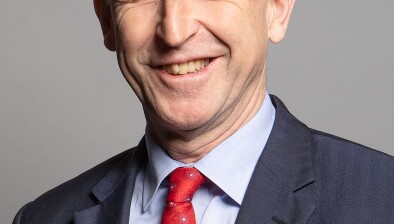
LSEG chief executive Dame Julia Hoggett
London Stock Exchange boss Dame Julia Hoggett believes the City has made headway in its case for cutting stamp duty on shares, after the Government acknowledged that a cut would boost the market’s competitiveness.
Stamp duty is currently charged at 0.5% on purchases of shares in listed companies.
Speaking after Chancellor John Healey’s maiden Budget, in which he promised “breathing space” for working people, Hoggett said documents released by the Government showed it was “saying we hear you”.
The chief executive said plans for a new “Starter ISA” for first-time investors should be used to encourage the buying of London-listed shares. She pointed to a Budget document that acknowledged calls for cuts to stamp duty, stating that the Government “recognises the potential economic benefits of such a change, and will keep this under review, with appropriate regard to the fiscal implications”.
She said the City needed to keep pushing the argument for reducing stamp duty, which brings in £3bn a year, and described the document as “one of the first recognitions” of the tax’s impact in deterring the buying of shares.
Hoggett added: “The key issue is making sure that we as an industry put the right case as to why the forgone revenue from [cuts to] stamp duty is in the best interests of the economy in terms of driving growth and the attractiveness of UK companies to drive employment and innovation and productivity growth.”
Last year, then Chancellor Rachel Reeves introduced a three-year stamp duty holiday on shares bought in initial public offerings (IPOs).
Hoggett also chaired an industry group, the Capital Markets Industry Taskforce, ahead of this year’s Budget. It acknowledged that abolishing the tax entirely was not feasible but called for it to be scrapped for pension funds and ISAs.
In the Budget, Healey confirmed that plans to cut the amount that can be saved tax-free in cash ISAs from £20,000 to £12,000 would not go ahead, and announced a new “Starter ISA” for first-time investors.
Hoggett said the new product “opens up a genuine conversation about if we are providing incentives for people to invest, how do we maximise the chance that they invest here? We will be leaning very heavily into what the new form of ISA could be”.
Speaking at an event this week marking 40 years since the Big Bang, the Thatcher government’s reforms that computerised and internationalised the City’s markets, Dame Julia Hoggett said Britain “had a habit of talking ourselves down”, reports The Times.
She said the country should “honestly and openly recognise the amazing strengths we have as a nation and create a culture where we need to get it back”.
Hoggett argued that other countries treated their stock markets as “sources of national economic security”, adding: “If you look at what we are actually really good at as a nation, they are things that are increasingly going to drive our economic security and sovereignty and indeed security.
“Take the US, if the sector is one that they deem to have national security implications and they determine you be a US company, which if you list in the US you become, they have requirements as to the nationality of the board members.
“They have an expectation that those companies will serve their national security. We haven’t traditionally thought about it in the same way and we need to. As a nation, we need to be more cognisant that we have all these amazing companies and we should do everything we can to keep them.”

Share this article:

Subscribe to our newsletter to not miss articles like this one:
 SUBSCRIBE