

Written by:

Schroder Income Growth Fund extends dividend growth to 31 years as share price return beats benchmark
 Reading time: 3 minutes
Written by:
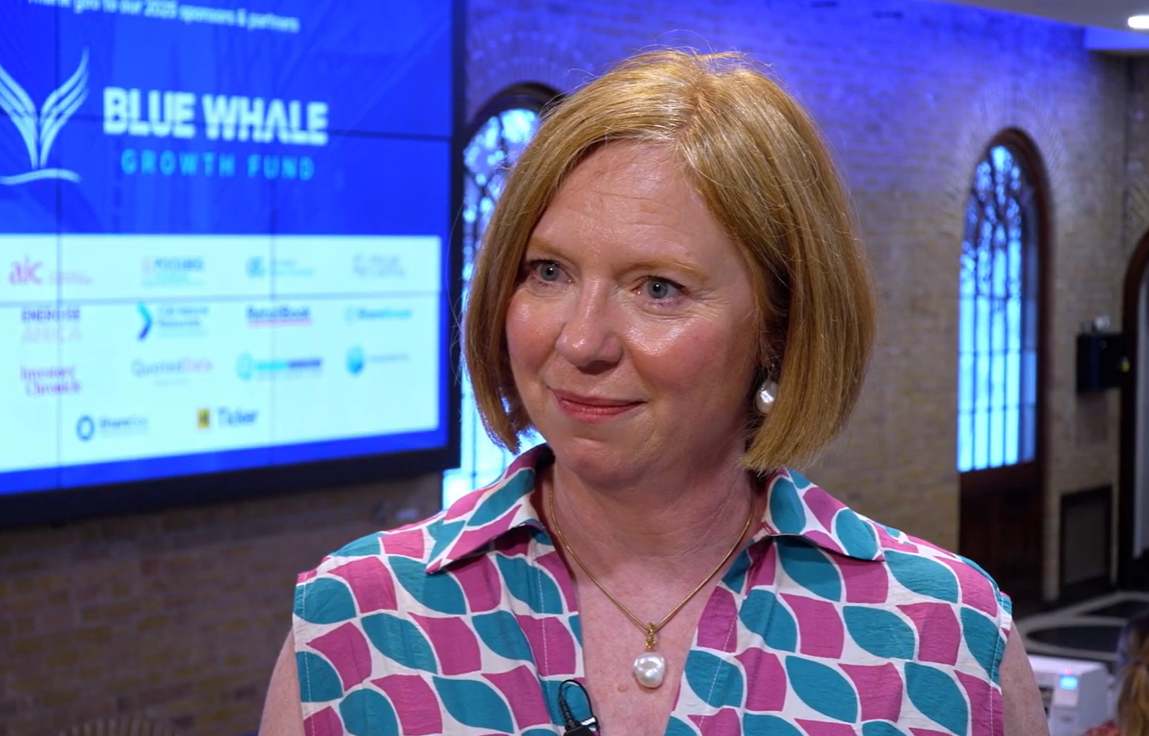
Sue Noffke, fund manager at Schroder Income Growth Fund and head of UK equities
Schroder Income Growth Fund has reported a net asset value (NAV) total return of 19% and a share price total return of 23%, compared with 21.3% for its benchmark, the FTSE All-Share Total Return Index, as it recorded its 31st consecutive year of dividend growth.
Outgoing chairman Ewen Cameron Watt highlighted that the trust’s dividend growth has exceeded inflation over one, three and ten years. He praised the investment manager, noting that longer-term performance has remained ahead of the index since Sue Noffke assumed responsibility for the portfolio in 2011.
The board explained that the portfolio remained focused on companies with attractive profits, cash flows and strong balance sheets, while providing diversified exposure to a broad range of growth drivers and international revenues.
The discount averaged 6.8% during the year and narrowed to 5.3% at the year end on 31 August 2026. The company repurchased 3,000,411 ordinary shares for treasury, representing 4.4% of issued share capital, for around £10.7m.
The board confirmed that, following the conclusion of the AGM on 10 December, June Aitken will be appointed senior independent director and chair of the management engagement committee, Victoria Muir will become chair of the nomination committee, and David Ballance will become chair of the remuneration committee.
Noffke said: “Over the longer term, returns remain ahead of the index. Since your Investment Manager assumed responsibility for the portfolio in July 2011, your Company has delivered an annualised NAV total return of 8.7%, compared with 8.1% for the FTSE All-Share Index.
“UK equities performed strongly over the period, with returns comparing favourably with most other developed equity markets. This continues the run of strength seen in recent years.
“Geopolitical tensions, including conflict in Iran and the continuing Russia-Ukraine war, contributed to higher inflation expectations and bond yields, prompting markets to reassess the outlook for interest rates. AI was another important influence, as substantial investment in the technology fuelled both enthusiasm and growing concerns over disruption to existing business models and the returns likely to be generated on the capital invested.”
She added: “Despite the uncertain backdrop, resilient corporate earnings and economic activity proved supportive to markets, while the UK benefited from its sector mix and elevated M&A activity, as overseas companies and private equity continued to take advantage of relatively low valuations… The portfolio nevertheless trailed the Index, with consumer discretionary, healthcare and financials the main sector detractors. Consumer discretionary, where the portfolio is overweight, had the greatest impact.”
Cameron Watt said: “Your Company again met its primary target of increasing dividends in excess of the rate of inflation. Strong share price performance, aided by share repurchases, gave shareholders a competitive return in excess of the FTSE All-Share Total Return Index.
“On a personal note, this is my last statement as your chairman. Over the period since I joined your Board in 2017, we have delivered strong dividend growth and achieved a significant reduction in overall costs. Whilst there is a commonly expressed view that investment trusts need to be much larger to meet shareholder needs, we see this as secondary to meeting your principal requirement of real dividend growth.
“Your Investment Manager charges fees on the lower of market capitalisation or NAV, meaning that you directly benefit from any discount to NAV. This is by no means common in the investment trust industry, where total costs remain higher than they need be.”

Share this article:

Subscribe to our newsletter to not miss articles like this one:
 SUBSCRIBE