
Written by:

Andrew Bailey warns inflation risks are “on the upside” as he defends reliance on Treasury to cover QT losses
 Reading time: 5 minutes
Written by:
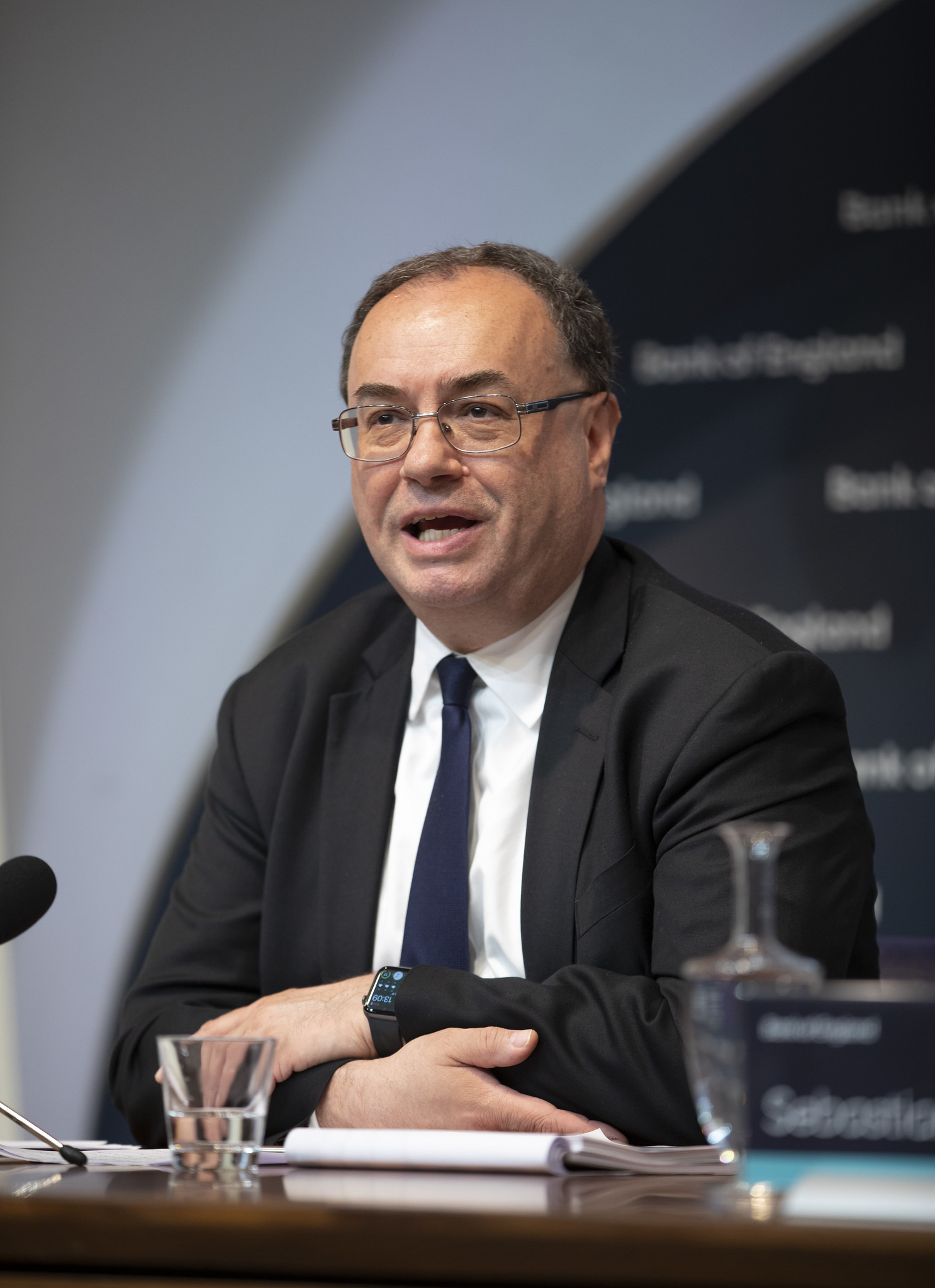
Andrew Bailey, Governor at The Bank of England
Andrew Bailey has warned that inflation risks remain “on the upside” as he defended the Bank of England’s reliance on the Treasury to cover losses generated by quantitative tightening.
The Governor of the Bank of England told MPs on the Treasury Select Committee in an evidence session that the current outlook was skewed upwards, driven primarily by energy prices and uncertainty over how far those cost fed through into wider inflation.
He said: “The risks, I’m afraid are on the upside, really coming from energy prices. There are questions about where energy prices are going and about second-round effects, but I’m afraid the risks are on the upside, and we’re seeing that when you look at the market curve.”
The evidence session also saw disagreement among rate-setters over how far to look ahead when weighing inflation risk. Megan Greene, an external member of the Monetary Policy Committee who voted for a rate rise, told MPs she was applying a risk-management approach: acting pre-emptively against second-round effects and course-correcting later carries a smaller cost, in her view, than waiting for definitive evidence and being forced into a sharper response.
Deputy Governor for markets and banking, Sir Dave Ramsden and Professor Alan Taylor, an external member of the Monetary Policy Committee, who both backed holding rates, pushed back on the idea that this amounted to inaction.
The deputy governor pointed to wage data coming in consistently below the Bank’s forecasts as evidence the domestic picture remained benign enough to justify staying put, while Taylor argued that holding rates against a backdrop of markets pricing in cuts was itself an active decision to preserve a restrictive stance.
Pressed on whether the split reflected a genuine difference in economic analysis or simply a different tolerance for risk, Greene said the committee broadly shared the same framework but differed on their starting point. She had already been concerned that household inflation expectations were sitting at the top of their historical range before the Middle East conflict began, which coloured her reading of the risks that followed.
Mr Bailey also addressed the financial mechanism behind quantitative tightening after MPs questioned him on the scale of losses being incurred by the Bank of England as it unwinds its bond-buying programme.
Sir Dave, confirmed the Bank’s balance sheet had reduced from £895bn to under £500bn, a reduction of around £400bn, estimating that the overall impact on term premium at between 20 and 30 basis points, against a broader 350 basis points rise in yields over the period.
Members of the committee pressed Mr Bailey on the 1844 Bank Charter Act and how it impacted the Bank of England as it appeared to be simultaneously handing profits to the Treasury while being recapitalised by it to cover the losses from quantitative tightening.
Mr Bailey said: “In economic terms, this makes no difference at all. First of all, this is all about accounting. But it is also about transparency, that’s the point… Now, the reason this was done in 1844 was all to do with the gold standard, so that’s history. It was a way of actually making the gold standard work, because the gold was on the issue department, back the notes. Because the bank originally also was a commercial bank, actually, but it’s persisted.
“So these days, the so called seigniorage, which is the profit of the note issue, because every note we’ve built is effectively an interest free loan to the Bank of England. Because of the way the 1844 Act works, all the profit of issue department is paid directly over to the government, to the Treasury. The only bit that we withhold is the cost of actually printing and issuing banknotes, which is very small compared. So it’s about £4m a year.
Mr Bailey explained the Bank was paying money to the government while also needing money back from the government to offset quantitative tightening losses, an arrangement other central banks such as the Federal Reserve and European Central Bank do not face, because they are able to offset the seigniorage against quantitative easing and quantitative tightening costs internally.
He added: “Most, we pay a dividend at Treasury, but it’s not, it’s about £100m a year, I think, it’s under that. We’ve only just started repaying, resuming that. So, now, say, the consequence of that is that we are paying, in cents, we’re paying money to the government, with one hand, and getting it, but it’s having to come back with another hand. Other central banks don’t do that.
“If we didn’t pay the seigniorage, there would be a fiscal hit to the taxpayer. That’s my point.” When asked if the UK should following other countries and adopt a similar accounting approach, he defended the existing system, warning it would make no difference in economic terms, since the underlying cost to the taxpayer would remain the same, regardless of how it is accounted for, arguing the current framework offers greater transparency than approaches used elsewhere.
He said: “There’s merit in that”, referring to the case for greater alignment with peer central banks, acknowledging the current arrangement was “quite painful” in political terms despite being economically neutral.
The exchange came after MPs heard evidence on a proposal from the Institute for Public Policy Research for banks to be taxed over interest paid on reserves.
Mr Bailey pushed back on the idea warning that removing interest on reserves would reduce banks’ net interest margins, which would most likely be passed on to customers.
He also highlighted the reserves’ dual role: they are both the mechanism through which MPC rate decisions transmit into the wider banking system, and a buffer banks are required to hold for financial stability purposes, meaning any policy that discourages holding them, deliberately or not, would run counter to existing regulatory expectations.

Share this article:

Subscribe to our newsletter to not miss articles like this one:
 SUBSCRIBE