

Written by:

Andy Burnham blasted over ‘fantasy’ triple lock state pension savings claim for social care
 Reading time: 4 minutes
Written by:
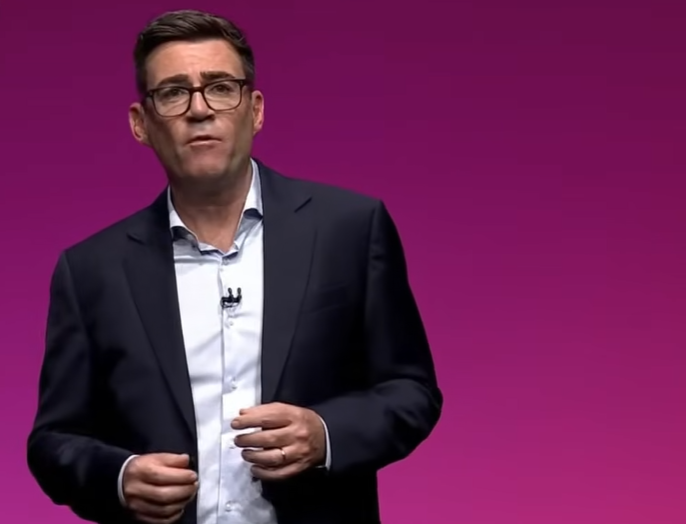
Andy Burnham
Prime Minister Andy Burnham has been blasted over his “fantasy” claim that scrapping the state pension triple lock will bankroll his government’s plans for social care.
Mr Burnham confirmed that from April 2030 the triple lock will no longer exist and that he will “adjust” the state pension uprating, with increases going up in line with inflation or 2.5%, whichever is higher, as he indicated it will “hold its value” relative to earnings. It will become an annual double lock.
He said: “The state pension will continue to rise every year at least by prices or 2.5pc and it will hold its value relative to earnings over time, so pensioners will always share in the rising prosperity of the nation. But this change will generate significant savings which we will use to build up our National Care Service.”
The Treasury clarified that the new measure will include a “new earnings link”, preventing the state pension falling below a share-of-average-earnings threshold, and reports suggest the state pension will never fall below 30% of average earnings under the new rules.
Labour deputy leader Lucy Powell said changes to the triple lock, “over a long period of time”, will create savings to pay for the National Care Service. Powell confirmed in an interview with the BBC that the costings “will be published in due course”.
But the thinktank the Institute for Fiscal Studies said the “savings to the Exchequer from this reform are likely to be relatively small in the first few years. However, over time the new triple lock will prevent the state pension being locked into an ever-increasing level of generosity compared with workers’ earnings, thereby generating significant savings in the long run.”
AJ Bell head of public policy Rachel Vahey praised Mr Burnham for attempting to tackle who pays for social care, calling it a “thorny question” that has been side-stepped by governments.
She said: “The idea that scrapping the triple lock will bankroll social care on its own is simply fantasy. The triple lock has materially boosted the value of the state pension. Spending on the state pension is now £16bn per year higher than it would have been in the absence of the triple lock. But that increase has been built up over 15 years.
“Those spending increases are now baked into the state pension. Moving away from the triple lock is not about reversing those increases. Instead, it means reducing the cost of future state pension increases. Transforming social care such that it becomes free at the point of use under a ‘National Care Service’ will cost billions each year to maintain.
“There’s a mismatch between one policy – scrapping the triple lock guarantee - saving a little over a long period of time, and another – introducing a social care system - costing a lot immediately. The numbers simply don’t stack up, at least until the cumulative annual saving from lower state pension increases adds up to the cost of running a social care system.
“Scrapping the triple lock cannot solve the national care problem on its own. If the government goes down this route, there will need to be additional measures alongside it to get the balance sheet singing. And the sooner the government comes clean on these plans the better.
“Parting ways with the triple lock is far more than an exercise in making a balance sheet add up. Replacing the triple lock guarantee with an inflation link – even one with a minimum increase of 2.5% - risks the state pension gradually losing pace with earnings, and causing pensioners’ income to fall in value compared to workers.”
How the triple lock has pushed up the cost of the state pension
Since it was introduced, the triple lock has resulted in the state pension increasing in line with CPI five times, one of which was the result of a temporary suspension of the earnings link.
Earnings have been used to index the state pension in six years, while the 2.5% minimum applied in four years.
In the first year of the triple lock, in April 2011, RPI was used as a one-off because it was higher than CPI, wages or 2.5%.
As a result, the triple lock has increased the state pension by 89%, while the increase in earnings over the same period, measured by average wage growth from the previous July, has been 66%.

Share this article:

Subscribe to our newsletter to not miss articles like this one:
 SUBSCRIBE