
Cameron Gillies: Repopulating rural Scotland is an economic necessity, not a luxury
 Reading time: 6 minutes
Cameron Gillies
Cameron Gillies argues that rural Scotland is a vital economic engine currently threatened by depopulation, and outlines a comprehensive strategic blueprint, including housing investment and financial incentives, designed to attract residents back to these crucial communities.
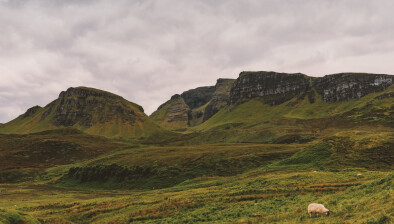
Ninety-eight per cent of Scotland’s land mass is considered rural. That is usually presented as a geographical fact, but Scotland’s rural prevalence is becoming an economic fact too. Many of the industries driving Scotland’s future are rooted in rural places. Yet just as economic opportunity moves outwards, our population continues to move inwards. Rural Scotland is powering huge parts of our economy even as many of its communities shrink.
Take food and drink. Our two biggest exports, whisky and salmon, are born in rural Scotland. Global demand for both is rising. But the communities that sustain these world-leading industries face declining populations, ageing workforces and housing they cannot afford. Without people, brands don’t grow; supply chains don’t strengthen; investment stalls. These industries depend on human capital as much as natural capital.
Energy tells the same story. Scotland’s net zero ambitions don’t hinge on Morningside coffee shops, but on the wind that whips across our coasts, the gravity the pulls water of the side of our mountains and the engineers and technicians who call small towns and islands home. If we are serious about leading on renewables, we need people living and working where this work is actually happening.
Tourism makes the point even more starkly. When the world thinks of Scotland, they don’t imagine office blocks, they picture rugged landscapes and lochanside castles. Our rural communities carry our national brand. But you can’t run a world-class visitor economy without workers, guides, chefs, cleaners and drivers. Empty villages cannot sustain a thriving tourism sector.
And then there is nature. Scotland is one of the few places where landscape-scale restoration is not only possible but already underway. Peatland restoration, woodland creation and habitat recovery are creating the green jobs of the future. They draw investment, support communities and position Scotland at the forefront of climate action.
These sectors don’t just underpin rural Scotland; they are rewiring our national economy.
All of this should be cause for optimism. But too often policies treat rural Scotland as a problem to be managed, not a platform for growth. Meanwhile, population decline continues and the infrastructure required to sustain communities struggles to keep pace.
Other countries have reversed rural decline with practical, targeted interventions: delivering the housing needed, improving connectivity, creating the right incentives and empowering local communities. Scotland can do the same.
Drawing on lessons from across the world, rural business organisation Scottish Land & Estates has set out a blueprint for our political leaders on how we can achieve it domestically. If rural Scotland hosts many of our biggest economic opportunities, then repopulation is not a ‘nice to have’, it is an economic necessity. That means enabling people to live where they are most needed: in communities with affordable homes, decent transport, and real prospects. It means backing entrepreneurs who want to build businesses outside the M8 corridor. It means seeing rural Scotland not as the edge of the map, but as a vital cog in our economic future.
Our approach starts by establishing ‘Repopulation Priority Areas’ (RPAs) where population decline, service fragility and labour shortages are most acute. Each area would have a local Repopulation Board comprising councils, enterprise agencies and businesses to drive change quickly and coherently – with a laser focus on delivering what is most needed most for their particular region.
Housing is the number-one barrier to rural growth and requires decisive action. A Rural Homes Accelerator would provide a ring-fenced, needs-based pot to deliver genuinely rural homes to refurbish derelict buildings, support rural housing associations and ensure funding reaches the communities that need it most.
We would pair this with measures that make it easier for people to live and work in rural Scotland: a Rural Retention & Return Scheme for under-35s; student loan write-downs for priority professions; and an RPA Employer Allowance to help rural businesses create year-round, well-paid jobs.
Services matter too. When the last shop, fuel station or post office closes, a community’s viability can collapse. A Fragile Service Grant will help keep essential facilities open. And because connectivity is a lifeline, we would accelerate rural broadband rollouts and guarantee better transport links through a Rural Mobility Guarantee.
At a time of stretched public finances, many will scoff and claim it is an unaffordable pipedream. However, according to our estimate – and depending on the options adopted by government – we believe it could be achieved for a sum of £80 million to £150m per annum.
Above all else, the key factor is delivering a plan beyond the usual silos. It may be great to improve broadband provision and increase the potential for home working – but if there are no homes available to purchase and no schools to send your children to then it remains an unviable option.
Our proposals are just the start of the conversation. Whilst not every politician may agree with every word we have set out, we hope that this can be a starting point to finding solutions that work.
By joining up and tackling all the factors that drive people away from our rural areas under a cohesive depopulation strategy, we can move away from the piecemeal efforts that are so often doomed to failure before they have even begun.
None of this is abstract. Tackling this issue has worked in many countries abroad and there is no reason it cannot work in Scotland. Our plan is focused and evidence-led to ensure the vast regions of Scotland that produce our food, drink, energy, timber, climate solutions and world-class landscapes have a sustainable population to match their economic importance.

Cameron Gillies is head of external affairs at Scottish Land & Estates

Share this article:

Subscribe to our newsletter to not miss articles like this one:
 SUBSCRIBE