

Written by:

ECB raises rates again, signals December hike still on the table
 Reading time: 3 minutes
Written by:
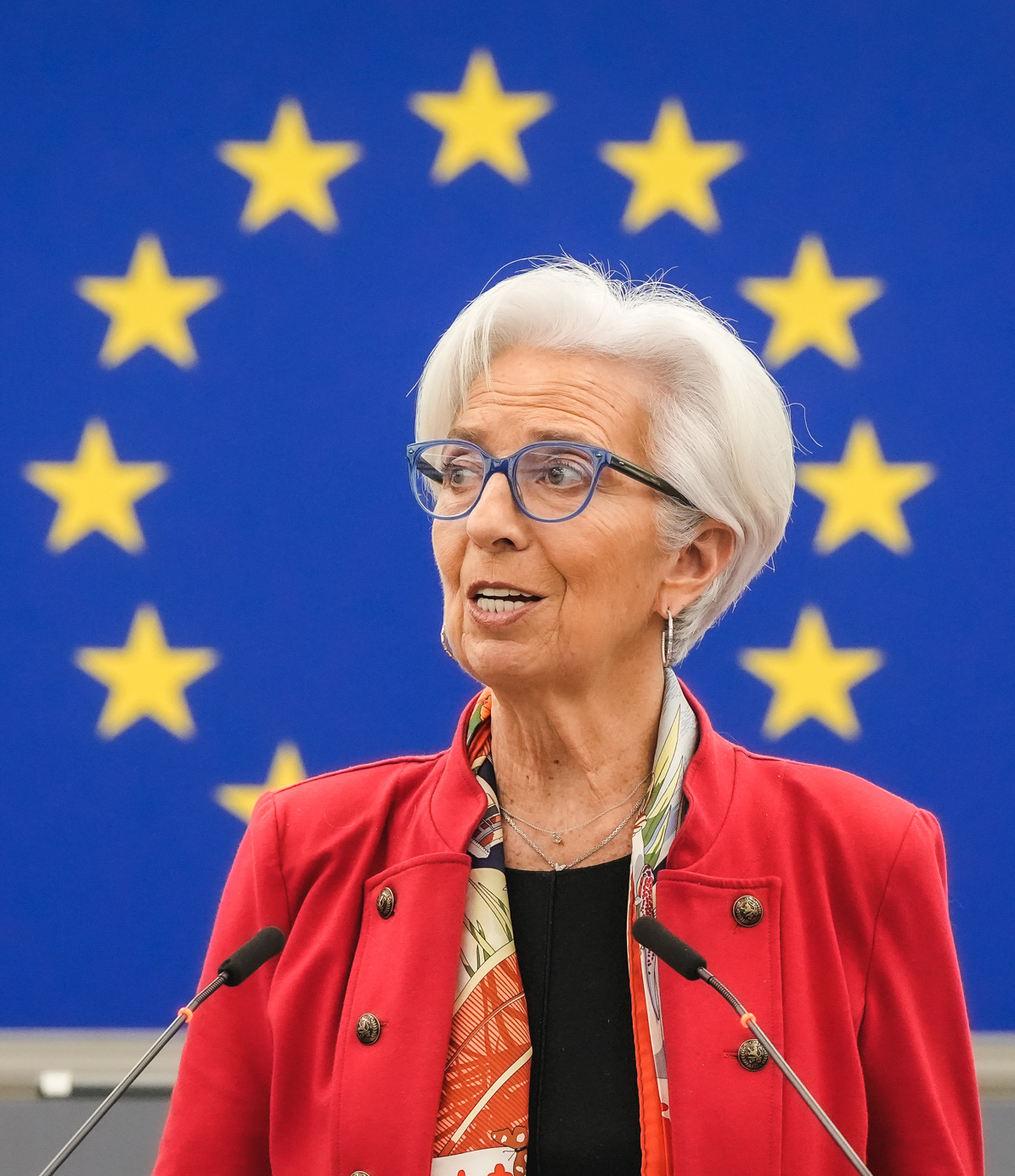
The European Central Bank (ECB) has raised its key interest rate by 25 basis points following price pressures triggered by the conflict in the Middle East, predicting inflation will remain “well above target” for an extended period.
The ECB’s Governing Council voted on Thursday to raise all three of its interest rates by the same amount, taking the key main refinancing operations rate to 2.65%, and the deposit facility and marginal lending facility to 2.50% and 2.90%, respectively. The marginal lending facility was last that low in March 2025.
ECB staff have projected headline inflation to average 3.0% in 2026, before easing to 2.5% in 2027 and 2.1% in 2028, with the latter two years’ numbers revised higher than previous estimates in June.
Core inflation, which excludes the more volatile food items and energy, will average 2.5% in 2026, 2.6% in 2027 and 2.3% in 2028. While the eurozone has shown “greater-than-expected resilience,” according to the ECB, the outlook remains “highly uncertain,” with risks to the downside for economic growth. The single currency economy is expected to expand by 0.9% in 2026, 1.4% in 2027 and 1.5% in 2028, according to ECB forecasts.
At the same time, inflation risks remain to the upside, the ECB said. The latest Eurostat figures showed the annual rate of inflation rising to 3.3% in August from 2.9% in July following a renewed spike in energy prices. This was the highest level since September 2023.
“With today’s decision, the Governing Council remains well positioned to navigate the uncertainty caused by the conflict. It will follow a data-dependent and meeting-by-meeting approach to determining the appropriate monetary policy stance,” the ECB said in a statement.
The central bank added that policymakers were not pre-committing to a particular rate path. Christine Lagarde, the ECB’s president, said the decision to raise rates was a “no-brainer”, explaining: “We believe that inflation will be longer lasting than we anticipated.”
In a sign of the upward pressure on prices, the ECB lifted its inflation forecast for next year to 2.5 per cent from a June prediction of 2.3 per cent.
Felix Feather, Economist at Aberdeen, said: “The ECB’s decision to raise interest rates by 25 basis points to 2.5% was widely anticipated. More important than the move itself is that the ECB has used this meeting to acknowledge a stronger economy and a more persistent inflation outlook than it expected just a few months ago.
“The updated forecasts are telling. The eurozone has proved remarkably resilient despite higher energy prices and geopolitical uncertainty, leading policymakers to revise growth expectations higher. At the same time, inflation forecasts have also moved up, reflecting elevated energy costs and concerns that inflation could remain above target for longer.
“Taken together, today’s decision signals a Governing Council that is becoming less confident that 2.5% is necessarily the end point of this cycle.
“Rather than signalling the end of tightening, the wording of the decision’s summary left the door open to further rate increases if inflation pressures fail to moderate. We expect the ECB to hike again at its December meeting.”

Share this article:

Subscribe to our newsletter to not miss articles like this one:
 SUBSCRIBE