
Food and drink sector continues to invest despite growing cost pressures
 Reading time: 3 minutes

Adam Hardie
UK food and drink businesses are investing substantially in innovation and product development to remain competitive and secure their future in an increasingly challenging market, according to a new survey of the sector, commissioned Johnston Carmichael for its annual food and drink report.
The research, which questioned businesses about industry challenges and opportunities over the past 12 months, highlights a number of pressures facing companies and how they are fighting to prosper without significantly raising prices for consumers.
While 56% of respondents reported feeling optimistic, this represented a drop from 58% in 2025’s survey and 68% in the year previous.
The main area of cost concern for companies continues to be labour with 56% citing it as their most increased outlay and three quarters reporting a rise of 5-20%. The increasing price of raw materials was the second most cited factor (23%). These pressures contribute towards 91% of businesses reporting a cost base increase up to 20%.
However, more than half (53%) have raised their prices for consumers by just 0-5%, conveying a willingness to not burden customers with price increases and instead absorb costs or find additional revenue elsewhere.
From a policy perspective, 57% reported that taxation was the greatest regulatory impact due in part to the rise in both the National Minimum Wage and National Insurance contributions.
Despite reduced optimism and increased costs, there remains a determination to succeed and grow with 79% of firms having invested in innovation or new product development, including 30% who said they had invested “significantly”. Linked to this, more than 64% are innovating on the back of customer or market-led trends.
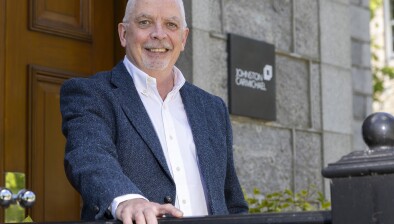
Adam Hardie, partner and Head of Food and Drink, said: “This year’s survey has really showcased the stark challenges and contrasting opportunities facing businesses in the food and drink sector.
“Rising labour costs continue to hit companies hard and it’s created an environment that makes it extremely challenging to succeed in. Without gaining any recent budgetary incentives, businesses are having to continue to absorb costs with little hope on the horizon.”
Food and drink firms continue to face frustrations when trading in the European Union (EU) too. Only 12% reported being more positive about trading in the EU compared to 12-months ago, citing barriers to trade, economic uncertainty, and challenging customs as continuing challenges.
What’s more, 50% of businesses have secured funding from elsewhere in the past 12-months and 41% are to look into receiving additional funding in the next year.
Mr Hardie added: “What is understandably causing exasperation is that the external pressures related to taxation, labour and tariffs are beyond the control of the businesses that are contending with them. 70% of respondents reported that these increasing cost pressures are keeping them up at night – this shouldn’t have to be the case.
“As it is, companies are showing an abundance of resilience and determination to firstly survive and secondly to grow. Whether by seeking investment or reinvesting themselves, there is widespread vision and entrepreneurial talent in the sector that’s both admirable and necessary.
“For food and drink businesses to thrive they need to be able to adapt and pivot with speed when opportunities arise. The sector is vital to Scotland’s economy and international outlook and it will take forward-thinking business minds to ensure optimism levels rise.”

Share this article:

Subscribe to our newsletter to not miss articles like this one:
 SUBSCRIBE