Written by:

Founders fear a shortage of people, not too many, says Scottish Mortgage manager
 Reading time: 4 minutes
Written by:
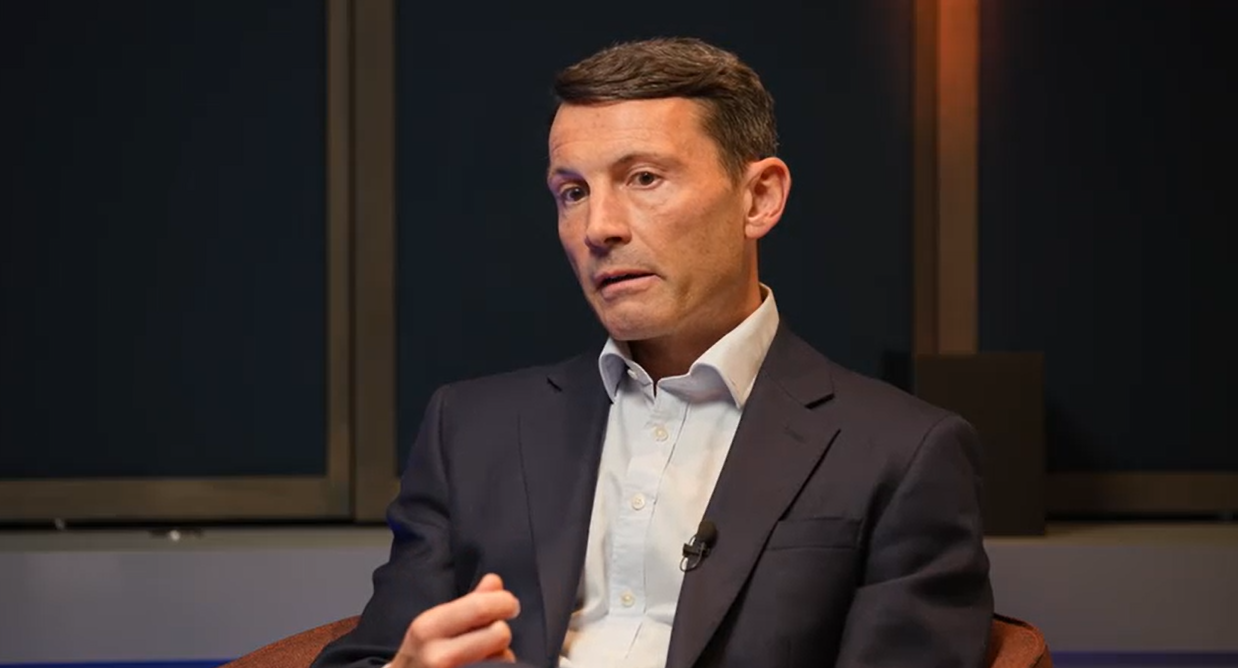
Scottish Mortgage Investment Trust manager Tom Slater
Scottish Mortgage Investment Trust manager Tom Slater has revealed that founders of the “brilliant” companies that they back raised concerns over a “shortage of humans”.
Mr Slater made the comments at the trust’s digital conference, responding to questions from shareholders and investors about what had changed his view over the past year.
The conclusion from the managers was that AI will widen the gap between companies and not close it. Earlier in the conference, AI expert Professor Ethan Mollick said research pointed the same way.
Mr Slater said: “I think there is this fear out there about what AI is going to be in the downside. I think that is absolutely understandable. I think there’s going to be huge changes in the jobs market and the type of roles people do and therefore the type of roles people train for - there’s a real dislocation.
One message I’ve got consistently from some of the brilliant people I’ve met that run companies is what they’re worried about is a shortage of humans, not too many humans and human weakness. I think the fear comes from this idea that there’s a fixed amount of work to be done and if AI doesn’t increase the pressure of that work, then we’ll need fewer humans to keep the same thing.
“I think what you hear time and time again is there’s no shortage of ideas, about economic opportunities, wants and needs of consumers and then you’re more and more to us than we have to go after solving these problems. I think that is the overarching idea.”
Mr Slater said AI could mean “enterprises, big companies have fewer employees”, but that “if you’re an entrepreneur what you can accomplish now using this technology, what you and a small team can accomplish, is so much greater, so maybe we get smaller, large companies but lots more smaller companies.”
The founders were not named.
His co-manager Lawrence Burns said the gains would not be shared evenly, calling AI an “amplifier of the very best organisations” and “not a leveller”. He highlighted conversations with people in the industry about competitors having the “same access and same model”, but in regulated industries it takes two years to approve a decision.
Mr Burns said it was “multiple generations in the world of AI… so it goes back to those points around founder, leadership, culture, data that you’re seeing some companies that are absorbing AI re architecture, saying we are picking ourselves around it and potentially beginning to show very different outputs from what they’re able to achieve in that technology”.
He explained that distinction is very “interesting” to them as they are “active managers” and don’t “own the entire index”, adding that “we think there are a small number of exceptional companies, so this pool is allowing some successful companies to become even more exceptional and I think that becomes very interesting for us.”
Asked by Mr Burns whether AI was “a democratic tool that makes them all equally better” or “an amplifier”, Mr Mollick said early research found AI lifted the weakest performers.
“More recent research suggests that people who are already experts get an even higher return to AI,” he said. Between companies, the gap is wider: “The organisational level, the results are even more extreme.”
Mr Mollick said the test is what a company has stopped doing, one of four questions he puts to companies. “If you haven’t stopped doing anything, you know, something’s wrong,” he said.
He offered no ready answer on what comes next. “Nobody knows anything for sure,” he said. “We also have to invent this future, as well as just react to it.”

Share this article:

Subscribe to our newsletter to not miss articles like this one:
 SUBSCRIBE