
Highland Council pauses Visitor Levy plans as Stirling presses ahead
 Reading time: 2 minutes

The Highland Council has agreed to postpone the implementation of a Visitor Levy Scheme to await new primary legislation from the Scottish Government.
At a meeting on Thursday, 11 December 2025, council members voted to pause proceedings until they can evaluate new statutory powers expected in early 2026.
The Scottish Government intends to introduce legislation early next year giving councils greater flexibility in how they design tourism taxes.
While previous discussions focused on a percentage-based model, the new powers will allow local authorities to choose between:
- A percentage-based levy.
- A single fixed amount (flat fee).
- Differentiated amounts based on factors such as the time of year or accommodation type.
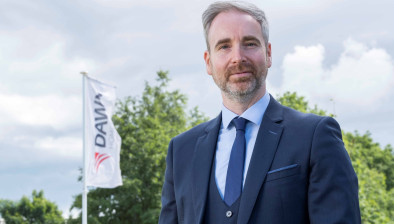
Councillor Bill Lobban, convener of The Highland Council, welcomed the move toward greater flexibility. Although the council has already analysed over 4,000 responses regarding a percentage model, cllr Lobban stated that further assessment is required to ensure the final scheme is “practical and sustainable.
“Our next steps are to evaluate the impact of applying the new charging models being brought forward by the Scottish Government,” said cllr Lobban. “This assessment will consider a range of matters, including the visitor economy in Highland, income potential, and local impacts.”
Once the legislation is published, council officers will review the options and report back. Any new proposal will require member approval and a subsequent 12-week statutory consultation.
The Association of Scotland’s Self-Caterers (ASSC) welcomed the Highland Council’s decision. Fiona Campbell MBE, CEO of the ASSC, described the pause as “sensible and constructive”, noting that a flat-fee model – which the new legislation may facilitate – is the industry’s preferred option for fairness and ease of use.
Conversely, Stirling Council has chosen not to wait, deciding instead to proceed with a 3% seasonal tourist tax. The move drew criticism from the ASSC, who expressed disappointment that Stirling did not follow the “prudent step” taken by Highland and other authorities.
“For the operators who will actually be responsible for administering the levy, a flat-fee model remains the simplest and most workable option,” Ms Campbell stated, urging Stirling to reconsider.
The landscape for visitor levies across Scotland remains varied. Schemes have already been approved in Edinburgh, Glasgow, Aberdeen, and West Dunbartonshire. Currently, seven other local authorities are in the active stages of consultation, while seven have decided to pause or halt their pursuit of a levy entirely.

Share this article:

Subscribe to our newsletter to not miss articles like this one:
 SUBSCRIBE