
Written by:

John Healey stakes Budget on “fiscal discipline” as borrowing costs hit two-decade high
 Reading time: 4 minutes
Written by:
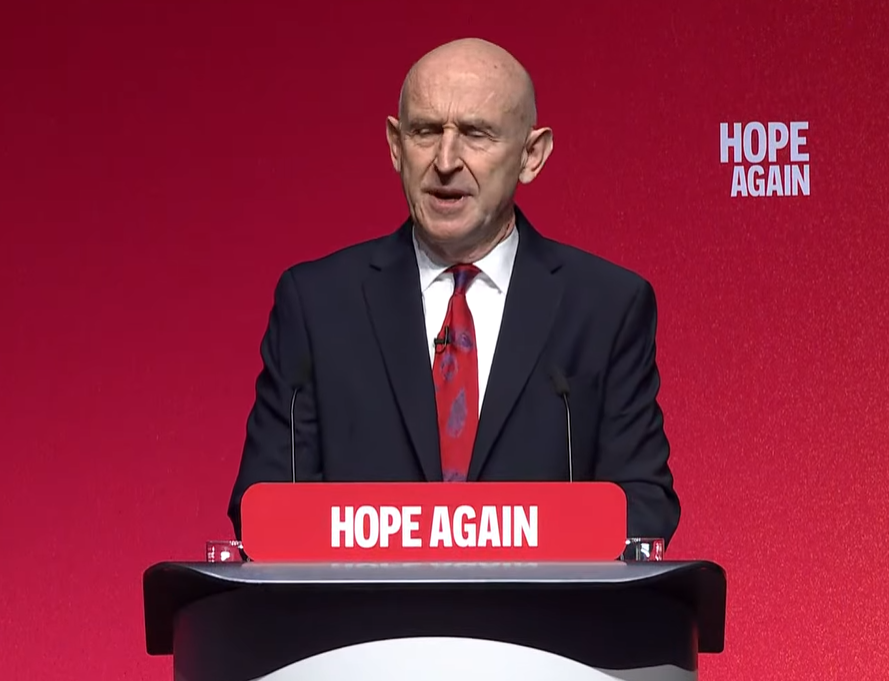
Chancellor John Healey
Chancellor John Healey has promised to restore hope to the UK through “fiscal discipline,” supporting “good work” and “strong industries,” in a major speech ahead of the Budget.
Mr Healey used his speech at the Labour Party Conference to focus on fiscal policy, stating that it was “not progressive” to fail to balance the books amid rising welfare bills and borrowing that continues to climb to record levels.
The Chancellor of the Exchequer promised Andy Burnham’s government will keep its word on delivering growth, jobs, national security and public services, warning that the Budget will need to take into account challenging global affairs.
He set out measures to support “growth in every postcode” and jobs, as he insisted he would balance the books, following the government’s announcement of a new Help to Buy scheme, which has seen shares in housebuilders jump by 13-15%.
He said: “On day one as chancellor I said my first duty is fiscal discipline, and I’ll tell you why. It underwrites every promise this government makes on growth, on jobs, on national security and on public services. We can’t succeed without it.
“And that’s why the prime minister and I are united in meeting the fiscal rules, balancing the books with a buffer against uncertainty, controlling borrowing to bring down inflation, and reducing long-term pressures on our finances, and confidence.
“That commitment is so important. There is nothing progressive about losing control, because it’s always working people who pay for it.” He explained that the party would earn the trust of the people and restore hope “through fiscal discipline, through good work, through strong industries.”
Mr Healey’s speech comes against a backdrop of volatility in financial markets, as the war in Iran rattles the global economy, high energy prices begin to squeeze, and UK borrowing costs rise to their highest levels in almost two decades.
Economists have warned that the chancellor is likely to increase taxes, such as capital gains, or cut spending in response to the rising spending pressures. Mr Healey also used the speech to signal that the party was planning to tackle a rise in youth unemployment, stating that it “falls to us to act” to overhaul the benefits system, as it is “simply not progressive to allow a bigger and bigger benefits bill.”
He added: “Britain has it harder now. We had 13 years of flatlining Tory growth in living standards when Cameron’s austerity gutted our public services, when Johnson’s Brexit hammered our exports, and Truss’s mini-budget crashed our economy. As Andy has argued, this country has seen political power centralised, economic control privatised, Britain de-industrialised.
“And the result? Too many people today feel that Britain hasn’t been working for them, for their family, and for their area.”
Lizzy Galbraith, senior political economist at Aberdeen Investments, said: “Chancellor John Healey will be constrained at the 28 October Budget by his commitment to the current fiscal rules and Labour’s manifesto commitment to avoid raising VAT, income tax, employee National Insurance, and Corporation Tax.
“Current fiscal headroom is estimated at around £10bn-£15bn, a significant drop from the £23.6bn Office for Budget Responsibility (OBR) estimate in March 2026.
“Healey seems to be comfortable leaving headroom around this level, rather than rebuilding it to the £20bn+ levels Rachel Reeves increased it to. But, given recent spending announcements, further tax rises are likely. Capital gains tax is one obvious lever Healey may pull, although we expect further reform, rather than equalisation with income tax.
“Yesterday the government announced a new version of the Help to Buy scheme for first-time house buyers, which has driven a 13-15% rise in housebuilder share prices this morning.
“Still, concern over the growing tax burden will mean the overall size of the fiscal package at the Budget is likely to be fairly contained.
“Finally, speculation has continued to mount over the prospects of Prime Minister Andy Burnham calling an early snap election. But we still think this is unlikely. While Labour’s polling numbers have improved under Burnham, they still point to a hung Parliament.
“We are expecting a fairly small UK Budget due to the constraints on government finances, with tougher decisions on welfare, youth unemployment, social care, and long-term defence spending pushed to next year’s spending review and the release of Burnham’s 10-year plan.”

Share this article:

Subscribe to our newsletter to not miss articles like this one:
 SUBSCRIBE