
Written by:

Nationwide profit jumps 23% as boss pledges human-led AI
 Reading time: 5 minutes
Written by:

Dame Debbie Crosbie
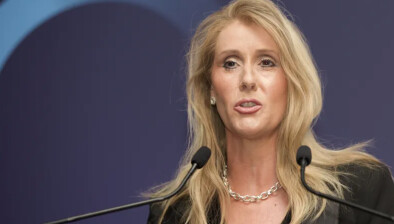
Dame Debbie Crosbie has claimed Nationwide is doing things “differently with AI”, promising “humans are always in the loop” as the building society reported a 23% increase in its underlying profit before tax to £1.2bn in the first six months of the year, from £977m over the same period last year.
The group chief executive said the firm is using AI extensively to help serve customers better, revealing it is used to detect patterns in fraud, to prevent it and even to detect the crimes.
Dame Debbie revealed AI is being used to help advise employees on the information they provide to clients struggling with complex finances, those in financial difficulty or those who are bereaved.
During a media call, the chief executive said the building society was putting “humans at the centre of how we serve people”, explaining that it is using AI differently and in a way that supports its members.
She said: “We are focussed heavily on retraining existing colleagues in how to use AI. We have an extensive training programme, from using simple AI tools like Co-Pilot. We’ve got 3,000 of our engineers who use AI to help with coding. The story for us is about training. Our ethos is different and we want to retain that talent. We are doing a huge amount of training.”
When asked about agentic banking, Dame Debbie revealed the building society was working on developing an offering for its members around agentic commerce, where AI agents can buy products on your behalf, adding: “What we want to do is to support and safely protect them from fraud and have choice of services in a safe and secure environment.”
The building society expects to see an increase in staff numbers over the next few years, as technology and third-party platforms cut its costs and allow it to invest in its staff. It plans to recruit 800 people to support its business banking, and promised there won’t be “many job losses” as part of the integration with Virgin Money.
Nationwide saw its net mortgage lending soar to £7.7bn in the months to September 30, 2026, from £4.7bn in the same period last year, as it delivered £1.4bn in value for its members, including a fourth fairer share payment totalling £440m.
Underlying profit before tax increased by 23% to £1.2bn in the first half of 2026, from £977m over the same period last year. It reported a statutory profit before tax of £673m, up from £486m, after the fairer share payment.
Total underlying income increased 7% to £3.31bn from £3.1bn. Underlying net interest margin increased to 1.62% from 1.58%. Underlying costs decreased from £1.98bn to £1.91bn, despite a planned increase in integration spend.
The building society’s market share of balances increased from 16.3% on March 31, 2026 to 16.4%, a 0.1 percentage point rise. It also reported growth in retail deposit balances of £8.2bn to £279bn, over a quarter of market growth, with its market share increasing from 12.2% on March 31 to 12.4%.
It also recorded £24bn in business deposit balances, up from £22.8bn on March 31, 2026, with business lending growing by £300m to £15.2bn.
In its interim report, Dame Debbie Crosbie said it was the “best ever” first half of a year for new personal current account openings, and that it achieved a 46% share of student current account openings, with a record of more than 87,000 accounts opened.
It has also commenced customer migrations from Virgin Money to Nationwide-branded products and is piloting co-servicing of Nationwide customers in selected Virgin Money branches. It remains on track to launch its Nationwide-branded business banking in the first half of 2027, initially focusing on the needs of the UK’s sole traders and microbusinesses.
It is also planning to acquire more businesses to support its growth thanks to “lower margin costs”, Dame Debbie revealed during the media call.
The average liquidity coverage ratio over the 12 months ended 30 September 2026 remained significantly above regulatory requirements at 180% (12 months ended 31 March 2026: 169%), underpinned by well-diversified sources of funding. It also maintained a peer-leading common equity tier 1 (CET1) ratio of 18.8% (31 March 2026: 19.1%) and a leverage ratio of 5.4% (31 March 2026: 5.3%).
She added: “It’s been a really great six months and our mutual model is delivering choice to our customers. Once again, we’ve delivered market-leading growth in mortgages and retail deposits. We’ve opened more Nationwide personal current accounts than ever before, including almost half of all new student accounts, and we’ve been recognised as number one in the UK for customer satisfaction. That shows the strength of our mutual model: giving people choice, good value and service they can rely on.”
Nationwide’s chief financial officer, Muir Mathieson, said: “Reduction in costs doesn’t relate to people-related costs. We are very proud about delivering efficiency and productivity for our members through technology and third-party expenditure. We are very, very pleased about that.”

Share this article:

Subscribe to our newsletter to not miss articles like this one:
 SUBSCRIBE