

Written by:

Overhaul of youth benefits and employer cash incentives proposed to tackle NEET rates
 Reading time: 5 minutes
Written by:
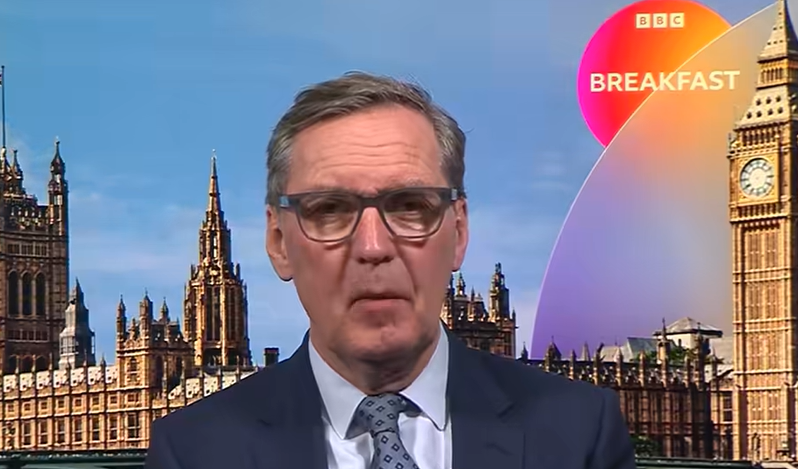
Alan Milburn spoke about the review on BBC Breakfast
A major review has recommended that employers be given a cash incentive for hiring young people not in education, employment or training (NEET), to help reduce the scale of the problem.
The report suggested employers could receive £3,000 for hiring someone who has been inactive for six months, or £2,000 if the young person is in care or disabled.
The 267-page report made several recommendations to the UK Government and the NHS to tackle the issue and avoid a lost generation. However, most of the recommendations were aimed at young people in England and Wales.
It called for a complete overhaul of the benefits system, recommending that under-25s would no longer qualify for Universal Credit and would instead receive a Youth Allowance at the base level. To help with the extra costs of being disabled, Personal Independence Payment (PIP) would be scrapped and replaced by two funds: one for ongoing costs and the other for one-off expenses.
Former Labour politician and chair of The Social Mobility Foundation, Alan Milburn, who led the review, also recommended that employers’ National Insurance thresholds be raised over the next five years from £5,000 to £10,000 for those aged 21 to 24 working in retail and hospitality, to make this age group cheaper to employ.
He also called for the UK Government to double the number of young people completing apprenticeships by 2036, to provide an alternative route to university.
The report also called for an expansion of post-18 college places, with an extra 150,000 18-to-24-year-olds taking up further education. Regional mayors have been encouraged to work with local employers to develop new industry-led technical colleges or specialist campuses.
Milburn said modelling carried out for the review suggests that these reforms, alongside other changes, would help around 440,000 young people into work by 2036.
He also said that reducing the NEET rate should be a “formal objective” for health boards [or “integrated care boards”, depending on which nations are covered], stating that “half measures will not do” and that the NHS operating model requires a “radical shift” if the care model is to change.
The report added: “A radical shift in the NHS’ operating model will be needed if a fundamental change is to take place in the care model. So reductions in NEET rates should become a formal objective for every local NHS integrated care board (ICB).
“There should be a new legal requirement placed on ICBs to work with MSAs (mayoral strategic authorities) and other local agencies to increase youth participation and in doing so ensure that provision of services for young people is properly integrated. ICBs and providers should be expected to explain poor performance, produce an improvement plan and, where necessary, face intervention.”
Work and Pensions Secretary Pat McFadden says the prime minister and the whole cabinet have endorsed the need for a brand-new system but he did not make clear if the thrust of the report outlined by Milburn was accepted.
He said the government will set up a new Youth Opportunities Unit, which will report to the Prime Minister before confirming a white paper in the new year will set out how the government plans to introduce some of the reforms.
Milburn acknowledges the savings in his plan will only happen after 10 years, with the government projected to spent £5.6bn a year on youth support outlined in the report, by 2036/37, if it followed through on all of his recommendations.
He claimed in the same year his measures would have cut the welfare bill from £3.6bn and £2.4bn more in tax receipts, providing an overall saving of £200m in that year, with the saving expected to rise every year after.
Kristina Church, group head of sustainability at Aberdeen Group and chair of the Aberdeen Group Charitable Trust, said: “The review is right to recognise that there is no single explanation for why so many young people are out of work. But the focus on intervening earlier and creating clearer routes into work matters, because these are practical steps we can take to address some of these barriers. Proposals such as pre-apprenticeships and meaningful work experience could provide an important first rung on the ladder for young people who might otherwise struggle to make that initial step.
“But getting a young person into work is the beginning, not the end, of the journey. Our research shows that, among under-30s who are out of work but want a job, 37% say there are not enough suitable opportunities, 25% say available jobs do not offer the hours or flexibility they need, and 24% face transport or travel difficulties.
“These are complex, interconnected barriers, and they cannot be solved by schools, employers or government acting alone. National ambition must be matched by locally led partnerships that bring together education, employers, councils, charities and financial services.
“Young people also need practical support to manage the transition into work, build financial resilience and establish the foundations for longer-term financial wellbeing. The proposed locally led support model provides an opportunity to connect employment and skills support with the wider barriers young people face. Success should be judged not just by how many young people enter employment, but by whether they can remain in work, progress and achieve lasting financial security.”

Share this article:

Subscribe to our newsletter to not miss articles like this one:
 SUBSCRIBE