
RBS: Scottish business activity falls as inflation rises and market uncertainty intensifies
 Reading time: 4 minutes

Judith Cruickshank
Scottish private sector firms recorded a fresh decline in business activity at the start of the second quarter, the latest Royal Bank of Scotland Growth Tracker has revealed.
The headline Royal Bank of Scotland Business Activity Index – a seasonally adjusted index that measures the month-on-month change in the combined output of Scotland’s manufacturing and service sectors – posted below the neutral 50.0 threshold that separates expansion from contraction in April, falling to 48.0 from 50.1 in March. The index therefore indicated the first reduction in Scottish private sector output in four months.
Sector data revealed a drop in business activity at service providers. However, manufacturing production broadly stabilised following a 33-month run of reduction.
At the same time, greater global economic uncertainty and sharply rising costs weighed on firms’ projections for the year ahead. Furthermore, operating expenses increased across Scotland’s private sector at the fastest pace in 41 months in April. Where a rise in costs was observed, firms widely attributed this to higher fuel prices due to the war in the Middle East. Increased labour costs were also mentioned.
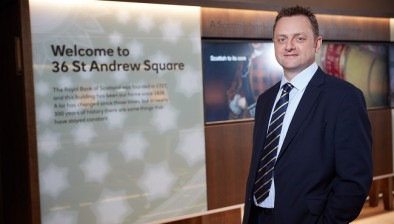
Judith Cruickshank, Scotland Board chair, Royal Bank of Scotland, said: “Continuing geopolitical tensions contributed to increasing inflationary pressure and ongoing market uncertainty, which are difficult headwinds for Scottish businesses.
“As a result, business activity fell for the first time in four months in April, while forward-looking indicators, such as new orders, point to challenging market conditions in the coming months.
“Consequently, we see that firms are increasingly focused on managing their costs in the face of these pressures. Furthermore, the latest survey showed employment falling after expansions in the previous two months.
“In summary, our Royal Bank of Scotland Growth Tracker for last month highlights considerable pressures on businesses. We will continue to review their impact on our customers and how best we can support them through these challenges.”
Performance in relation to UK
The renewed decline in overall output across the Scottish private sector contrasted with a stronger upturn in activity across the UK as a whole.
Scottish private sector firms signalled a nineteenth consecutive monthly fall in new business in April. The pace of decrease was the fastest in four months. Panellists noted that the conflict in the Middle East, and the subsequent rise in energy prices and market uncertainty, had underpinned the latest fall.
Of the 12 monitored UK regions and nations, Scotland recorded the steepest decline in new orders.
Businesses across Scotland were cautiously hopeful that demand conditions will improve and planned to introduce new products and expand into new markets. That said, the degree of confidence fell to a 40-month low as geopolitical uncertainty dampened projections at some firms.
Only firms in Northern Ireland were less upbeat about their activity outlook than those in Scotland.
Following a two-month sequence of modest growth, staff numbers across Scotland’s private sector fell in April, with the rate of reduction the fastest seen since last August. Fewer sales and increasing overhead costs were key factors cited by panellists who had cut their workforce numbers.
That said, the pace of job losses across Scotland was slower than that recorded at the UK level.
April data pointed to a ninth straight monthly decrease in backlogs of work across Scotland, thereby highlighting a sustained lack of pressure on capacity, however the pace of decline was the slowest in three months.
While outstanding business fell across all the 12 nations and regions monitored by the survey, only firms in Yorkshire & Humber and Wales recorded faster rates of depletion than seen in Scotland.
Turning to expenses, the rate of inflation in Scotland was substantial, but slower than the UK-wide trend.
Prices charged for Scottish goods and services rose again during April. The rate of output price inflation accelerated for the second straight month to the highest since January 2023, reflecting companies’ efforts to partly transfer higher expenses to customers.
Though historically marked and substantial overall, the extent to which charges rose across Scotland was the weakest of the 12 monitored UK regions and nations.

Share this article:

Subscribe to our newsletter to not miss articles like this one:
 SUBSCRIBE