
Written by:

Scotland’s Private Finance Initiative revival faces lender and construction cost hurdles
 Reading time: 9 minutes
Written by:
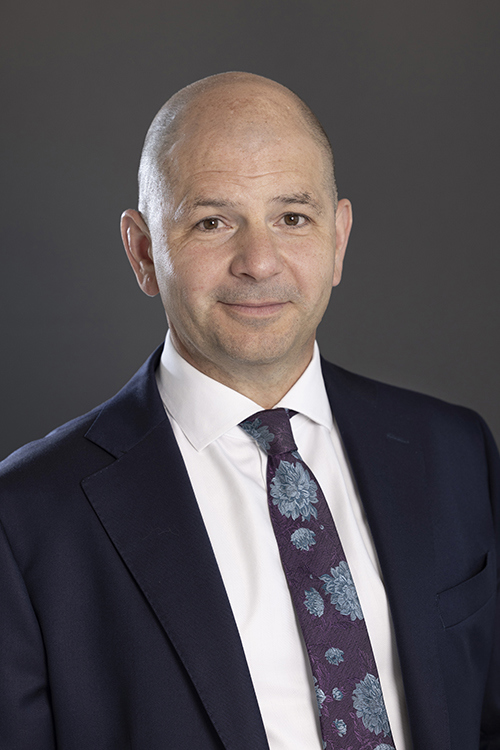
Rod Munro
The Scottish Government is exploring new ways to privately finance major public infrastructure projects, with the Scottish Futures Trust leading work on alternative funding models as pressure on public finances constrains capital spending.
The trust is working with the market on a revised approach to infrastructure finance, with a project expected to come to market in the second quarter of 2027, according to Rod Munro, a partner at Morton Fraser MacRoberts (MFMac).
Law firm Browne Johnston is drafting a proposed national public-private partnership (PPP) framework for Whitehall and UK policymakers. The scheme will be a blueprint for a central PPP delivery body modeled after Ireland’s national Development Finance Agency.
The proposed framework would give metro mayors greater autonomy over local infrastructure, supported by multi-year funding settlements and enhanced transparency rules intended to address commercial confidentiality concerns associated with earlier PFI models.
Speaking to Scottish Financial News, Mr Munro said the new model was expected to be “reimported to Scotland” from Wales, where the Welsh Government adapted Scottish documentation to create the Mutual Investment Model.
He said: “It’s tinkering. It’s like spray-painting a car and putting new bits in the engine, but it’s largely the same vehicle. It’s a timely question, because for the last few years there have been little to no opportunities for private finance in major public infrastructure projects, other than renewables.”
“From about 1992 to about 2018 there were a number of variations of what we call the private finance initiative. A lot of schools, hospitals and roads were built using private finance, and then politically it became unpalatable, so they stopped it.”
“At the minute, the Scottish Futures Trust is working on a newish model for private finance in Scotland. They are putting the documentation together for a project that we think will come to market maybe in the second quarter of next year.”
“It’s the same law firm that is putting together a similar structure for use in England. It’s some small-scale health centre deals, spread across the west and through into the east as well. There was a lot of criticism, but they said it was too expensive and inflexible, and it got pulled.”
The legal expert was speaking to Scottish Financial News ahead of the Scottish Construction Summit on October 22, which will bring together investors, legal experts, construction firms and public bodies to support new projects in the sector. The event is sponsored by MFMac and Axiom.
The free event at the SEC is expected to attract more than 1,000 construction leaders, contractors, developers, consultants, public sector decision-makers and supply chain experts.
Duncan Osler, partner in MFMac’s public procurement team, said about the event: “Construction is an element in these projects, but we also do procurement and finance – we’re involved in the whole process. What Rod and I are actively looking at is supporting clients, trying to develop models. The models are there. It’s about getting through all the hurdles they need to go through to get things done.
“You need to work out what you want to buy. You need to work out how to finance it. You need to allocate the risks in the project to the party best placed to manage them. These are the things we do all the time. There’s a range of types of construction in the sector, but what we deal with is complex public infrastructure delivery and de-risking it.”
“There’s obviously a high public profile, because when you build a hospital it’s a billion pounds or whatever it is. There’s a public policy issue and a scrutiny point there, and we handle those.”
“We’d have a technical team, a legal team and a financial team when advising on the really big projects. There are some niche teams in the financial and commercial advisory firms that do this.”
“We don’t really have any particular corporate angles, and we don’t currently have a particular specialism in insurance. Most of what we talk to clients about is construction and inflation. It’s a big deal. We work with financial advisers. There’s significant expertise here. We’ve been doing this for 25 years, and Scotland has had a very good ecosystem for it for many years.”
Projects such as the proposed Monklands Hospital illustrate the funding challenges facing major public infrastructure developments, with a PFI-style arrangement potentially allowing the cost to be spread over time.
He added: “You can get stuff done that you might not otherwise be able to do, because you’ve got no cash. To give an example, it’s been all over the press that hospitals are really expensive. Monklands Hospital, the biggest hospital project in the UK, I believe, we’re involved on the public side. It was suspended, but it’s perfectly public that questions were raised about the cost. It’s a very expensive project, as is to be expected
“However, a PFI-type project, or a Mutual Investment Model-type project, or whatever they end up calling this new model in Scotland, whatever badge they give it, allows you to pay for it over time, as opposed to finding several hundred million now, which they just don’t have because there are so many other budget pressures. So it’s a useful tool.”
Mr Munro acknowledged the criticism of PFI but said it remained a useful way to deliver infrastructure. He compared the arrangement to buying a house with a mortgage, but with additional maintenance and services included over the life of the contract.
“With a PFI, you’re not just buying the house, you’re buying a service. Somebody comes in, replaces the carpets and paints the walls, and when your kids smash the place to bits, they come in and repair it. You’re buying the wraparound care of that asset for 25 years. That’s why it costs more, and it was rarely reported.”
“Some council officers say they’re not looking forward to the deal ending, because at the moment they pay a monthly fee and someone else looks after the schools. When it ends, they have to take it back on and find the resource for it elsewhere.”
Mr Munro advises public bodies, government, sponsors, developers, funders and contractors on project finance transactions, including private finance initiative (PFI), public-private partnership (PPP) and non-profit distributing models.
He said finance providers needed a pipeline of projects to justify committing resources, warning that a shortage of long-term lending could limit competition for major infrastructure contracts.
“What’s needed is a sufficient pipeline of projects. With a single project, only one team is successful and two or three are bidding. That’s not enough for firms to think it’s worth investing in advisory teams.
“Everyone wants to see a pipeline. Firms need to see what’s happening over the next few years before they commit resources and hire people. One major player said they’re not doing debt longer than about 10 years. They’re happy with shorter-payback renewables projects.
“If you’re doing deals of 25, 30, 35 years, you need financiers to put their money in for long periods. Some projects may have a reduced pool of interested financiers.”
“You can structure a deal to allow repricing of the debt after 10 years, but then the public sector takes the risk on the new debt terms. It works best in a stable environment. In a long-term partnership like a PFI, construction inflation is a major concern. How do you price for that? These deals are generally done on fixed-price construction contracts. I’m not saying it makes these deals unviable. It makes them more expensive, inevitably, because people will have to price them appropriately.
“It becomes a procurement issue: how authorities approach the market, and what leeway they give for varying prices. The authority has to decide how much risk to transfer to bidders for a premium, or whether to retain it and bear the cost uplift.”
Mr Munro also warned that construction inflation and uncertainty in energy markets could complicate the financing of major infrastructure projects, adding: “Raw components are made using certain energy sources and then shipped here using certain energy sources. At the moment, it’s not looking good.”
“In a long-term partnership like a PFI, construction inflation is a major concern. These deals are generally done on fixed-price construction contracts, sometimes lasting two or three years. If you’re building a hospital, look at the politics, with the Gulf and the Red Sea closed, Saudi Arabia not being able to export, and the US putting an export ban on diesel. Trying to fix your costs in that context is pretty tricky.”
“Construction and energy will be impacted by this uncertainty. I think it’s difficult to launch a new PFI against that backdrop. There’s a whole process around that, the Scottish Transport Appraisal Guidance (STAG). They have to show a positive cost-benefit return. It’s all there, and they can’t do it. It isn’t about showing it would work. It’s a lack of capital. But then lack of capital goes back to who’s willing to invest.”

Share this article:

Subscribe to our newsletter to not miss articles like this one:
 SUBSCRIBE