
Scottish firms welcome Spring Statement calm but fear energy crisis and rising costs
 Reading time: 7 minutes

Finance leaders and business organisations across Scotland have broadly welcomed the Chancellor’s decision to hold firm on fiscal policy, but warn that cost pressures, energy risks and global uncertainty leave little room for complacency.
Chancellor Rachel Reeves presented her Spring Statement to MPs against a backdrop of mounting global uncertainty, with fresh conflict in the Middle East pushing up energy prices and prompting a sell-off in gilts. The Office for Budget Responsibility (OBR) revised down its 2026 growth forecast to 1.1% - from 1.4% in November – while also upgrading its fiscal headroom estimate to £23.6bn and trimming its inflation projection to 2.3% this year. With no major new policy announcements, Reeves described the Statement as a deliberate act of stability. Scottish business figures, broadly speaking, agreed – though many cautioned that the challenges ahead remain formidable.
“Boring can be a very good thing”
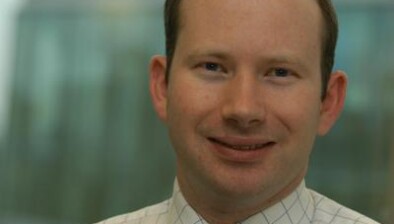
David Ward, partner and head of specialist taxes at Johnston Carmichael, captured the mood of many when he argued that predictability is itself a form of stimulus.
“The UK government advised that the Spring Statement would be boring, but in business, boring can be a very good thing,” he said. “What businesses need above almost everything else right now is certainty, creating confidence to plan, invest and hire, especially as ongoing geopolitical issues create challenges.”

David Ward
Mr Ward acknowledged the lack of action but stressed that business owners’ wish list remains clear: investment incentives and relief from rising employment costs. He welcomed the government’s previously announced adjustment to Agricultural Property Relief and Business Property Relief thresholds, and noted Reeves’ pledge to address youth unemployment – now above 16% among 16-to-24-year-olds – as a necessary step given the increased costs of hiring introduced in recent Budgets.
Johnston Carmichael struck a cautiously optimistic tone overall, but warned that “margins are tight” for businesses still absorbing the rises in the National Minimum Wage, National Insurance contributions and energy bills. “Taxation works best as a stable, transparent framework that backs the people creating jobs and building businesses,” Mr Ward added. “A tax environment that holds steady – where the goalposts don’t move every few months – will provide businesses with the foundation they need to make long-term decisions with confidence.”
Wealth planners flag fast-approaching tax changes
While the statement contained no fiscal surprises, Daniel Hough, Wealth Manager at RBC Brewin Dolphin’s Glasgow office, urged clients not to mistake a quiet Spring Statement for a quiet tax environment. Several significant changes are imminent, most notably the reform of Agricultural Property Relief (APR) and Business Relief (BR) from 6 April 2026, which will introduce a £2.5m cap on qualifying assets – rising to £5m for married couples and civil partners.
“This is a complex area of tax,” Mr Hough noted, pointing to research showing that nearly half of respondents to the firm’s gifting survey were unaware that business relief from qualifying investments cannot be passed to a spouse on death. He urged farmers, family business owners and those with diversified operations to review their estate planning arrangements before the deadline, particularly where activities such as property letting, tourism or renewable energy might affect eligibility for relief.
Small businesses brace for April’s cost wave
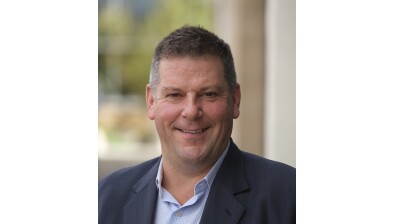
For Scotland’s small business community, the Spring Statement offered scant relief. Guy Hinks, Scotland Chair of the Federation of Small Businesses (FSB), said the downgraded growth forecast surprised no one on the ground.
“No one running a small business will be surprised by the downgrading of the growth forecast for this year,” he said. “Small firms across the country are shelving plans to hire staff or otherwise invest in their businesses in the face of constantly rising costs.”

Guy Hinks
Mr Hinks cited FSB research showing that one in three Scottish small businesses expect to shrink or close in the coming year – and that was before higher business rates and increased employment costs take effect next month. He called on the UK government to stand ready to support small business energy consumers should another price crisis materialise, and pointed to the FSB’s Scottish Election 2026 manifesto as a source of practical proposals for Holyrood to consider.
Roan Lavery, chief executive and co-founder of Edinburgh-based accounting software firm FreeAgent, echoed those concerns, noting that from April his firm’s 200,000-plus business owner clients will face simultaneous changes including rising minimum wages, frozen personal tax thresholds and altered business rates. He also highlighted that Making Tax Digital – which he described as “the biggest change to the UK tax system in two decades” – will come into force on 6 April, though the Chancellor made no explicit reference to it in her statement.
Mr Lavery pointed to FreeAgent’s Business Monitor survey, which found that almost half of small businesses are extremely concerned about cashflow, while one in five have worried about the future of their business due to late payments. He urged the Government to provide an urgent update on its Late Payments Consultation. “Business owners continue to cry out for pragmatic policies that make day-to-day operations easier,” he said, calling for simplified tax rules, measures to tackle late payments and government-backed access to finance.
Chambers welcome stability but sound energy alarm
The Scottish Chambers of Commerce (SCC) had called ahead of the Statement for a halt to volatile policy shifts, and its chief executive, Charandeep Singh BEM, welcomed the fact that the Government had delivered on that front.

Charandeep Singh
“While new policy announcements might make for more exciting headlines, recent experience shows that volatility in fiscal policy can undermine business confidence, force employers to scale back their expansion plans, and have adverse impacts on jobs and wages,” he said. “Predictability allows businesses to plan, invest, and grow, and that in itself is economically valuable.”
However, Mr Singh warned that domestic stability must now be matched by resilience in the face of global shocks. With the crisis in the Middle East deepening and disruption in the Strait of Hormuz placing upward pressure on energy markets, he called on the UK government to use its additional fiscal headroom to protect domestic competitiveness.
Looking further ahead, he said the Autumn Budget “must be the moment to move from stability to strategy,” with a long-term fiscal framework that addresses energy security and unlocks investment.
Tax specialists warn of rising burden and global pressures
Chris Sanger, UK Tax Policy Leader at EY, noted that despite the absence of new announcements, the Spring Statement contained important signals about the trajectory of taxation.
The OBR’s forecast showed the tax-to-GDP ratio rising to an all-time high of 38.2% by the end of the forecast period – a further 0.2 percentage points above the November projection. He also flagged a significant shortfall of more than 40 per cent in expected receipts from the UK’s Global Minimum Tax, driven in part by the exclusion of US multinationals.
Mr Sanger questioned whether the Chancellor’s commitment to confining policy change to a single annual fiscal event was sustainable in an uncertain global environment. “Such strict constraints may risk building up pent-up demand for change, restricting the UK’s ability to adapt accordingly,” he said. He suggested that the Chancellor’s forthcoming Mais Lecture could offer an opportunity to set out her strategy should future tax rises be needed – a signal he argued would be essential if businesses are to plan with any confidence.
Taken together, the reaction from Scotland’s finance and business community reflects a grudging acceptance that fiscal stability is preferable to upheaval — but also a growing anxiety that the Spring Statement’s calm may not survive contact with a turbulent world for long.
For reactions to the Spring Statement from ICAS and ACCA, click here.

Share this article:

Subscribe to our newsletter to not miss articles like this one:
 SUBSCRIBE