Written by:

Showdown at Baillie Gifford US Growth Trust as board accuses Saba of power grab
 Reading time: 5 minutes
Written by:
Baillie Gifford US Growth Trust’s board has warned shareholders that voting in Saba’s nominees would spell the end for its current US growth strategy, as the two sides head towards a showdown at October’s AGM.
Chair Tom Burnet accused Saba of seeking to take control of the popular US Growth Trust, pointing out that if shareholders voted against the trust’s resolutions, allowing Saba’s requisition notice to pass and electing three individuals “linked with or employed by Saba” to the board, it would “severely compromise” the board’s independence.
It comes as the Edinburgh-based trust received a requisition notice in August from Saba Capital Management, which wants shareholders to back the appointment of three directors: Jason Chen, Thomas H McGlade, and James Waterlow.
Saba wants a vote at the forthcoming annual general meeting in October. The board of Baillie Gifford US Growth Trust has now advised shareholders to vote against Saba’s resolutions.
Chen was among four Saba nominees elected to the board of Impax Environmental Markets (IEM), a separate trust, when Saba won control in June 2026. McGlade, a hedge fund executive, has previously been nominated by Saba in its campaigns against US closed-end funds, including those of BlackRock. Waterlow, a former partner at broker Singer Capital Markets, joined Saba in February as its UK managing director.
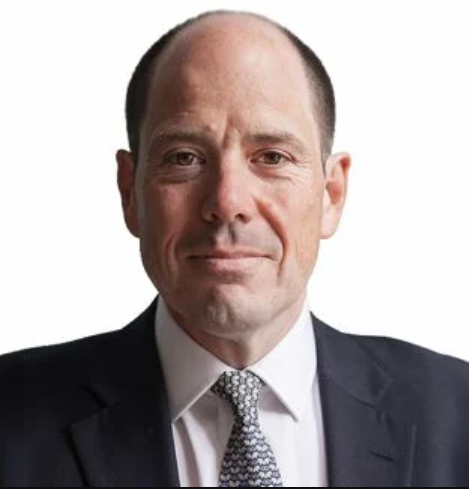
Tom Burnet, chair at BG US Growth Trust
In a circular issued to shareholders, the board confirmed its annual general meeting will be held at the offices of Stephenson Harwood at 1.00pm on 23 October 2026.
The board explained that it engaged with Saba to explore “various opportunities for its exit”, including the option of a cash exit at net asset value (NAV) less portfolio realisation costs, with the investment manager bearing all other transaction costs, at around 99.75% of NAV. Saba rejected the proposals and requisitioned resolutions to appoint the Saba nominees.
The board said: “If the Saba resolutions pass and the Saba nominees are elected to the Board, Shareholders will no longer be represented by a wholly-independent and conflict-free Board.
“Beyond reference to a liquidity event, Saba has not made clear its longer-term intentions for the company, or for those shareholders who wish to remain invested in the current strategy,” warning that the board believes Saba is intent on “obtaining control of the company at the expense of other shareholders.”
The board added that if the Saba resolutions fail and the incumbent directors are re-elected, there is a “clear mandate” for the trust to continue in its current form, and the board will re-engage with Saba to support a “cash exit opportunity at close to NAV”, to allow Saba, and any other shareholders who wish to participate, to exit.
It also warned that if the Saba nominees are elected to the board, “it is the board’s expectation that this would signal the end of the Company’s current successful strategy, heralding its transformation into a vehicle for Saba’s own benefit.”
During the financial year to 31 May 2026, the company’s share price and net asset value (‘NAV’ after deducting borrowings at fair value) returned 44.5% and 31% respectively. This compares with a total return of 29.8% for the S&P 500 Index.
As at 31 May the company held 27 private company investments which collectively comprised 45% of total assets. Turnover in the portfolio over the financial year was 23.7% which is consistent with our five year plus time horizon.
Two new private company investments were made: Anthropic and OpenAI.
Twelve listed holdings were added to the portfolio: Alphabet, AppLovin, Axon Enterprise, Broadcom, Circle Internet Group, Coinbase Global, Figma, Knife River, Mastercard, Medline, RBC Bearings and United Therapeutics.
Airbnb, Capital One, Chewy, Datadog, Doximity, Globant SA, Ginkgo Bioworks, Inspire Medical Systems, Penumbra, Pinterest, Roku, Sana Biotechnology and The Trade Desk were listed holdings sold during the period.
Mr Burnet said: “The company launched in 2018 with a clear purpose: to give shareholders access to exceptional US growth companies through a genuinely long-term investment approach. This includes difficult-to-access private companies such as Anthropic, OpenAI, Stripe and Cloudflare, as well as the recently publicly listed SpaceX, where we first invested in 2018.
“Since launch in March 2018, the annualised NAV total return ranks the company among the top 10% of all UK-listed investment companies and all US equity open-ended funds and ETFs globally over the period. In short, the company’s strategy is delivering, and exceptional opportunities are ahead.
“But Saba wants to end this and is, again, making proposals which would compromise the independence of the board, seeking the appointment of three of its own nominee directors who may, if elected, pursue proposals designed to further Saba’s own interests at the expense of other shareholders.
“The board believes that Saba is not interested in achieving liquidity for itself but is intent on obtaining control of the company. It is the board’s view that the appointment of Saba’s nominees would signal the end of the company’s differentiated and performing current strategy, heralding its transition into a vehicle for Saba’s own benefit.
“We urge all of our shareholders to make your voices heard: vote against the Saba resolutions and vote for the company resolutions to protect the future of your company.”
Saba has been contacted for comment.

Share this article:

Subscribe to our newsletter to not miss articles like this one:
 SUBSCRIBE