Written by:

Baillie Gifford US Growth Trust chair Tom Burnet calls on retail investors to vote as Saba fight reaches AGM showdown
 Reading time: 9 minutes
Written by:
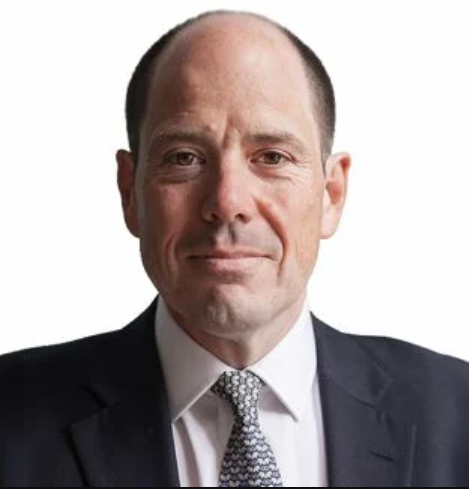
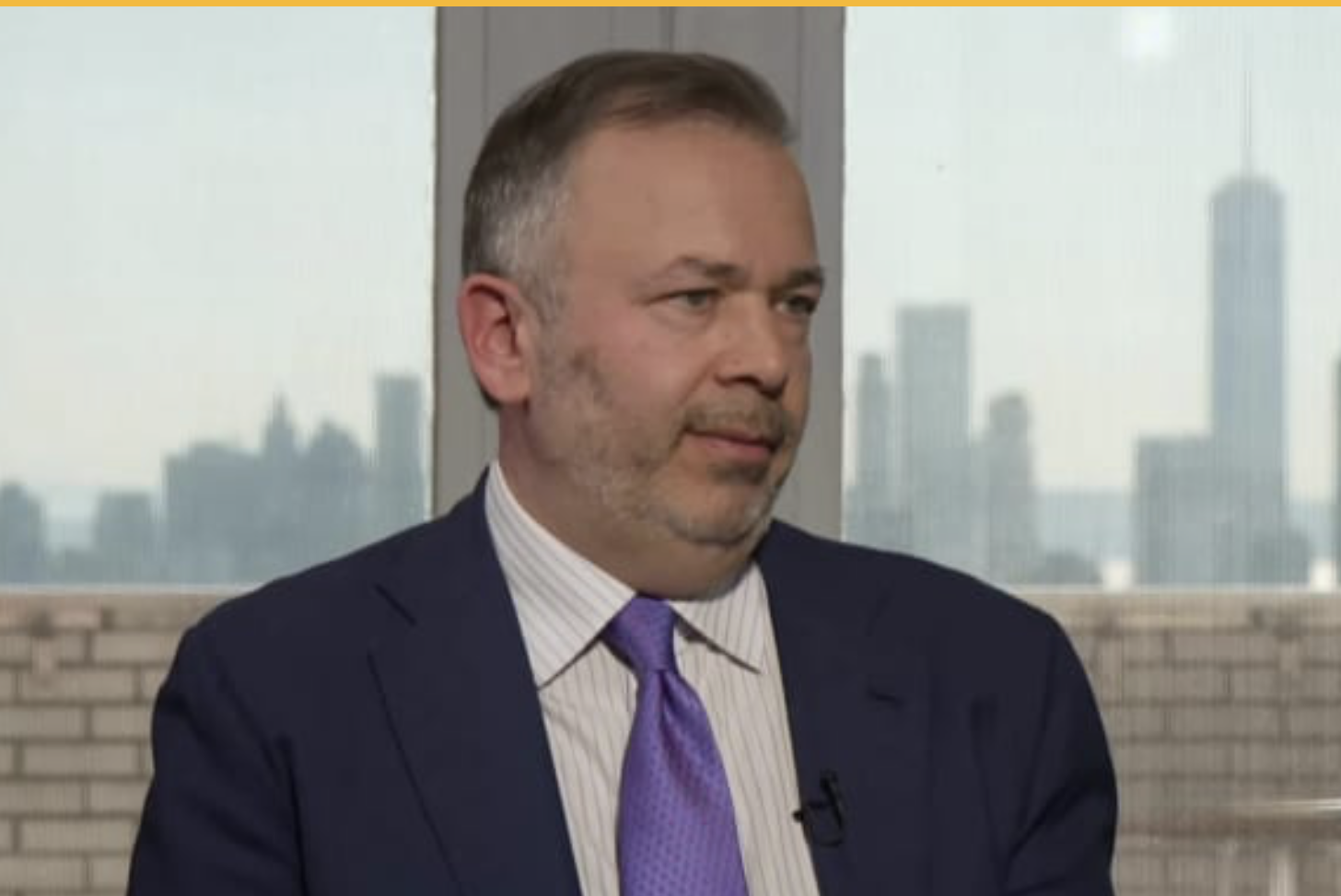
Tom Burnet, chair at BG US Growth Trust
The chair of Baillie Gifford US Growth Trust has called on retail investors to turn out in force to vote at next month’s annual general meeting, warning that a low turnout could see Saba Capital Management take control of the trust.
Tom Burnet told Scottish Financial News that retail investors are the trust’s largest single shareholder block and their vote, regardless of stake, will decide the composition of the board after 23 October.
Burnet said: “If you’ve got a hundred shares, or a thousand, or a hundred thousand, it doesn’t matter. We need you out to vote. Otherwise I fear they’re going to get locked into something they don’t want, from a manager that isn’t going to be able to offer them anything like what Baillie Gifford is able to offer them.”
The call to action comes as the Edinburgh-based trust prepares to fight a requisition notice filed by Saba in August, calling for shareholders to appoint three Saba-nominated directors, Jason Chen, Thomas H McGlade and James Waterlow, to the board. The AGM will be held at the offices of Stephenson Harwood on 23 October.
The interview comes hours after the trust issued a circular setting out what was at stake for shareholders if they failed to turn out to vote, allowing Saba’s requisition notice to pass and electing three individuals “linked with or employed by Saba” to the board, which it said would “severely compromise” the board’s independence.
During the financial year to 31 May 2026, the company’s share price and net asset value (NAV, after deducting borrowings at fair value) returned 44.5% and 31% respectively, exceeding the S&P 500 Index benchmark’s total return of 29.8%.
Burnet opened the conversation by pointing to the trust’s performance since launch. “Since we IPOed the company, which was 2018, we’ve been in the top 10% performing investment companies in the UK, and in fact globally, in those companies investing in the US.
“It’s been a fantastic outcome for shareholders over that period, and all run out of Scotland as well, which is something I think we in Scotland need to be very proud about.”
He credited that performance to Baillie Gifford’s access to private companies. “We’ve got companies like OpenAI, Anthropic, Stripe and Cloudflare, some unbelievable companies which not anybody can buy shares in.
“It’s a very small number of people who are allowed to, and they’ve been trusted to own these shares because they’ve been very patient, great shareholders over the last 25 years.” He added that the trust had invested in these areas of technology “five or six years before they became everyday news. That whole tech shift is speeding up, not slowing down.
“I think the trust is incredibly well placed to take advantage of those big changes that are coming over the next five and 10 years. We’re well placed to capitalise financially on those things.”
Burnet gave further detail on how the board had attempted to resolve the dispute in August by negotiating a deal with Baillie Gifford to cover all transaction costs for any shareholder wishing to exit the trust at net asset value, a commitment he said ran into the multiple millions of pounds.
He said: “In August we offered Saba exactly that, but with really enhanced terms. The board went to Baillie Gifford and effectively negotiated with them, and they agreed to cover all the costs of that transaction. That’s multimillion pounds of cost. Baillie Gifford said, ‘okay, we will pay for that for any shareholder that wants to sell shares in the trust and get out. We will cover those costs as a house, and that will benefit any shareholder that wants to leave the trust.’ And Saba blocked it. They said, ‘no, we don’t want to do that.’
“That would suggest to me that the last thing they want to do is sell their shares. They want to basically take control of the assets and run them themselves, or sell them down and do something else with the cash.”
He added: “Saba basically wants to get rid of the existing board, because they’ve voted against us twice previously and had a chance, and they want to put their own people in place.
“The current board, I can assure you, is entirely independent of Baillie Gifford. Our job is simply to represent our shareholders and make sure Baillie Gifford is doing the best possible job. We’ve got a range of skills around the table, from some really famous entrepreneurs through to lawyers, accountants, people steeped in this industry, people who work in private equity, people who really understand what’s going on.”
He contrasted the current board with Saba’s picks. “Saba wants to put three of his mates on the board, and one of them actually works for Saba. The idea that these three dudes are going to be independent is just laughable.” Waterlow joined Saba in February as its UK managing director.
The board confirmed they have never met with Boaz Weinstein
“The whole job of an investment company board is to be independent and to work on behalf of the shareholders, not on behalf of the manager,” Burnet said. “Because ultimately, we think that’s the endgame. We think Saba wants to take the assets of the trust and run them himself, charge fees for that, and basically do what he wants with it.”
Shareholders taking the cash exit offer would have faced capital gains considerations given the trust’s performance. However, the board said it is less concerned with persuading shareholders to support the current strategy than with voter apathy, pointing to Saba’s campaign at Edinburgh Worldwide Investment Trust, which Saba won on the back of a low voter turnout.
Burnet said: “I don’t think investors should be complacent that Baillie Gifford US Growth hasn’t been forewarned by Edinburgh Worldwide. I think it’s something to do with the composition of the shareholder register. They’re picking registers where there is a large retail community, and where there have historically been low turnouts at AGM votes. If you combine those two, it’s easier with a smaller amount of votes to effect change.
“Historically, sadly, voting levels at investment company AGMs have been very, very low. This is something shareholders are being asked to do in unusual circumstances, probably for the first time. We’re keen to make as much noise as possible to say, however you choose to vote, vote. You have the right as a shareholder. Please use it.”
Burnet drew a contrast between the trust’s cash exit offer and Aberdeen’s standstill agreement earlier in the year, under which Saba agreed not to vote against the board at Herald Investment Trust and eight other Aberdeen-managed trusts in exchange for an undisclosed payment.
He said: “I think what you’ll find is in that case a single fee was paid to Saba. There was no democracy in that. There was only one beneficiary from that fee paid, which I suspect was multimillion.
“That just feels to me instinctively wrong, to be extorted effectively: call it greenmail, or whatever you want to call it. It feels like the wrong choice for everybody, which is why I thought the Baillie Gifford view, which allows everybody to benefit equally, was the right thing to do.
“I don’t care whether you’ve got a million shares or one share, you are a shareholder in our firm and you should be treated equally. That seems to me an absolute fundamental.”
He confirmed the board would not have considered a similar deal to stop Saba’s campaign, adding: “I have to say, I think we as a board were very disappointed when another house chose to basically buy off Saba.
“I would have been equally opposed to it. It’s not something we would ever do as a board. Baillie Gifford came up with a solution which allowed us to treat all shareholders equally, and that felt like exactly the right thing to do to me.”
Asked why Saba had targeted the trust specifically, Burnet said he could not be certain. “God knows. I don’t know. I think it’s something to do with the composition of the shareholder register.”
Burnet raised the trust’s access to private companies, including Anthropic, OpenAI, Stripe and SpaceX, as a possible motive for Saba’s campaign. “Our private assets may be part of the appeal as well,” he said. “When we first met with Saba, over a year ago, they specifically mentioned SpaceX, and how there are so few ways to access it for their investors. We were one of the ways to do it.
“We’re pretty certain they want to do an asset grab. What we don’t know is what they intend to do with the privates, and whether all they’re trying to do is drive the private investors out of the fund, so they more or less keep the privates to themselves to get the massive benefit we believe is going to come through.”
Asked what would happen if the board lost the vote, Burnet said any decision on the trust’s future, including a wind-down, would no longer be the current board’s to make. “It wouldn’t be our decision. All decisions would be controlled by the Saba nominees, who are clearly conflicted and will do whatever best suits them. I’m not telling you how to vote. I’m telling you what I think, but you can vote your conscience as a shareholder, of course. But if you like what you’re getting at the moment, you need to vote for the board. Simple as that.”
Burnet confirmed he has never spoken to Saba founder Boaz Weinstein directly. “On the vast majority of occasions they have turned down any conversation whatsoever. They haven’t been prepared to engage,” he said. Contact has instead run through Saba’s deputy, Paul Kazarian, whom Burnet has met three times, twice in New York, most recently in August.
Burnet said the Financial Conduct Authority’s ongoing consultation on board independence, launched in response to Saba’s campaigns across the sector, would come too late to affect the USA vote.
“The FCA had been working really hard in the background, with a bunch of investment companies and the whole community, to think about how the governance and rules around how these votes work might be changed,” he said. “Sadly, that work is still underway, and it won’t be complete until the end of the year or the beginning of next year. It’s not going to be in time to protect our shareholders from this threat. But the door is closing.
“Today for us is a call to action. The downside is significant for people if they get locked into something they can’t get out of, which isn’t going to give anything like the returns they’ve enjoyed over the last ten years.”
Aberdeen declined to comment.
Saba has been contacted for comment.

Share this article:

Subscribe to our newsletter to not miss articles like this one:
 SUBSCRIBE