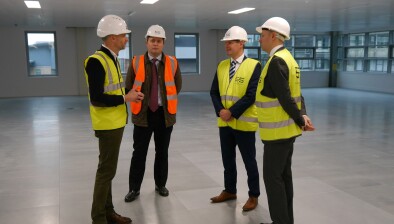


The quiet £10bn fund reshaping Scotland’s next decade
 Reading time: 3 minutes
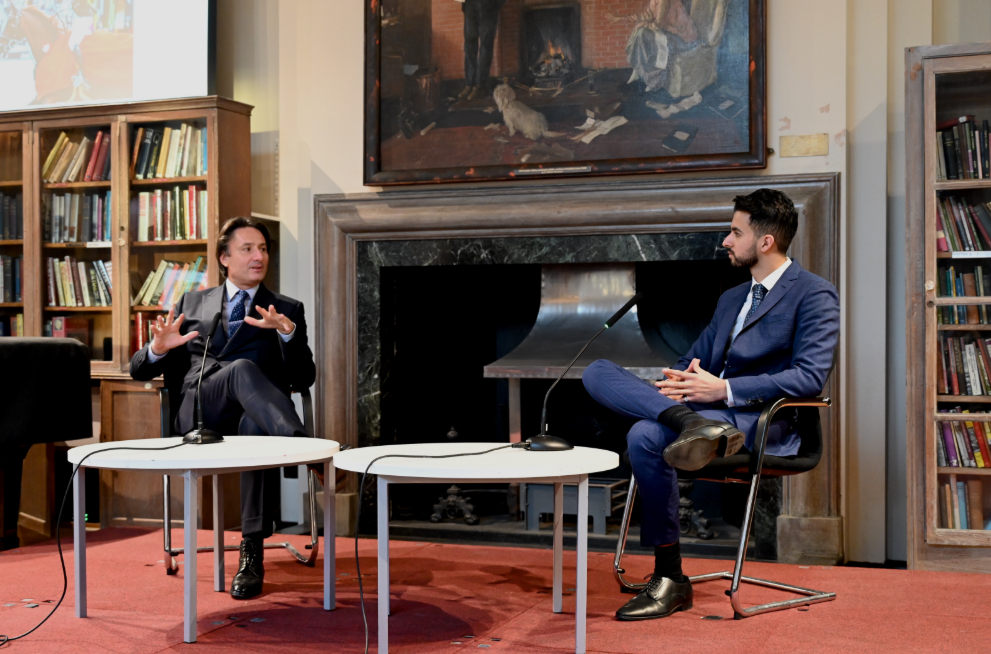
Omar Arfan (right) with Hermès executive chairman Axel Dumas
A private investment platform with a completed $2.5 billion capital stack for its first data centre is the clearest signal yet that Scotland has moved from competing for capital to being competed for.
For two decades, the prevailing account of the Scottish economy has been one of lag: behind London, behind the south-east, behind the capital clusters of continental Europe. Recent developments suggest the account is overdue for revision.
A private investment platform known as the Scotland Fund is preparing to deploy capital at a scale not previously seen in the country from a single privately held vehicle. The fund is targeting £10bn of investment by 2035. Its opening commitment, a hyperscale data centre, is already underway, with a $2.5bn capital stack closed and in place.
The platform has kept an unusually low profile. Its public footprint is minimal and those associated with it have not sought attention. The approach is understood to stem from the hedge fund background of its founders, where heads-down execution and above-market returns have long been valued over visibility. The scale of what is being assembled, however, makes a degree of public understanding overdue.
The Scotland Fund is led by Omar Arfan, a young founder with a track record of generating returns, alongside partners who count among the best minds in European alternative asset management and a leading figure of considerable stature in UK luxury hospitality. The fund is understood to be backed by at least three individuals on the Forbes list of the world’s 100 wealthiest people.
The fund’s mandate is pure-play Scotland. What distinguishes it is not only what it invests in the country but what it unlocks from it. The platform is understood to have engineered a structure that allows Scottish institutional capital to participate in opportunities ordinarily reserved for senior sovereign investors. Access of that order has not previously been available to Scottish allocators.
The investment focus rests on two sectors. The first is hyperscale data infrastructure, where Scotland’s renewable generation mix, cool climate and grid headroom have made it one of the more structurally advantaged jurisdictions in Europe for the AI-era build-out reshaping global digital capacity. The second is luxury experiential hospitality, a category in which Scottish supply has long trailed the quality of the underlying asset base.
The platform is positioning itself in next-generation consumer brands, working, it is understood, with some of the most recognisable global names in entertainment and with consumer companies valued in the multi-billions. A senior figure at one such firm described the platform’s consumer strategy as “unparalleled” and credited it with driving serious returns in a fiercely competitive category, the basis, the person said, on which its partnerships had become so appealing.
People close to the fund have drawn private comparisons with the early trajectories of Blackstone and KKR. Such parallels are rarely warranted at this stage. The scale of the opening commitment, the closed capital stack and the calibre of the backing have made them harder to dismiss.
Capital of this quality does not commit to jurisdictions it regards as peripheral. For a country long described as lagging, the more accurate description may be that Scotland has entered a period in which it is being chosen: by capital, by operators, and by the structural logic of where the next decade of European growth will occur.
The Scotland Fund has not announced itself. It has begun.

Share this article:

Subscribe to our newsletter to not miss articles like this one:
 SUBSCRIBE