
UK inflation climbs to 3.3% as Middle East Conflict pushes up energy costs
 Reading time: 4 minutes
UK inflation rose to 3.3% in the year to March, up from 3% in February, as the conflict in the Middle East triggered the largest monthly jump in petrol and diesel prices in nearly three years.
The Office for National Statistics (ONS) said the rise was “largely due to increased fuel prices”, with airfares and food also contributing.
Motor fuel increased by 8.7% month-on-month, the largest rise since June 2022, in the immediate aftermath of the Russian invasion of Ukraine. Over the year to March, fuel prices rose by 4.9%, the highest annual increase since January 2023.
ONS chief economist Grant Fitzner noted that airfares and rising food prices also played a part, whilst “the only significant offset came from clothing costs, where prices rose by less than this time last year”. He added that “the monthly cost of both raw materials for businesses and goods leaving factories rose substantially, driven by higher crude oil and petrol prices”.
Food inflation climbed from 3.3% to 3.7% in the year to March, driven by chocolate and confectionery, meat, fish and soft drinks. The Food and Drink Federation has forecast that food inflation could reach as high as 10% by the end of the year. Economists more broadly predict that headline inflation could peak between 3.5% and 4% – above the Bank of England’s 2% target, though far below the double-digit rates seen at the start of the Ukraine conflict in 2022.
Kevin Brown, savings expert at Scottish Friendly, said the March figures reflect “the early impact of recent energy price increases, with further inflationary pressure from conflict in the Middle East still to filter through”. He warned that for many UK households, “this is an unwelcome development at an already difficult time”, pointing to Scottish Friendly’s Family Finance Tracker research which found six in ten people do not believe the cost-of-living crisis is over, whilst two-thirds remain concerned about affording their regular outgoings over the next 12 months.
On the implications for monetary policy, Mr Brown said that “a 3.3% reading today will only reinforce expectations that the BoE’s base rate will remain on hold next week”.
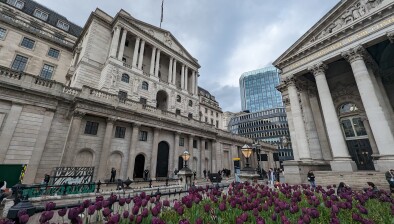
The bank’s Monetary Policy Committee is due to meet next week. Before the conflict, interest rates had been expected to fall this year, but the prospect of sustained price rises has all but ruled out any near-term cuts.
Luke Bartholomew, deputy chief economist at Aberdeen, said that whilst “the market will take some comfort that the increase in inflation was no greater than had been expected”, services inflation remained elevated and inflation is set to rise further once higher energy costs feed through to household bills following the Ofgem price cap reset in July.
He added that policymakers will be “much more focussed on whether higher energy prices start to contaminate a broader range of prices”, though with the labour market and broader economy “relatively weak, it is hard to see workers and firms having much power to gain higher wages and push through higher prices in response”. For now, he concluded, “the Bank of England is likely to remain in wait-and-see mode”.
Emeritus Professor Joe Nellis, economic adviser at MHA, struck a more cautionary note, warning that the UK may be “drifting towards a difficult combination of weak growth and persistent inflation”. He observed that whilst the rules of the game appeared to have changed, the inflationary pressures now facing the economy are “external and transitory, not structural”. A key distinction from the demand-driven surge that followed the lifting of Covid lockdowns.
Unlike in 2022 and 2023, economic growth remains subdued, business investment is cautious and household spending constrained, meaning the bank is “unlikely to increase rates at all – unless there is a material escalation on the horizon”. He cautioned, however, that even a swift resolution to the conflict would not bring swift relief, as “costs already absorbed by firms take time to unwind, and pricing behaviour tends to adjust slowly on the way down”.

Share this article:

Subscribe to our newsletter to not miss articles like this one:
 SUBSCRIBE