
UK inflation hikes to 3.4% in December, signalling warning for rate cuts
 Reading time: 3 minutes
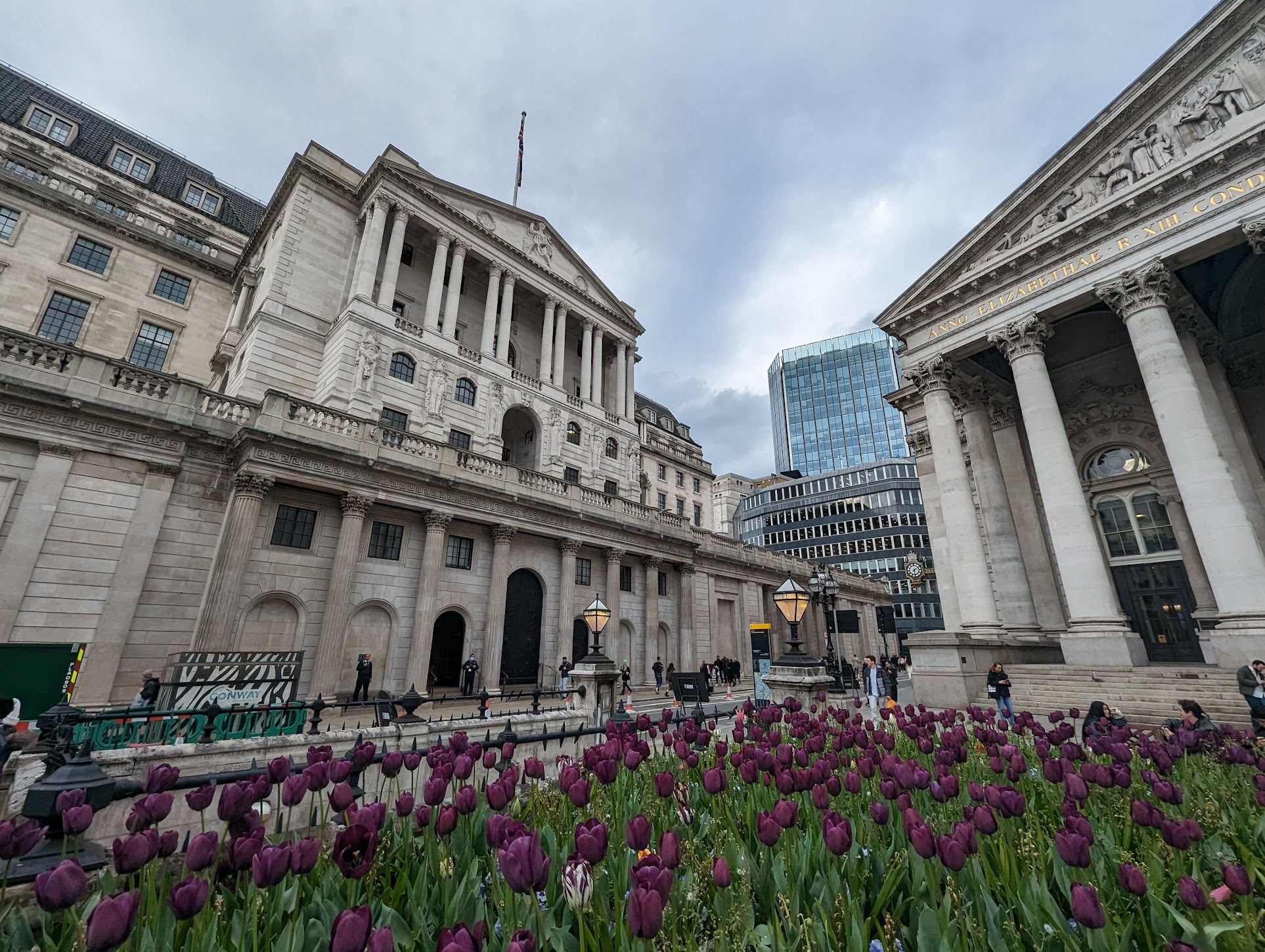
The Bank of England building (credit: George Iordanov-Nalbantov)
Inflation has risen faster than expected, presenting a fresh challenge to the Bank of England’s plans for easing interest rates.
New data from the Office for National Statistics (ONS) reveals that the Consumer Prices Index (CPI) reached 3.4% in the year to December, exceeding the 3.3% predicted by economists.
The increase was driven largely by higher tobacco prices following excise duty hikes, alongside a worrying rise in food price inflation, which climbed from 4.2% to 4.5%. Services inflation, a metric closely monitored by central bank officials, also stood at 4.5%.
Paul Dales, an economist at Capital Economics, warned that the headline rate might have been even higher had the data collection period captured the full pre-Christmas surge in airfares. The political reaction was swift, with Chancellor Rachel Reeves insisting her focus remains on cutting the cost of living and that Britain is set to “turn a corner” this year. Conversely, Shadow Chancellor Mel Stride attributed the rise to Labour’s economic mismanagement, arguing it punishes the most vulnerable households.
This release serves as the final key dataset for policymakers before their early February meeting. While the Bank is not expected to cut rates from the current 3.75% immediately, conflicting economic signals persist. Recent figures showing a downward trend in wage growth and job cuts may embolden dovish committee members, such as Alan Taylor, to push for reductions. However, most economists now predict only one further rate cut this year as the Bank attempts to guide the economy back to its 2% inflation target.
Further complicating the outlook, Governor Andrew Bailey has urged vigilance regarding President Trump’s economic policies, noting that potential US tariffs and interference with the Federal Reserve could have significant ripple effects on UK growth and inflation. Sticky pay growth and external geopolitical factors may thwart hopes for rates dropping as low as 3% in the near future.
Kevin Brown, savings expert at Scottish Friendly, commented: “For borrowers, ambiguity continues. Mortgage rates are still expected to trend down over the year, but today’s data might mean that comes more slowly than hoped.
“For savers, rising inflation highlights evermore the problem that inflation can quickly chip away the real value of cash savings. A short-term rise in prices reduces purchasing power immediately, and cash returns often struggle to keep up over sustained periods.
“That’s why it remains wise to look beyond cash for long-term goals. Investing has historically offered a far better chance of protecting purchasing power and growing wealth over time. In an environment where inflation continues to erode cash, that distinction is key.”
Luke Bartholomew, Deputy Chief Economist, at Aberdeen, said: “Given the rapid fall in inflation in recent months, a small bounce higher in headline inflation was always likely. And the fact that the bounce was largely driven by highly volatile airline fares means policymakers and the market are likely to look through this noise.
“Indeed, with the crucial services inflation component a little softer, the big picture is that inflation is on track to return to 2% later this year.
“With yesterday’s jobs data showing that the labour market remains weak, the pieces are still very much in place for further Bank of England easing. However, today’s data probably do now firmly rule out a February cut, with the next rate reduction probably set for March instead.”

Share this article:

Subscribe to our newsletter to not miss articles like this one:
 SUBSCRIBE