
Celtic Renewables extends circular partnership with Rosebank Distillery
 Reading time: 4 minutes
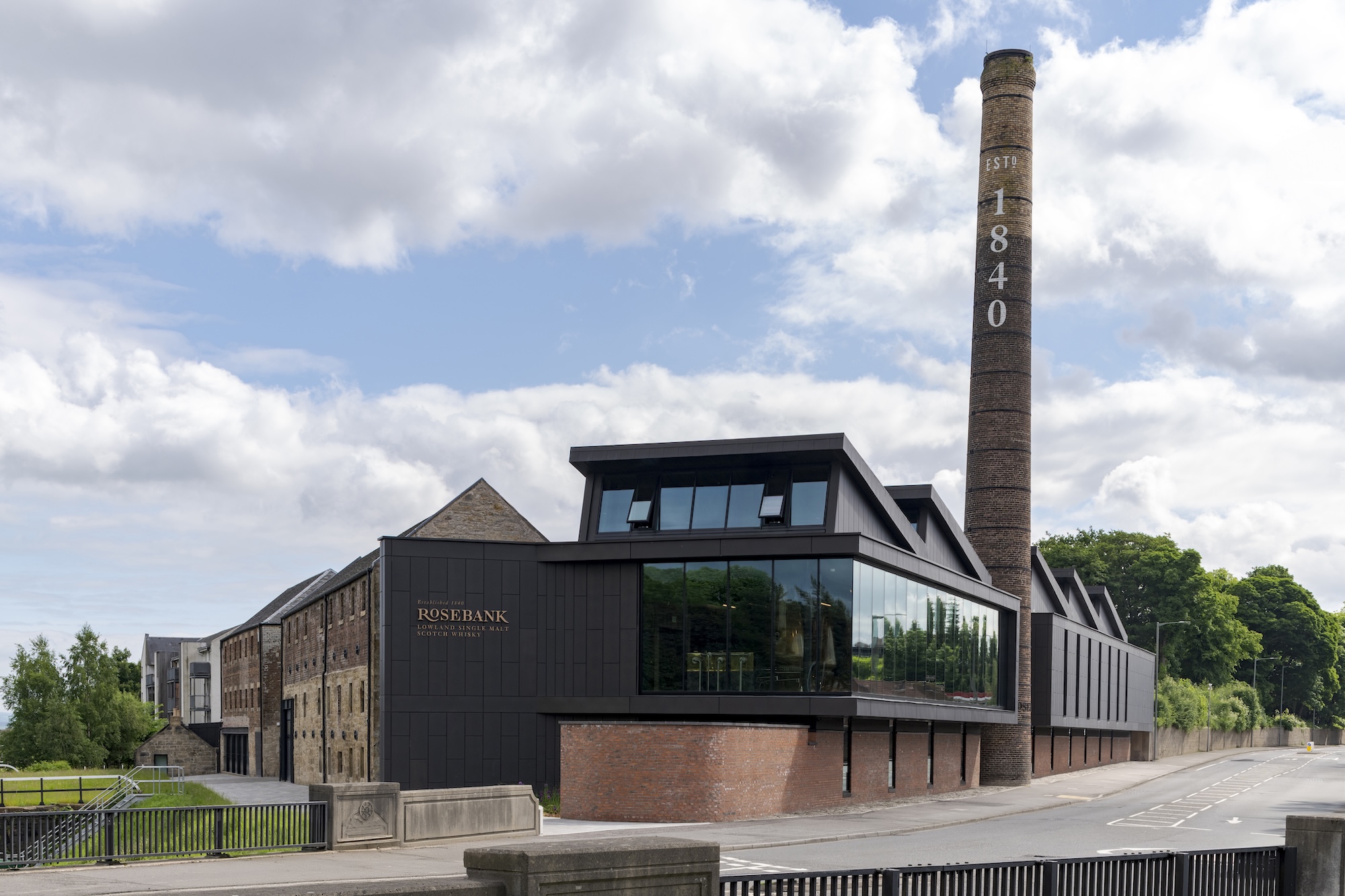
Rosebank Distillery at Falkirk in Scotland (credit: Ian Macleod Distillers)
Scottish green chemical producer Celtic Renewables has renewed its partnership with the independent ultra-premium whisky distillery Rosebank, part of Ian Macleod Distillers, for another three years.
The partnership will see Rosebank Distillery in Falkirk send the pot ale by-product produced during its distilling process to the Celtic Renewables biorefinery located less than four miles away at Grangemouth.
The new agreement extends the existing three-year partnership between the companies, during which Celtic Renewables received over 4600 tonnes of whisky by-product from the few thousand casks created in the production of the reawakened Rosebank spirit.
Celtic Renewables uses pot ale as a feedstock to produce 500 tonnes of bio-based chemicals annually at its commercial demonstrator facility. Using pot ale extracts value from the whisky by-products and reduces the amount sent to animal feed or anaerobic digestion, the process by which organic material is broken down into CO2 and methane.
The bio-based chemicals that Celtic produces are chemically equivalent to fossil-based chemicals and can be used in the manufacturing of thousands of everyday consumer goods – everything from skin moisturisers and household cleaning products to paint and bike tyres.
With the pot ale supplied by Rosebank, Celtic Renewables can produce green chemicals that generate over 60 percent carbon savings when compared to their fossil-based counterparts, using a circular process that repurposes residues from distilling whisky instead of using fossil fuels.
The innovative process allows consumer goods firms and manufacturers to partly defossilise their supply chain and cut their indirect Scope 3 emissions.
Ian Macleod Distillers’ partnership with Celtic is one part of the company’s wider commitment to sustainability for its entire portfolio of distilleries across Scotland.
Other measures include:
- exploring renewable energy with a carbon neutral distillery operation at its Edinburgh Gin distillery
- the creation of wetlands at the Glengoyne Distillery estate: wildlife protection measures at Tamdhu, Speyside
- and support from two important environmental charities.
The ongoing relationship between the two firms is testament to the Grangemouth area’s commitment to the net zero transition, creating a truly circular economy, and bolstering the region’s low-carbon industry.
Bettina Brierley, chief commercial officer at Celtic Renewables, said, “Ongoing local partnerships like the one we have with Rosebank are the foundation for Scotland’s low-carbon green economy.
“With over four million tonnes of pot ale and stillage produced in Scotland annually, our efforts in Grangemouth are just the beginning, and the room for growth in the low-carbon industry is huge.
“Our work with Rosebank Distillery showcases the ability of companies to work together in innovative ways at local and regional level for a more sustainable circular way of life – a blueprint for the future green economy.”
Neil Bulloch, distillery manager at Rosebank Distillery, said: “Working with Celtic Renewables to take the pot ale bi-product from Rosebank and create natural bio-chemicals for household use is part of our broader plan to sustainably manage our solid and liquid waste across our distilleries and to reduce the environmental impact of our operations.
“The proximity of Grangemouth to the Rosebank Distillery in Falkirk also reduces the impact of transportation and supports our local community in Falkirk.”
The Rosebank brand has recently enjoyed a trio of accolades. Last November, Rosebank 31-Year-Old was heralded as the ‘Best Whisky in the World, after being awarded “Best in Show” at the prestigious 2025 San Francisco World Spirits Competition (SFWSC).
Rosebank Distillery was named ‘Tourism Destination of the Year’ at the 2025 Scottish Whisky Awards, firmly establishing it as one of the country’s most significant whisky experiences. The Award recognises the single most outstanding visitor experience in Scottish whisky tourism each year.
In January 2026, His Majesty King Charles III enjoyed tasting ‘the world’s best whisky’ – Rosebank 31YO – at a private reception attended by senior representatives of Ian Macleod Distillers and the First Minister of Scotland held at the Palace of Holyrood House.
Earlier this month, Celtic Renewables secured more than £16 million in public and private funding towards the planning and construction of a new £120M industrial-scale biorefinery in Grangemouth.
The funding comprises £5 million in new investment from Scottish Enterprise, Scotland’s national economic development agency: £5 million from Celtic’s existing private investors: and £6.23 million from the Grangemouth Just Transition Fund, which Celtic received from the Scottish Government last December.

Share this article:

Subscribe to our newsletter to not miss articles like this one:
 SUBSCRIBE