
Written by:

CISI Scotland on AI, careers and the future of financial advice
 Reading time: 7 minutes
Written by:
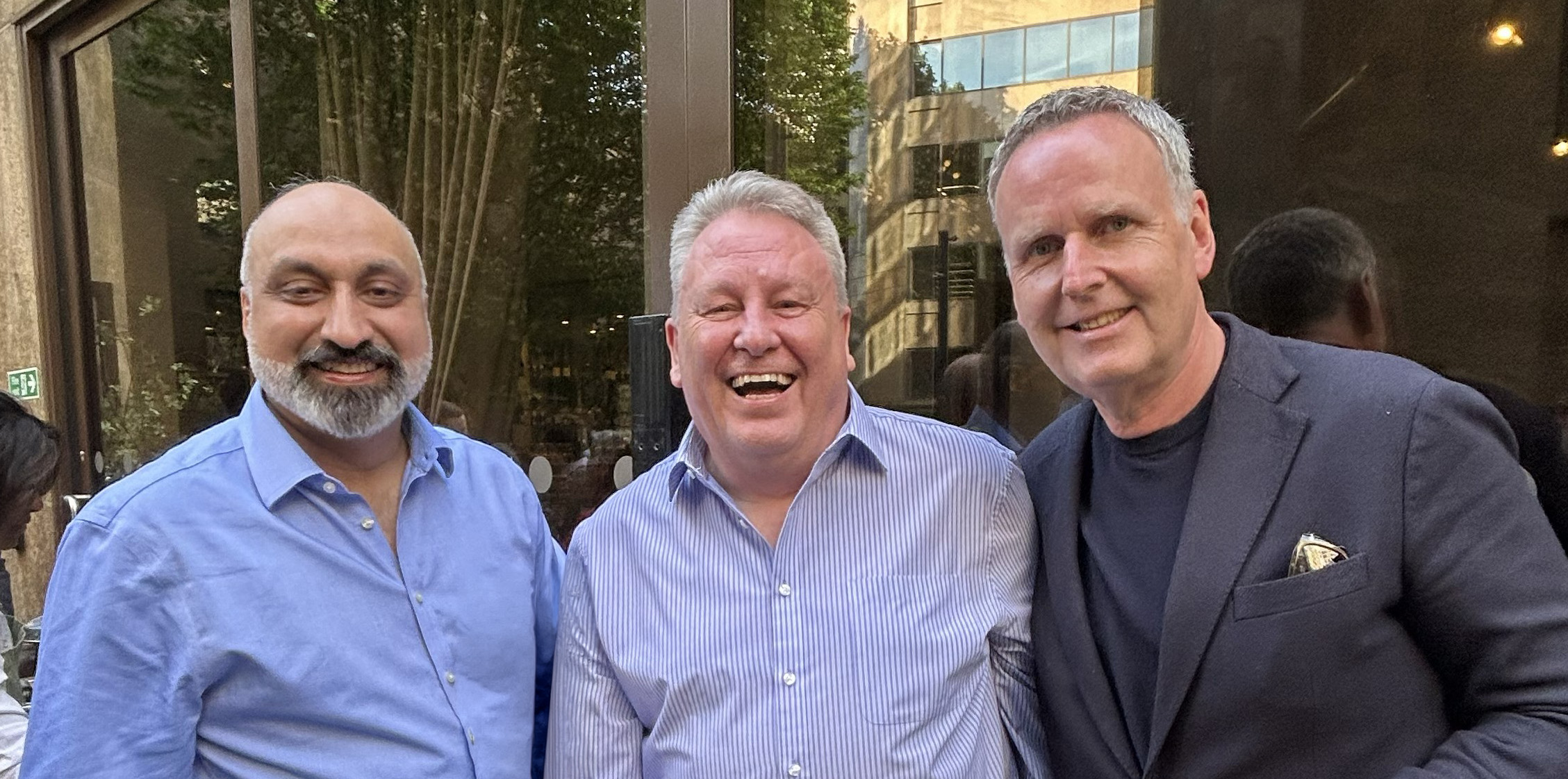
(L-R) Shaid Moughal, Colin Anderson and Jonathan Gibson
The Chartered Institute for Securities & Investment (CISI) has spoken about the challenge of getting more younger people into financial planning, saying it has a responsibility to help members stay indispensable as technology changes the workplace.
The professional body has been holding roadshows across Scotland to connect with members and help them keep on top of changes in financial services. The financial services sector employs more than 150,000 people in Scotland.
In an interview with Scottish Financial News, Colin Anderson, senior client relationship manager at the CISI, said: “AI is just a tool, very powerful, but we should be the trusted person in the room.
“If you’ve done all the training, you’re chartered or certified, you’ve done your exams, and you’ve kept up to date by coming to conferences, because you can’t know everything… we need to help our people be the trusted person in the room.”
He said members who hold qualifications, keep up their CPD and attend events are the ones who can tell when an AI answer is wrong.
Shaid Moughal, head of client assurance at Aberdeen Adviser and co-president at the CISI, stressed that financial advisers will still have an important role in the future. He said: “When it comes to money, people are very cautious, and they want to speak to people. If you have quite a lot of wealth, you will want a relationship with somebody you trust.
“The key won’t necessarily be knowing how to instruct AI. It will be knowing what to do with the information it provides, and what is important and what isn’t, because machines will not be able to do that.
“The top thing on my list for a planner is: do I trust this person as a person? Not whether they’re going to help me grow my wealth or look after me. Can I get on with this person? Is this someone I can have a relationship with, someone I can share things with?
“People don’t like talking about money, how they use it, what they spend it on, what their aspirations are for it. Nobody likes to disclose that sort of stuff. The first and foremost motivator in any conversation is trust.”
He also suggested that AI personas of celebrities could one day be used to deliver financial advice. He said: “You’ll have wearable tech: glasses that can see, with cameras and sensors, and augmented VR. Somebody will appear to you as if they’re in the room, through your glasses.
“A projected image that is an autonomous AI, and it could be anybody. Movie stars could sell their image rights, and all of a sudden you’ve got a Tom Cruise in your life.
“It could give you financial advice, life coaching, be a conversational friend. You buy upgrades and they teach you stuff. You buy other updates and they might give you financial advice, with a voice and a recognisable image.
“It doesn’t necessarily need to be a machine that goes around doing physical things. I used to say this last year and I’m still saying it, because they’re already developing it. The sophistication is out of this world already.”
Mr Anderson said knowledge is no longer a differentiator in the industry, as AI can provide answers very quickly. What counts, he said, is what advisers do with the information, and he suggested the CISI’s qualifications may move away from knowledge and towards application.
Jonathan Gibson, managing director at Wells Gibson, said clients will still want to “see the whites of someone’s eyes”, even though he agreed the profession will look unrecognisable within years.
The CISI’s Scotland team runs two roadshows a year, one in spring and one in autumn, visiting members in Inverness, Dundee, Aberdeen, Edinburgh, Glasgow and Stirling. The aim is to be visible and accessible to all members, and not to be seen as a body that operates only in the Central Belt. The roadshows and the annual conference drew close to 1,000 people this year.
The idea was to bring “important conversations to people” who could not get to London or even travel to the Central Belt, and to give members someone to partner with throughout their careers, not just at qualification stage.
The annual conference and dinner now run alongside two learning streams, one for compliance and operations and one for financial planning. The dinner brought together nearly 300 people, up from 170 three years ago.
However, the speakers acknowledged that one of the biggest challenges facing the sector and the body is getting young people into finance. Students tend to say they want to be an accountant or a hedge fund manager, with nothing in between, and financial planning degrees are scarce in Scotland.
To change how young people see the sector, the CISI invites university students to its events, sends young professionals to talk at universities and supports the charity Future Asset, which encourages schoolgirls to explore careers in financial services.
Mr Anderson said: “We’ve actually developed a course that schools can use. It’s a free service. They can help their pupils understand a little bit more about key things about finance, not just about the industry but about personal finance.
“Financial literacy has always been a problem. I think the Scottish government would agree that it’s as poor in Scotland as it is across the UK. It’s one of the programmes we’re trying to push out as part of the CISI, to help with that.”
Mr Gibson, co-president at the CISI, added: “There are so many opportunities for young people. Client service could lead into compliance, HR, finance or marketing. It’s down to the CISI and members like ourselves to be engaging with local schools. We were at the local high school, and a couple of our team went along to interact with the students. We offer the students a taster day. They can come and spend the day with our firm. We just need more firms to do that.
“Financial planning is still an emerging profession. It’s still not talked about the way you would talk about the traditional professional services, where you could be a lawyer, a doctor or a dentist.
“You still can’t go to university today and do a financial planning degree course. I think Napier has some financial services degree course, and perhaps a couple of universities down south.
“It’d be nice to see financial planning available as a course at a university. Firms like ours are trying to grow by growing people, through graduates and graduate apprentices, who tend to be doing a business management or economics degree.
“We have four graduates in our business, and we’re a very small business. They’re all working through the exams at different stages, and we also have two graduate apprentices who are at university one day a week. Every time we need new people, we plan ahead and think, it’s time for another graduate.”
The CISI leadership team also challenged the stereotype that financial planning is only for high-net-worth individuals. Mr Gibson said: “There’s a stereotype that only very rich people invest, but most people invest incrementally. If you can save, then you can invest.
“The vast majority of my clients invest on a regular basis. They’re paying into a pension or an ISA each month. There needs to be more education around that. If you earn some money and have the ability to save some of it, you should be able to invest it, and that is a gap.”

Share this article:

Subscribe to our newsletter to not miss articles like this one:
 SUBSCRIBE