

Written by:

deVere CEO Nigel Green warns UK could be “Truss’d” as gilt yields surge
 Reading time: 4 minutes
Written by:
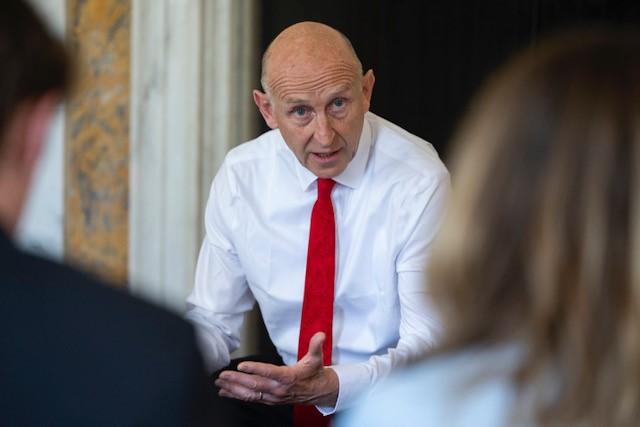
Chancellor John Healey
Nigel Green has claimed that the UK could be “Truss’d” in a stark warning as gilt yields surge, drawing comparisons with the market turmoil that followed Liz Truss’s mini-budget in 2022.
The chief executive of deVere Group, one of the world’s largest independent financial advisory organisations, shared his concerns as the 10-year gilt yield stood at around 5.25%, its highest level since 2008, while the 30-year yield reached 5.89% earlier this month, a level not seen since 1998.
Both yields are now at historically elevated levels. However, the Bank of England’s intervention in 2022 was prompted by severe dysfunction in the gilt market and risks to financial stability, rather than by yields simply crossing a particular level.
Chancellor John Healey is under pressure to calm jitters in the bond market ahead of his Budget next month.
Mr Healey has pledged to stick to the Government’s spending limits, which restrict the amount the Treasury can borrow as a proportion of national income.
Newly published data from the Office for National Statistics (ONS) revealed that borrowing was £3.5bn higher than forecast by the Office for Budget Responsibility (OBR), taking the deficit for the financial year so far to £77.3bn, £8.1bn above forecast.
Borrowing in August was £18.3bn, above the £15.6bn forecast by City analysts.
Mr Green said: “The bond market is doing to the UK’s finances, in slow motion, what it did during the 2022 mini-budget meltdown, and Chancellor John Healey walks into his first Budget on 28 October with a far weaker hand than the official forecasts suggests.
“Everyone remembers the Truss moment because it happened in a week. This one’s happening in slow motion, and the damage could end up bigger. Borrowing costs are already higher than when the bond market went mad in 2022. There’s just no single day, no single decision, to point at.”
Rising yields have cut estimated fiscal headroom from around £26bn to £13.8bn, with no new spending announced and no tax cut delivered. Every uptick in borrowing costs adds to debt interest costs, potentially reducing the Government’s fiscal buffer ahead of the Budget.
However, the current rise in gilt yields does not by itself indicate a repeat of the 2022 crisis. The Bank of England’s intervention at the time followed severe market dysfunction and forced selling associated with liability-driven investment strategies, rather than simply a rise in yields.
He added: “The Chancellor’s already lost almost half his headroom and he hasn’t stood up at the despatch box yet for the Budget. The market’s writing the first draft of this Budget. Every basis point makes the arithmetic harder, and every tax rise or spending restraint gets judged against a bond market that’s already moved.
“In 2022 the fix was a U-turn and a new face at the Treasury. There’s no equivalent here. You can’t reverse a trend. The old reliable buyers of long-dated debt are fading, the supply keeps coming, and global bond markets are already jittery. It’s a combustible mix.”
Global forces are also pushing yields higher, including inflation concerns, higher oil prices and tighter policy in Japan and the US. Yet the UK, with Bank Rate at 3.75%, a thinning fiscal buffer and a Budget looming, remains exposed to shifts in investor sentiment.
Bank Rate is well above where it stood in 2022, yet long-dated borrowing costs are still climbing, which may indicate that investors are demanding greater compensation for holding longer-term UK government debt. Green argues that the current deterioration resembles the 2022 episode, albeit unfolding more gradually.
He added: “The pain won’t stay in Whitehall. Higher gilt yields feed into mortgage pricing, corporate borrowing costs and pension valuations, spreading the strain across households and businesses. Global bond markets are setting the tone, but the UK’s got its own vulnerabilities and 28 October is where they get tested.”
“If the Budget doesn’t convince bond investors the numbers add up, the drip becomes a flood. Doubt is all it takes for gilts to misbehave, and bond vigilantes to come roaring back.”
“The bond market will judge whether there’s credibility and the sums work at the Budget, and right now it’s casting a very sceptical eye over them.”

Share this article:

Subscribe to our newsletter to not miss articles like this one:
 SUBSCRIBE