
Written by:

John Healey eyes bank tax rise to fund winter energy support
 Reading time: 4 minutes
Written by:
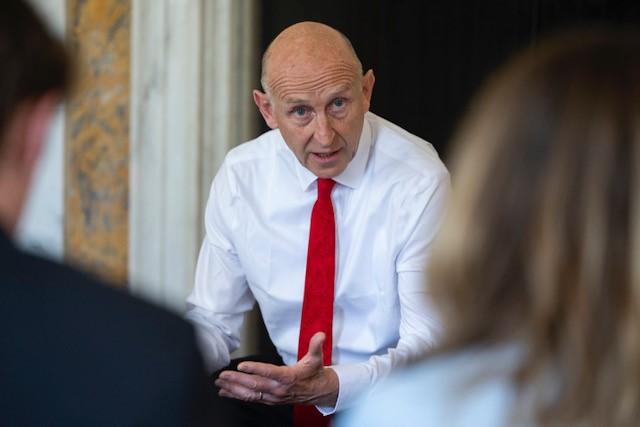
John Healey is plan a tax on banks
Chancellor John Healey is set to increase taxes on Britain’s banks to help plug a hole in the UK Government’s finances caused by rising borrowing costs.
Mr Healey is considering options for raising more revenue from Britain’s financial institutions ahead of the Budget on 28 October.
The Government will use the extra funds to help provide a planned package of support for poorer households and businesses with their energy costs over winter.
Options include reversing a cut in the bank profits surcharge, which is paid on top of corporation tax. This would raise an additional £2bn a year. The surcharge was introduced in 2016 at 8% and reduced to 3% in 2023.
The chancellor is reported to be considering a one-off windfall tax, but he has been warned that international banks with operations in Britain will move investment overseas if their tax rates rise further.
It has also been suggested that Mr Healey could avoid targeting non-British lenders by introducing a moratorium on deferred tax assets, which allow banks to use past losses to reduce the profits they report to the taxman.
He told the International Monetary Fund (IMF) meeting in Bangkok that banks were the “jewel in the British economic crown”, but that he had “decisions to take in the Budget” and a “special responsibility to protect the resilience of the British economy”.
The Guardian first reported the planned increase in banking taxes, noting that it would help to offset a £12bn hole in the public finances caused by the war in the Middle East.
Economists have predicted that fiscal headroom against the Government’s tax and spending plans is around £15bn. Whitehall departments have been told that pressure on the public finances means no extra money for health, education or the police, in order to stay within the fiscal rules.
Mr Healey said: “There are pressures on departments and colleagues … but it’s important that they do manage within what they’ve got. You need to prioritise if you want to do fresh things.”
This comes after the IMF’s managing director, Kristalina Georgieva, singled out the UK for rare praise and urged the chancellor to “stay the course” with his fiscal plans. The IMF predicts that Britain’s budget deficit will fall over the next five years.
Mr Healey said: “We will meet those fiscal rules. One of the hallmarks of the IMF’s backing of our plans has been recognition that there isn’t just a forecast for the future, but there’s some evidence of performance already. That involves borrowing falling and involves being able to meet the costs of government day-to-day spending. Those are the rules and we will meet them.”
However, he added that he would not engage in “deeply damaging” speculation over tax or spending plans, which, he said, had hurt economic growth and led to slower consumer spending and business investment in 2024 and 2025.
He pointed out that speculation before previous Budgets “led to people cashing in on pensions early when they didn’t need to. It led to people holding back or not investing in their businesses when they didn’t need to.”
He added: “I’ve got decisions to take in the Budget. My special responsibility is to protect the resilience of the British economy for the future, the resilience the IMF has reported on by upgrading [our] growth figures.”
Industry lobby groups including UK Finance and TheCityUK warned that raising taxes on top of “weakening investor confidence” could force firms to move staff and business out of the country.
Mr Healey said: “My observation on the banks is that people too often see them as big, distant financial institutions when they are hardwired into the economic fabric of this country and our future prospects.”
A Treasury spokesman said: “As has always been the case, decisions on tax are a matter for the chancellor to set out at fiscal events, rather than routinely commenting on rumour, speculation or proposals.”

Share this article:

Subscribe to our newsletter to not miss articles like this one:
 SUBSCRIBE