
KPMG: Scottish businesses enter 2026 with steady confidence and a strong focus on sustainability
 Reading time: 5 minutes

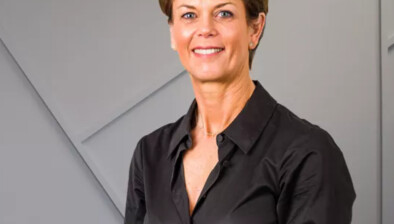
Vishal Chopra – Scotland office senior partner at KPMG UK
Nearly nine in 10 (87%) private business owners in Scotland are confident about growth in 2026, according to KPMG’s annual Private Enterprise Barometer.
The annual survey captured the perspectives of 1,500 privately owned businesses, including 119 in Scotland, from across various industries including professional services, finance, technology, industrial manufacturing and retail.
Growth drivers
Technology was cited as a key driver of this optimism, with half of Scottish businesses (50%) planning to introduce new technology over the next year, well above the UK average of 39%, underlining a commitment to innovation and the strength of Scotland’s growing technology ecosystem.
Sustainability will also be a focus for firms in 2026, with 73% of Scottish businesses planning to review their use of sustainable materials to better understand their environmental impact – the highest proportion across the UK.
Internationalisation is high on the agenda, with 66% confirming that appetite has risen over the last twelve months and 67% of businesses targeting new markets to diversify in the next five years. Western Europe was the most favoured destination for trade and expansion amongst Scottish businesses, with nearly half (48%) citing the region as a priority.
Funding
Meanwhile, alternative funding is a popular route for Scottish businesses, with 40% now open to private equity investment, reflecting willingness to explore new sources of capital to support innovation and accelerate growth.
When it comes to M&A activity more broadly, over a third of Scottish businesses (37%) are open to opportunities but are not actively seeking them, this is followed by 35% of businesses who are actively pursuing acquisitions – three percentage points higher than the UK average of 32%.
Vishal Chopra, Scotland office senior partner at KPMG UK, said: “There’s a cautiously positive mood among Scotland’s private businesses as they head into 2026. Confidence in growth is there, but it’s more measured, reflecting both the ambition and resilience of the business community alongside ongoing challenges.
“While 2025 was widely seen as a year of uncertainty, many businesses are now describing 2026 as a year of unreliability, one that calls for flexibility and the need to adapt quickly.
“It’s particularly encouraging to see firms taking such a proactive approach to the future from leading the UK on sustainability, supported by the government’s £5bn investment to drive climate impact and create green jobs, to continuing to invest in new technology and exploring alternative sources of funding to support growth. Scottish businesses are clearly thinking long term and putting the right building blocks in place to innovate, expand and thrive.”
The national outlook
Seven in 10 UK private business owners are looking to international trade to support growth plans and boost revenue over the next 12 months.
Western Europe was the most favoured destination for trade (46%), followed by Eastern Europe (40%). Over a third (34%) cited North America as a preferred trade destination, suggesting that UK firms managed the introduction of tariffs well in 2025.
Asia has become a greater focus for executives, with 27% now considering it for trade opportunities, up from 21% last year. The trade deal between the UK and India may have contributed to this increased interest.
The survey also found 87% of executives are confident about their growth prospects for this year. The main drivers for this optimism include increased demand for services, plans to introduce new technology and strategic growth initiatives. This figure is slightly lower than last year’s 92%, but it still presents an optimistic and ambitious outlook. Notably, the findings reveal that more than six in 10 businesses intend to enter new markets and launch new products and services.
When looking at challenges, businesses highlighted cost pressures and potential tax policy changes as barriers for growth. This year’s survey also found that 30% of private business owners had a positive outlook for the UK economy, compared to 42% last year. However, despite this, more than half thought revenues would rise by up to 5%, with 46% predicting a rise of the same amount in profits.
When it comes to planned investment areas over the next 12 months, artificial intelligence (AI) emerged as the priority, overtaking technology as a whole, which led in the first survey last year.
Euan West, head of regions at KPMG UK, said: “Confidence among business leaders remains strong, but there is an undercurrent of caution amid a subdued economic outlook for the UK and most other developed economies.
“While international expansion is on the agenda, the geopolitical environment remains volatile and unpredictable, which means the UK’s private enterprise and family business leaders and owners are having to take a pragmatic and adaptable approach.
“Against this backdrop the search for growth is one that requires strategic clarity, determination and agility and it’s encouraging to see business leaders making AI an investment priority.
“As ever, I am heartened and inspired by the can-do spirit of the private enterprise community.”

Share this article:

Subscribe to our newsletter to not miss articles like this one:
 SUBSCRIBE