

New Pathways guide to support diversity in entrepreneurship
 Reading time: 4 minutes

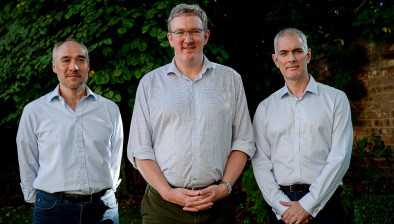
Dr Andrea Taylor and Ana Stewart (credit: Maverick/Edinburgh Innovations)
The University of Edinburgh has launched a new guide for those working with entrepreneurs to help them make their practice more inclusive.
Launched at the Edinburgh Futures Institute yesterday, the Practitioner’s Guide to Inclusive Entrepreneurship Support is part of the University’s commitment to the Pathways Pledge, to address women’s extreme under-participation in entrepreneurship in Scotland and beyond.
It is designed as a hands-on workbook that turns the findings of the Scottish Government’s 2023 Pathways: A New Approach for Women in Entrepreneurship report into everyday actions.
The Pathways report found that only one in five Scottish entrepreneurs are women and just 2% of capital investment in Scotland goes to female-led companies. The Pathways Pledge was created in response, and the University signed in July last year.
The guide offers practical tools for everyone involved in supporting entrepreneurs – from university staff and enterprise programme managers to investors and ecosystem partners, focusing on language and culture, actionable behaviours and shared responsibility.
For example, it encourages shifting language from describing risk-taking as the hallmark of a ‘real’ entrepreneur to framing resilience and sustainability as equally valid entrepreneurial values. It contains an accessibility checklist to use when designing programmes and events, and flags the need for systemic action, with specific advice for university, industry and political leaders.
Edinburgh Innovations, the University’s commercialisation service, produced the guide and leads the University’s commitment to the Pathways Pledge, which includes implementing a shared and reliable approach to data collection on women entrepreneurs and hosting events focused on deepening understanding of Equity, Diversity, and Inclusion (EDI) within the entrepreneurship landscape.
Dr Andrea Taylor, CEO of Edinburgh Innovations, who recently received an Inspiring Women in Business nomination at the British Business Awards, said: “56% of the 66 spinout companies created at the University since 2015 included a female founder, and 40% of companies approved for investment by Old College Capital, our in-house venture investment team, had a female founder or c-suite member.
“This doesn’t happen by accident, it is part of a concerted effort to change the status quo, and we proudly accept our share of the responsibility to do so.”
EI’s Power Her Up programme has supported and upskilled 71 women entrepreneurs so far, for example, and EI collaborates with other institutions and programmes that support women founders, including Converge, Keystone Women and AccelerateHer.
Professor Liz Baggs, Vice Principal Research and Innovation at the University of Edinburgh said: “The Pathways report identified the absence of clearly defined entrepreneurship routes and networks as a barrier to women’s participation.
“Increasing diversity was one of the reasons the University launched the Innovation Career Pathway, with a UK-first Competency Framework that sets out exactly how academics interested in commercialisation and entrepreneurship can progress in their careers.
“We are pleased to introduce this guide as part of our commitment to diversity in entrepreneurship, and to celebrate the Pathways Pledge one year on.”
Ana Stewart, tech entrepreneur, investor and chair of Pathways Forward, said: “The Pathways report set out 31 recommendations across five target areas for action: education, access to finance, the gendered care burden, structural change and the founder ecosystem.
“Whilst individual actions to address inequalities may sometimes feel insignificant in isolation, they are much more compelling when part of a collective, co-ordinated effort. The Pathways Pledge movement is enabling this by bringing organisations together to collaborate on actions which are tracked, monitored and shared together. Whether it’s increasing diversity in investment panels, capturing disaggregated data or creating new programmes to widen access, the Pledge community is achieving much greater impact.”

Share this article:

Subscribe to our newsletter to not miss articles like this one:
 SUBSCRIBE