

OBR cuts growth forecast as UK economy records zero growth in January
 Reading time: 3 minutes
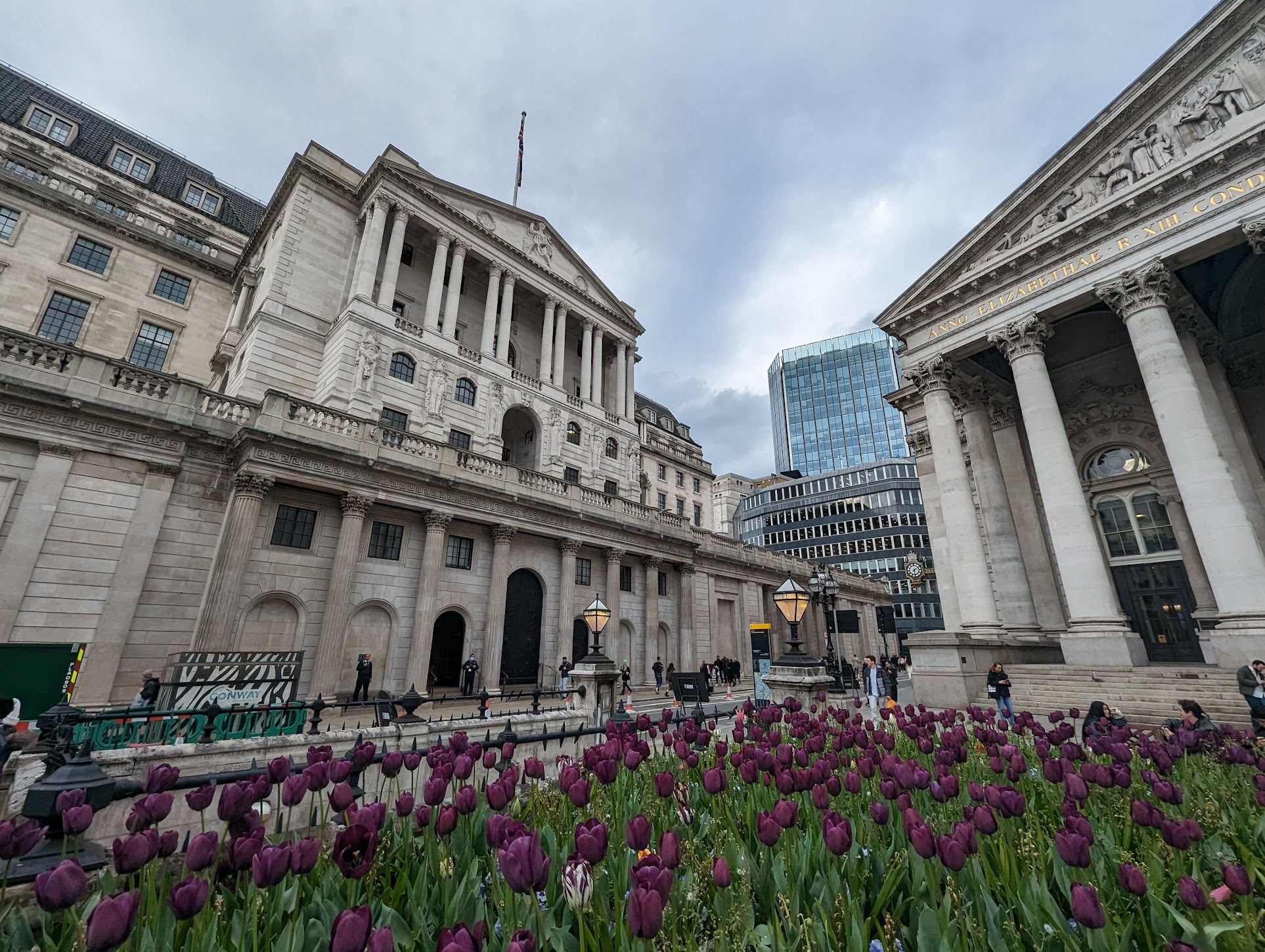
The Bank of England (credit: George Iordanov-Nalbantov)
The United Kingdom’s economy recorded zero growth in January, according to the Office for National Statistics (ONS), as weakness across key sectors of the economy compounded an already fragile outlook.
The services sector, which accounts for the largest share of economic output, showed no growth during the month, with food and drink service activities falling by 2.7%. Production declined by 0.1%, whilst the construction sector offered a modest bright spot, expanding by 0.2%.
The figures reflect a broader loss of momentum that had already taken hold in the second half of last year, as consumers, anxious about potential tax increases and rising unemployment, reined in their spending. Looking at the three months to January — a less volatile measure than the monthly figures — GDP grew by 0.2%, a modest improvement on the 0.1% recorded in the three months to December.
The Office for Budget Responsibility, the government’s official forecaster, struck a cautious note in the Spring Statement, cutting its growth forecast for 2025 from 1.4% to 1.1%.
Yael Selfin, chief economist at KPMG UK, warned that growth was “likely to remain elusive”, noting that the economy had started the year “on the back foot” with activity expected to weaken further amid sharply rising energy prices. She also highlighted that government borrowing costs have risen in recent weeks as expectations for the future path of interest rates shift. Keeping rates higher for longer would act as a “headwind” for businesses, she added, with weaker growth prospects and rising costs likely to prompt firms to scale back their investment plans.
Kevin Brown, savings expert at Scottish Friendly, said: “Despite some encouraging data recently, today’s GDP reading is disappointing and shows the UK economy is struggling to build momentum in the face of numerous headwinds.
“Recent reports of rising output and business confidence had perhaps raised hopes that the economy was starting to turn the corner. Instead, the data suggest that growth remains patchy and inconsistent.
“A major economic drag remains consumer confidence – or the lack thereof – with households grappling with elevated interest rates and nearly five years of higher inflation. This is a real concern for an economy that relies so heavily on consumption.
“Unfortunately, the outlook has also darkened due to the conflict in the Middle East, which has already sent shockwaves through financial markets. Swap rates – which determine the cost of fixed-rate mortgages – have surged since the outbreak, prompting lenders to pull products and reprice deals higher.”
Mr Brown continued: “Oil prices have also been volatile, pushing up costs at the petrol pumps. If energy prices stay elevated, it raises the risk that the Bank of England leaves interest rates higher for longer, which would be a double blow for both businesses and households.
“Higher rates would be welcome news for those with cash savings, but any gains made on savings interest would likely be offset by higher inflation. It would also result in further pressure on households and businesses, which would weigh on growth.
“Much will depend on how the situation in the Middle East unfolds, but if tensions persist it could quickly turn into a particularly nasty and unwanted headwind for the UK economy.”

Share this article:

Subscribe to our newsletter to not miss articles like this one:
 SUBSCRIBE