
SCC: Soaring business rates among top concerns for Scottish firms ahead of election
 Reading time: 5 minutes

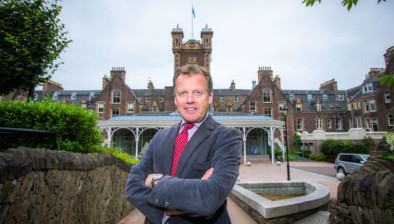
Charandeep Singh BEM – chief executive of the Scottish Chambers of Commerce
New data from the Scottish Chambers of Commerce shows nearly half of firms (48%) are concerned about business rates – the highest level in the last five years.
The findings from SCC’s Q1 2026 survey highlight growing pressure on businesses from rising fixed costs, with business rates rapidly climbing the list of concerns across the Scottish economy, now second only to tax.
With the Scottish Parliament election campaign firmly underway, SCC says the sharp rise in concern over business rates should focus minds across the political spectrum: if the next parliament is serious about growth, it must start by tackling the cost of doing business.
Businesses continue to show resilience, with confidence, revenue and profits stabilising compared to Q4 2025. However, entrepreneurs continue to warn that Scotland’s operating environment is becoming less competitive, with structural cost pressures holding back investment and growth.
Key findings include:
- Business rates concern has surged sharply: 48% of firms now cite business rates as a concern – a 20-percentage point increase in a single quarter, and the highest level recorded in the past five years
- Business confidence remains weak: 37% of firms reported a fall in confidence, with only 28% reporting an improvement – showing continued fragility in business sentiment
- Investment remains subdued: Only 17% of businesses increased investment in Q1, while nearly a third reduced it, with more firms reporting no change
- Recruitment challenges have intensified: 47% of firms reported challenges in hiring staff, up from 37% in the previous quarter, despite largely stable headcount
- Price rises expected to continue: 73% of firms expect to raise prices in the next quarter, up from 66% in Q4, indicating ongoing pass-through of cost pressures to customers
Doug Smith, vice-president of SCC and chair of the Scottish Economic Advisory Group, said: “The sharp rise in concern around business rates should be a clear warning sign ahead of the election.
“In just one quarter, we have seen a significant jump in the number of firms telling us that rates are a major pressure. That reflects a deeper, structural issue which is driving up the cost of doing business in Scotland.
“Business rates thresholds have barely moved in recent years, while inflation has pushed up costs and rateable values. In reality, that means more firms are being pushed into higher rate bands simply because their rateable value has risen – not because the business is growing.
“That leaves firms paying more tax for standing still, and in some cases losing access to reliefs at the same time. Taken together with drastic increases in rateable value, it’s little surprise that rates are continuing to cause pain for our members.
“These pressures are not happening in isolation. They are feeding directly into business decisions and wider performance. While there are some modest signs of improvement, the fundamentals remain challenging. Investment is flat, recruitment pressures are rising, and momentum is sluggish.
“As the election campaign ramps up, reform of business rates must be a top priority for the next Scottish Government. That must include ensuring thresholds keep pace with inflation, providing greater long-term certainty, and ensuring the system supports, rather than penalises, investment and growth.”
Charandeep Singh BEM, chief executive of the Scottish Chambers of Commerce, said: “Scottish businesses are operating in an increasingly uncertain and costly environment. Ongoing conflicts in the Middle East and Ukraine are driving up global gas prices, disrupting shipping lanes, and increasing transport costs.
“These pressures are feeding directly into day-to-day business decisions: making supply chains less reliable, weakening demand, and making it harder for firms to plan ahead. There is a clear case for stability to return as quickly as possible.
“The longer the hostilities endure, the more serious the consequences on businesses’ day-to-day operations become. It means delays in getting goods to market, higher costs to move products, and greater uncertainty when trying to secure orders and plan ahead.
“In that context, Scotland cannot afford to be less competitive at home.
“When international conditions tighten, Scotland’s domestic policy environment becomes even more important in determining whether businesses succeed. That means reducing the cost of doing business, with a particular focus on business rates.
“Over seven in 10 firms reporting that they expect to increase prices over the coming quarter should set alarm bells ringing for prospective MSPs across the country.
“Without action to ease these pressures, that trend will continue. That is why Backing Scotland’s Businesses – our election-year plan for growth – sets out a clear, long-term approach to strengthen our competitiveness, expand our global reach, and create the conditions businesses need to invest and grow.
“The next Scottish Government must focus on getting those fundamentals right - working in partnership with businesses to ensure Scotland can compete and succeed at home and abroad.”
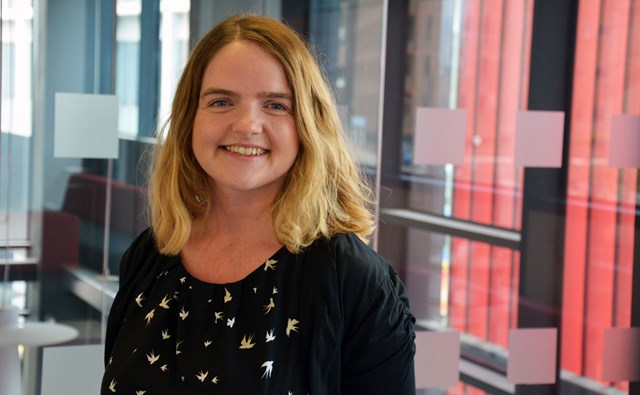
Mairi Spowage
Professor Mairi Spowage, director of the Fraser of Allander Institute, said: “Overall, the Q1 2026 results point to an economy that continues to face significant headwinds but may be beginning to find some footing.
“Whether these modest improvements can be sustained will depend on how both domestic pressures and global uncertainties evolve in the months ahead.
“Demand conditions continue to be subdued. Although revenues and orders continue to face pressure, the pace of decline has eased slightly, with more firms reporting increases in activity compared to last quarter.
“Cost pressures continue to weigh heavily on businesses, with labour costs remaining the dominant concern, and these pressures are feeding through into pricing decisions. Taxation remains the leading concern for businesses, alongside a notable increase in concern around business rates.
“Labour market conditions remain tight, with recruitment difficulties intensifying even as overall staffing levels remain broadly stable. Financial strain also persists, particularly in relation to cash flow, although there are some signs that the rate of profit decline has begun to ease.”

Share this article:

Subscribe to our newsletter to not miss articles like this one:
 SUBSCRIBE