

Written by:

Scotland must tackle talent, tax and capital to stay competitive, say industry leaders
 Reading time: 9 minutes
Written by:
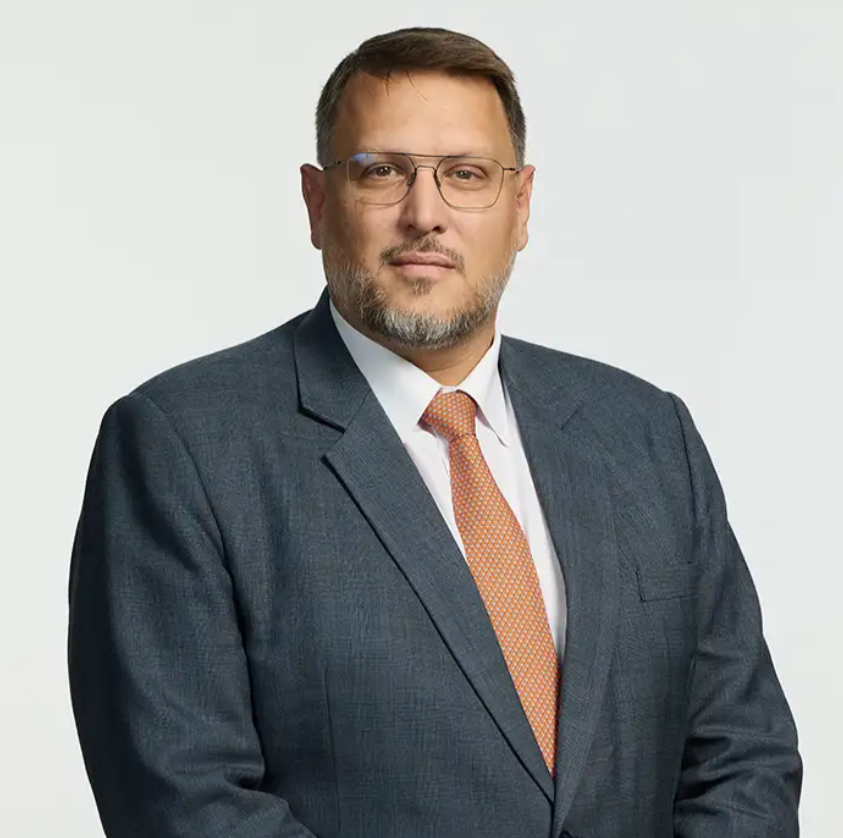
Xavier Meyer
Senior figures from BlackRock, Aegon Asset Management, Aberdeen Investments and Aberforth Partners have said Scotland’s 700-year financial heritage is no longer enough on its own to stay competitive and grow the sector.
Investors heard from Sandra Boss, UK chair at BlackRock, Aegon chief executive Kirstie MacGilivray, Xavier Meyer, chief executive at Aberdeen Investments, and Scott Wallace, operations partner at Aberforth Partners, at the Investment Association’s Scotland Conference on 5 November.
The panel, moderated by former Treasury adviser John Owen, chief executive of the Investment Association, discussed the challenges facing the industry. Panellists said Scotland has a strong talent base and a long history, but needs more people, better infrastructure and fresh sources of capital. They noted that other countries have raised their game and that Scotland can no longer rely on its reputation alone.
Scottish Government Minister for Business Tom Arhur told investors at the conference that the Scottish Government has committed up to £500m over five years to the offshore wind supply chain and infrastructure, which it expects to leverage up to £1.5bn of additional private capital.
He said the Scottish National Investment Bank has attracted about £1.9bn of co-investment across 55 projects, “demonstrating the important role of public finance crowding in private finance” and he wanted the “unvarnished critique” from everyone so ministers can understand what is holding investment back.
The panel began with how the industry itself is changing, before turning to what that means for Scotland.
BlackRock: portfolios are being rebuilt
Boss said the biggest change over the next five years will be portfolio composition. In a market where changes that once took months now happen in minutes, she said: “What used to be a 60/40 world is now a 50/30/20 world”, with the biggest change being the diversifiers entering portfolios.
She said clients want private markets to deliver returns, stability and inflation protection, and are returning to hedge funds, which offer both long and short positions in a managed way. BlackRock has made two big bets in response, she said, buying HPS and Global Infrastructure Partners (GIP) at about $12.5bn each, to bring private credit and infrastructure capabilities to clients.
Boss said clients are shifting towards whole-portfolio and outsourced CIO mandates rather than picking individual funds, while BlackRock’s systematic business has grown to about $500bn on the back of AI-enabled tools.
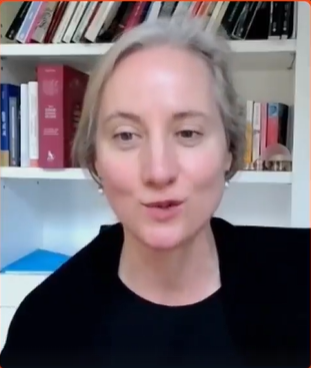
Sandra Boss
Aberdeen: a change of regime
Meyer agreed with much of Boss’s analysis but said the shift is not short-term. “We are operating a change of regime”, he said, with higher inflation, higher rates for longer and a nearly record-high level of index concentration.
Referring to the 60/40 portfolio, he said he had grown up believing bonds and equities would balance each other, but the two have been more positively correlated in recent years. Over the last 60 years, he said, there have been more periods of positive correlation than negative, meaning investors’ needs are changing.
The challenge for managers, he said, is to raise the bar by offering more diversified sources of return beyond the US, through emerging markets, infrastructure and the beneficiaries of the rewiring of global supply chains, where capital is increasingly heading.
He said this was a better environment for active management than before. “Skill is going to be even more important than scale”, he said. Scale still matters, but specialist expertise will matter more.
On AI, Meyer said it is available to everyone, so it will not be what sets firms apart. The difference, he said, will be the people in an organisation.
Aberforth: boutiques under pressure
Wallace said Aberforth employs 19 staff and that smaller managers face a growing list of pressures at once. Technological change, including AI and cyber risk, is moving quickly, he said, while the distribution landscape is shifting as wholesalers consolidate and retail investment platforms aggregate.
He explained keeping across all of that is a real challenge for a small team in a political environment that has been unusually unstable in the UK and elsewhere.
He warned that the next generation of boutique firms faces high barriers to entry, including regulation and a shortage of UK capital for start-ups. He said the lack of capital makes it hard for new managers to launch and then to win the mandates they need to grow.
He suggested putting capital back into the UK to create “seats” for the next generation of entrepreneurs, and called for a lighter regulatory regime to incubate new firms while still protecting investors. Large groups could also help by hosting and developing smaller teams until they are ready to stand alone, he said, adding that “Vanguard was a boutique once”.
A strong base in Scotland
MacGilivray pointed to Scotland’s “700 years of financial services”, its universities and its appeal as a place to work, with a good quality of life without the cost of living in London.
The asset manager boss explained that Aegon is based in a business park outside of the city, which she claims is an “advantage” before explaining that the problem is about “developing the talent” and “bringing people through” the ranks by adopting and creating new opportunities.
She added: “I’m quite romantic about Scotland as a decision, as it was where I started my career. I studied at the University of Glasgow and it’s given me a super career. And I do think we should be able to provide that for generations to come.
“And I do think we should be able to provide that for generations to come. I think we’ve got a lot of great thinkers. We’ve got a lot of people who are prepared to challenge themselves and actually ask for themselves, what other people have done best or what should we being doing differently. We are always striving to do better.”
Boss said BlackRock now has about 1,400 people in Scotland, having opened its first international office in Edinburgh about 25 years ago, when it was an “adolescent firm”. Scotland was chosen for its AI hub, she said, because it can hire “super well-educated and happy people” at lower cost than in London.
She added that GIP has invested in Edinburgh airport, where a joint venture will bring in a further £500m. GIP is bringing money from overseas investors into energy, both traditional and renewable, where she said a tremendous amount of investment is going in. She said the UK has de-risked parts of its capital pools in recent years, and that defined contribution money is beginning to globalise.

Kirstie MacGilivray
Meyer said Scotland’s ecosystem and its people are recognised internationally for investment expertise, which helps build its reputation. But he warned that the world has moved on and a number of countries have raised their game, so what was once a Scottish speciality is no longer unique.
To remain an international hub, Scotland needs “people and infrastructure”, he said. On people, he said the industry must attract and retain talent and that it needs to “attract retain people in England and Scotland. I would say in the individual and infrastructure.”
Education
Boss said the UK needs to become a nation of investors, not just savers. “We are a nation of savers, that’s a start”, she said, pointing to about £10tn in UK savings.
Recalling growing up in Seattle, she said fear of missing out drove many people to invest, helped by easy access to investment and advice in the US. The UK, she said, needs to make participation easy, ideally with tax incentives. ISAs are a start, but pathways need to be simple, and people need to see that they can invest in portfolios of companies a little at a time.
She pointed to Sweden’s investment savings accounts and to Germany, which has added 5.3 million ETF savers in five years, as proof that “you can create a flywheel”. Providers, digital and traditional, need to make access simple, she said.
Panellists agreed the UK will only become a nation of investors if people learn about investing much earlier. Boss said financial education needs to start at primary school age, so that children understand the benefits of investing and “equity” stops being seen as a dirty word.
After 15 to 20 years in which risk has been treated as something to avoid, she said, it is “no wonder” people leave their money in cash. ISAs have helped by exposing more people to long-term saving, but the UK is “so far behind” other countries. In some markets, talking about investing is normal at dinner parties or in a taxi, but it is “alien” here. The aim is to get people comfortable that investing is the right thing to do.
MacGilivray added that Scotland is further behind than the rest of the UK, because people tend to put money into things they know and recognise. That calls for education at two levels, she said: children from a young age, and adults.
Tax and the budget
Asked what they wanted from the recent budget, Wallace said the difference in Scottish income tax is a significant issue when recruiting experienced staff, because it looks unfavourable to potential hires. He called for it to be addressed.
More broadly, panellists said the budget did no harm but felt uninspiring, with one criticising the absence of measures to promote investing rather than saving. Another said the UK must remain investable and welcomed the stability the budget brought. Boss said BlackRock is investing about £600bn in the UK, and that international capital accounts for about 40% of gilt ownership. “We could easily see more things to attract risk back into the country”, she said.
Optimism
Despite the challenges, panellists said they were optimistic. One said the industry is in “a global race” and must move quickly, pointing to Hong Kong and Singapore issuing tokenised funds at central bank level.
Mr Arthur acknowledged that delivery can be held back by “complexity and fragmentation across the public sector”, he said a new major projects unit within the Scottish Government would help nationally significant investments move more quickly to delivery.
He also confirmed to the room that the government was also engaging with pension funds and other institutional investors on mobilising capital.
He said: “We want the unvarnished critique from across the ecosystem, because it’s only by hearing the range of views that we can understand what is holding investment back. A key part of this is ensuring investors have the certainty and the consistency they need to invest in Scotland with confidence.”

Share this article:

Subscribe to our newsletter to not miss articles like this one:
 SUBSCRIBE