
Written by:

Sir John Elvidge demands action to secure the Scottish National Investment Bank’s long-term future
 Reading time: 6 minutes
Written by:
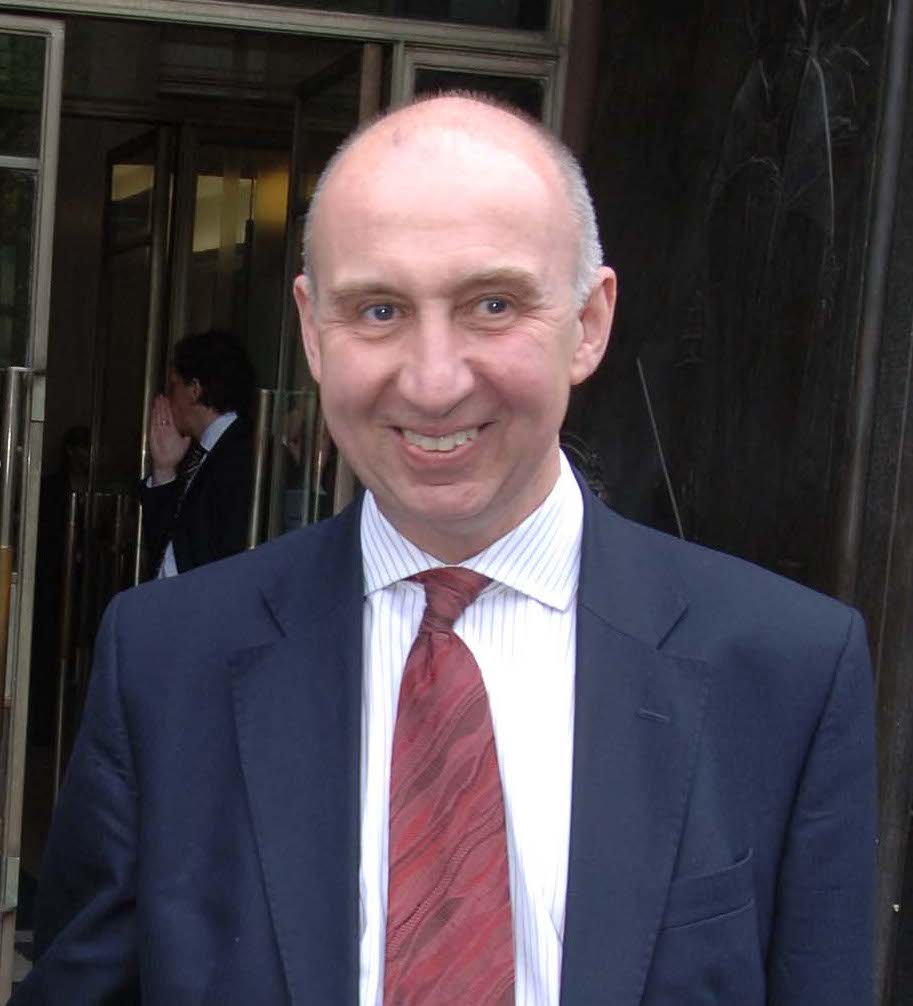
Edinburgh Airport chairman Sir John Elvidge (C) Scottish Government
Edinburgh Airport chairman Sir John Elvidge called on the Scottish Government to “take action” to ensure the Scottish National Investment Bank (SNIB) becomes a “permanent feature” of the Scottish financial landscape” in a new report.
Sir John urged for the government to collaborate with the UK government to create the conditions for the SNIB’s “future success” as a “matter of strategic priority”.
The former permanent secretary to the Scottish Government was commissioned to undertake an independent report examining the SNIB’s performance over its first five years and assess its progress against “its statutory objectives and missions”.
In his report, he stated that ministers needed to “decide and give a clear steer on where, how and how far it wants the Bank to pursue the third party capital route.” This was an issue that former Finance Secretary Kate Forbes was keen to achieve.
Sir John warned there was an “urgency” to resolve issues around the bank’s ability to become a “reliable source of long-term and repeat funding”, explaining there will be “negative consequences” if it is not clearly established and understood externally within the next year or so.”
He wrote: “Having to deploy capital effectively within the constraints of the public finance framework, which mean operating with annual financial contributions which must be deployed within the same year, with very limited ability to carry unused funds from one year to the next, has created significant inflexibility in the Bank’s operations, running the risk of distorting decision-making.
“And having to operate in the marketplace without certainty as to the existence of the organisation beyond 2030 is presenting increasing challenges in terms of forming and managing long-term relationships of trust and confidence with investees and co-investors alike.
“It will require action by both the Scottish and UK Governments to give the Bank the ability to manage, retain, carry forward and redeploy cash balances across years; and also to raise capital in its own right, so that it is no longer reliant on continuing capital advances from the Scottish Government beyond 2030.”
The chairman explained that he was aware the Scottish Government, Treasury and the SNIB had “productive discussions” about its future before urging the ministers to set out a clear plan of action and timetable to secure the “necessary agreement” by early 2027.
Sir John also warned that the SNIB will be watched closely by investors over the success of setting up a new university spinout fund, noting it will test “its attractiveness to private investors and also of the extent to which the Bank and Scottish Enterprise are able to develop a strong, clear, credible, and mutually complementary partnership approach in this area.”
The former civil servant found that there was no evidence of the medium-long term impact of housing investment on regional and local economies, “except where it unlocks a major strategic industrial development,” arguing that its choice to invest in housing did not speak to the “transformational ambition” express by the Government.
He added: “Clearly this is not an issue for the Bank alone. There is a need for strategic clarity, supported by effective communication, clear referral mechanisms, and where appropriate strong partnership working arrangements, on the part of all relevant institutions, in order to maximise the effectiveness of collective public sector activity alongside private investors in support of the Scottish economy.
“One question that has been raised with me both by investees and by co-investors in relatively early stage businesses is whether the Bank’s structural terms are fully aligned with its positioning as a relatively high-risk investor seeking to crowd others in: or whether in some respects, in particular the downside protections, they might in fact be more onerous than the circumstances require.”
Sir John also suggested that “issuing guarantees” could be an effective way for the SNIB to derisk “propositions to attract other private capital without tying “too much of the bank’s limited capital,” adding: “But it seems to me that there would be merit in exploring the option for the future. I understand that work is in hand between the Bank and the Scottish Government to identify whether there is a market opportunity in this area; and if so what would need to be done to take advantage of it, including in relation to public finance rules and processes.”
Willie Watt, chair of the Scottish National Investment Bank, said: “The review recognises the scale of what has been achieved since the Bank was established. Over the past five years, we have built a new institution in a period marked by significant economic uncertainty and change, while remaining focused on delivering long-term impact for Scotland.
“Importantly, the review not only reflects on our progress to date but also provides thoughtful recommendations to help shape the Bank’s future development. We are encouraged that many of its themes align closely with the direction set out in our recently published Investment Strategy and Business Plan. While strong progress has been made, we recognise that there is more to do.”
Economy Secretary Stephen Flynn added: “The review concludes that the Bank has made strong progress since its inception, deploying over half of the £2 billion in capital funding that has been committed to 2030.
“It has successfully established itself as a mission-led development bank and has already made an important contribution in supporting investment across Scotland. The findings reinforce those of Audit Scotland’s report published in May 2025.
“The Scottish Government has discussed the review’s findings with the Bank and agrees on the key areas for action. Together, we are developing a clear plan to take forward the recommendations, many of which are already underway, with defined responsibilities and timescales.
“The next phase of development will focus on maximising the Bank’s impact, helping more businesses to scale up and innovate, unlocking investment in housing and infrastructure, and supporting the creation of high-quality jobs across Scotland.”
To date, the Bank has committed a total of £1.16bn with 53 live investments: 31% in debt, 34% in combined debt and equity, and 10% in equity; and it invested 25% in funds. It has yet to issue any guarantees.
The Bank’s smallest investment to date was £700,000; its largest £70 million. A quarter of its investments were under £5m; a fifth of its investments were more than £45 million; but the largest proportion ranged between £5m and £45m.

Share this article:

Subscribe to our newsletter to not miss articles like this one:
 SUBSCRIBE