

Written by:

UK Government commits to automatic voting rights for retail investors
 Reading time: 5 minutes
Written by:
Tom Burnet
The UK government has committed to giving retail investors automatic voting rights, Scottish Financial News can reveal, although the department did not confirm whether the changes would cover the requisition of boards.
Scottish Financial News understands the changes will apply to UK retail investors, meaning members of the public who invest.
Most do not currently have automatic voting rights because they hold their shares through platforms and other intermediaries. The department has not confirmed a timeline for the changes.
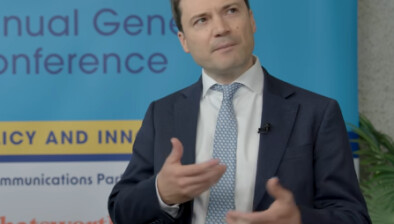
The commitment comes after Baillie Gifford US Growth Trust chair Tom Burnet wrote to Scottish Secretary Douglas Alexander and Economic Secretary Lucy Rigby, calling on the government to take action. He argued that investment trusts are being targeted in ways that “existing rules were not designed to handle”.
Burnet has been calling on retail investors to vote on the future of the £1.1bn trust after activist investor Saba Capital Management requisitioned the board, in a third attempt to replace the existing directors with its own nominees at the trust’s AGM on 23 October.
In his letter, Burnet said the threat facing the trust extended beyond the individual company and raised wider questions about the UK’s investment trust framework.
He argued that the structure of shareholder voting could leave trusts vulnerable, because resolutions are decided by a simple majority of votes cast, while private investors hold more than half of the trust’s shares and turnout among them can vary.
He also raised concerns about how retail investors are notified of votes and the deadlines set by investment platforms. “Platform deadlines for our AGM fall as early as 14 October – more than a week before the meeting,” he said. “Some wealth managers do not routinely tell their execution-only clients that a vote is taking place at all.”
He warned this could allow “a determined minority shareholder” to take control of a company that the majority of its other shareholders wanted to retain. Burnet said the issue “goes well beyond Baillie Gifford US Growth Trust” and threatened the wider UK investment trust sector and public equity markets.
Scottish Financial News first reported questions over whether existing company law is equipped to deal with repeated activist campaigns against investment trusts, in conversation with University of Edinburgh senior law lecturer Dr Jonathan Hardman.
A Department for Business and Trade spokesman said: “Shareholders have the power to decide what’s right for the company they invest in and should exercise their vote, which is why we have committed to making changes to the shareholding framework to ensure that all investors have automatic voting and other rights.
“We will continue to work alongside the Financial Conduct Authority to ensure investment trusts are well run and continue to benefit their shareholders.”
The Financial Conduct Authority (FCA) separately proposed changes to its listing rules for investment trusts following Saba’s campaigns. The main proposal would bar a substantial shareholder who is also the investment manager from voting on material changes to a trust’s investment policy. The regulator also wants consistent protections for changes to manager fees and strategies, and stronger board independence.
However, FCA interim executive director of markets Simon Walls told SFN at a press conference at its annual public meeting that the regulator has to be “careful” over the reforms, saying: “We really don’t want to step anywhere on shareholder rights.” Walls said voting rights are set by company law, which is overseen by the Department for Business and Trade, rather than by the FCA.
Baillie Gifford US Growth is preparing to fight a requisition notice filed by Saba in August, which calls for shareholders to appoint three Saba-nominated directors: Jason Chen, Thomas H McGlade and James Waterlow. The trust has said the three, whom it described as “linked with or employed by Saba”, would “severely compromise” the board’s independence.
Saba recently increased its stake to around 29.9%, just below the threshold at which it would be obliged to make a takeover offer for the trust. Fellow New York hedge fund Sessa Capital has also increased its stake to 7.7% ahead of the vote. It is believed Sessa will support Saba’s motion at the AGM in October.
Burnet also questioned Saba’s proposal to offer shareholders a full cash exit at or near NAV if its nominees are elected. He argued the trust did not have sufficient legal reserves to fund such an exit and that Saba had not explained who would meet the costs.
Saba founder Boaz Weinstein has claimed to have generated more than £600m for shareholders across the investment trusts it has targeted.
During the financial year to 31 May 2026, the trust’s share price and net asset value returned 44.5% and 31% respectively, ahead of the 29.8% total return of its benchmark, the S&P 500.

Share this article:

Subscribe to our newsletter to not miss articles like this one:
 SUBSCRIBE