
Written by:

FCA “careful” on shareholder rights as Baillie Gifford US Growth vote nears
 Reading time: 4 minutes
Written by:
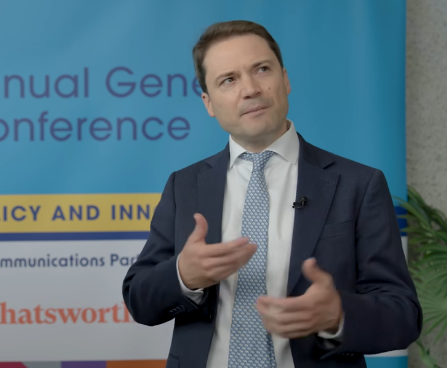
Simon Walls
The Financial Conduct Authority (FCA) has admitted it has to be “careful” over proposed changes to the listing rules following the recent campaigns by US activist investor Saba Capital Management.
The regulator said it was looking into reforms to help manage conflicts of interest involving activist investors, whose activity in investment trusts has increased over the past two years.
The main proposal would bar a substantial shareholder who is also the investment manager from voting on material changes to a trust’s investment policy. The FCA also wants consistent protections for changes to manager fees and strategies, and stronger board independence.
The Association of Investment Companies welcomes the proposals but wants a majority of other shareholders to approve any change of manager, and objects to a four-week delay before the rules take effect.
The proposals follow the success of the hedge fund founded by Boaz Weinstein in ousting the board of Baillie Gifford’s Edinburgh Worldwide Investment Trust in April, helped by low voter turnout, and replacing it with its own nominees.
Simon Walls, executive director of markets, was questioned about concerns that the changes could unintentionally affect legitimate shareholders questioning the board over poor performance.
He said: “What we have been working is our policy, and it is a careful line to tread. We really don’t want to step anywhere on shareholder rights. It is what happens in the specific context of investment trusts, where there’s this one big decision to make in terms of the economic value of appointing a manager, who has early engagement with the industry.
“It’s the same company law that governs votes around investment trusts as any other company, so we set out these rules in general in the context of those.
“As I said in the main session, a lot of the rules we’ve been able to relax to a degree of prescription because they exist because shareholders have this ability to exercise their right to call meetings and things. I set out my thinking on company law in a blog because there was some misunderstanding around the FCA’s role and company law.
“It is possible to set aside vexatious votes. We haven’t seen that used, but it’s there, and vexatious votes are not in the best interests of companies, so it’s worth having that in the conversation, as some of the feedback was raised around the number of votes that are occurring.”
Mr Walls acknowledged the impending vote on the future of Baillie Gifford US Growth Trust, adding: “It is worth stressing that there is a big vote coming up two weeks on Friday, and some of the deadlines for voting are coming soon.
“There has been really good shareholder turnout, and retail platforms have generally done a good job getting votes out: typically more than 70%, sometimes more than 80%. But shareholders will need to do that again.”
Mr Walls made the comments at the FCA’s first ever annual public meeting in Edinburgh, where the board was grilled by whistleblowers and campaigners over the FCA’s handling of them.
Saba Capital Management is now attempting, for a third time, to take over Baillie Gifford US Growth Trust, with a requisition to install its own nominees. The trust has been campaigning to get shareholders to vote ahead of its AGM on 23 October, to fight a requisition notice filed by Saba in August.
Saba is calling for shareholders to appoint three nominated directors, Jason Chen, Thomas H McGlade and James Waterlow, to the board. The AGM will be held at the offices of Stephenson Harwood.
The trust issued a circular setting out what is at stake if shareholders fail to vote: Saba’s requisition notice could pass, electing three individuals “linked with or employed by Saba” to the board, which it said would “severely compromise” the board’s independence.
During the financial year to 31 May 2026, the company’s share price and net asset value (NAV, after deducting borrowings at fair value) returned 44.5% and 31% respectively, exceeding the S&P 500 Index benchmark’s total return of 29.8%.
Chair Tom Burnet told Scottish Financial News that retail investors are the trust’s largest single shareholder block, and that their vote, regardless of stake, will decide the composition of the board after 23 October.

Share this article:

Subscribe to our newsletter to not miss articles like this one:
 SUBSCRIBE