
Aberdeen: US resilience and AI to define Q1 2026
 Reading time: 2 minutes

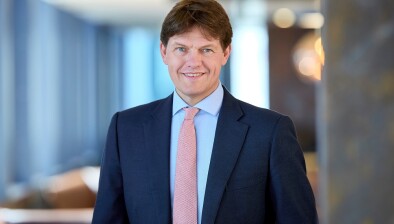
Paul Diggle – Chief economist at Aberdeen
Specialist asset manager Aberdeen has released its Q1 2026 global outlook, forecasting a modest reacceleration of the US economy.
The firm predicts the US will benefit as the initial tariff shock fades, interest rates are cut, and the artificial intelligence (AI) buildout continues.
Elsewhere, Chinese growth is expected to slow by less than previously thought and European prospects are supported by coming fiscal expansion.
Paul Diggle, chief economist at Aberdeen, projects US GDP growth to reach 2.2% in 2026 and 1.9% in 2027 – slightly above consensus. This outlook is underpinned by AI capital expenditure, stock market wealth effects, and fiscal easing. However, Mr Diggle warns of the risk of an “AI bust” driving a recession, noting that such a downturn would likely resemble the 2001 dot-com crash rather than the 2008 financial crisis.
While the US labour market has moderated, Aberdeen does not envisage a spiral into a deeper downturn. Inflation is expected to peak at 3.4% in Q1 2026 due to tariff impacts before easing to 2% by year-end. Political uncertainty remains, particularly regarding the Supreme Court’s potential ruling on President Trump’s tariff powers, however, the firm anticipates tariffs will eventually settle around 15%.
Regarding the Federal Reserve, Aberdeen expects current chair Jerome Powell to deliver one final rate cut, with his successor – taking over in May 2026 – delivering two further cuts.
Global divergence – China and Europe
China’s growth forecast for 2026 has been raised to 4.5% following a trade détente. However, challenges persist, including a struggling housing market and subdued consumer confidence. Stimulus measures are expected to focus on supply-side strategy rather than boosting demand.
Meanwhile, European growth will be buoyed by fiscal expansion, notably a fiscal impulse of 1.5% of GDP in Germany. Although headline inflation is predicted to drop below the ECB’s target in early 2026, the central bank is expected to hold rates steady due to fiscal support, resuming hikes only in late 2027.
Peter Branner, chief investment officer, at Aberdeen, added: “Geopolitical risk has become a structural feature of markets and challenges long-held assumptions. For the coming year our core message remains to prioritise diversification in portfolios. We believe amid uncertainty opportunities will continue to emerge.
“At this late stage in the cycle it is increasingly important to be mindful that risky asset classes could move in tandem hence important to see how less likely scenarios could erode multiple asset classes.”

Share this article:

Subscribe to our newsletter to not miss articles like this one:
 SUBSCRIBE