
Azets: VAT ruling is wake-up call for charities
 Reading time: 3 minutes

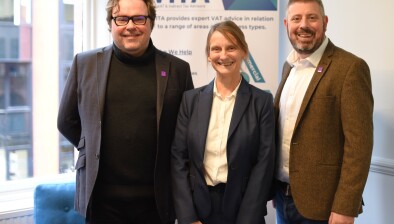
Alan Glen – Edinburgh-based VAT partner at Azets
Colleges, charities and other third sector organisations should urgently review how they treat publicly funded projects for VAT purposes in light of a landmark court ruling, Azets has warned.
The Court of Appeal decision in the case of HMRC vs Colchester Institute Corporation could have far-reaching implications across the UK’s not-for-profit sector, an expert at the firm has said.
The case centred on the VAT treatment of government grants received by the Institute so it could provide free education and vocational training to eligible students.
Historically, the tax authorities tended to treat such public funding as ‘subsidies’ outside the scope of VAT.
Now, the Colchester ruling has confirmed that HMRC can instead view grants as ‘payment for a supply of services’ akin to ‘business activity’ and therefore within the remit of VAT considerations.
Among the key factors influencing the court’s decision was the implication of a ‘two-way business relationship’ in which the amount of funding awarded to the Institute by the Further Education Funding Council for England depended on how many students were taught and which courses were actually delivered.
Alan Glen, Azets’ Edinburgh-based VAT partner, said the implications could extend well beyond further education colleges and training providers.
Mr Glen said: “This ruling should act as a wake-up call for the wider third sector across the whole of the UK. Many charities, social enterprises, membership bodies and not-for-profit organisations receive significant sums of public money which have historically been treated as grant income outside the scope of VAT.
“The Court of Appeal has now reinforced the principle that where funding is linked to the delivery of a specific service or outcome, HMRC may regard those monies as third-party consideration for a taxable supply rather than a straightforward grant.
“That distinction can have major VAT consequences for publicly funded bodies that may not be immediately obvious.”
With HMRC confirming it will not appeal the decision, Azets says organisations should carefully assess public funding arrangements where they require delivery of specified services, targets, outcomes or reporting obligations.
If funding is treated as consideration for potential supply, this may:
- Increase the level of exempt or taxable income for the organisation
- Affect VAT recovery on costs
- Affect the reduced rate of VAT applied to the treatment of expenses such as fuel and power
- Restrict access to VAT reliefs that rely on activities being classed as ‘non-business’.
Mr Glen added: “Following the Colchester ruling, we urge charities and other third-sector organisations not to assume that funding labelled as a ‘grant’ will automatically fall outside VAT rules.
“The terminology used in funding agreements is no longer enough. What matters is the underlying legal and commercial reality of the arrangement.”

Share this article:

Subscribe to our newsletter to not miss articles like this one:
 SUBSCRIBE