
Bank of England rate cuts hinge on Iran war resolution
 Reading time: 2 minutes
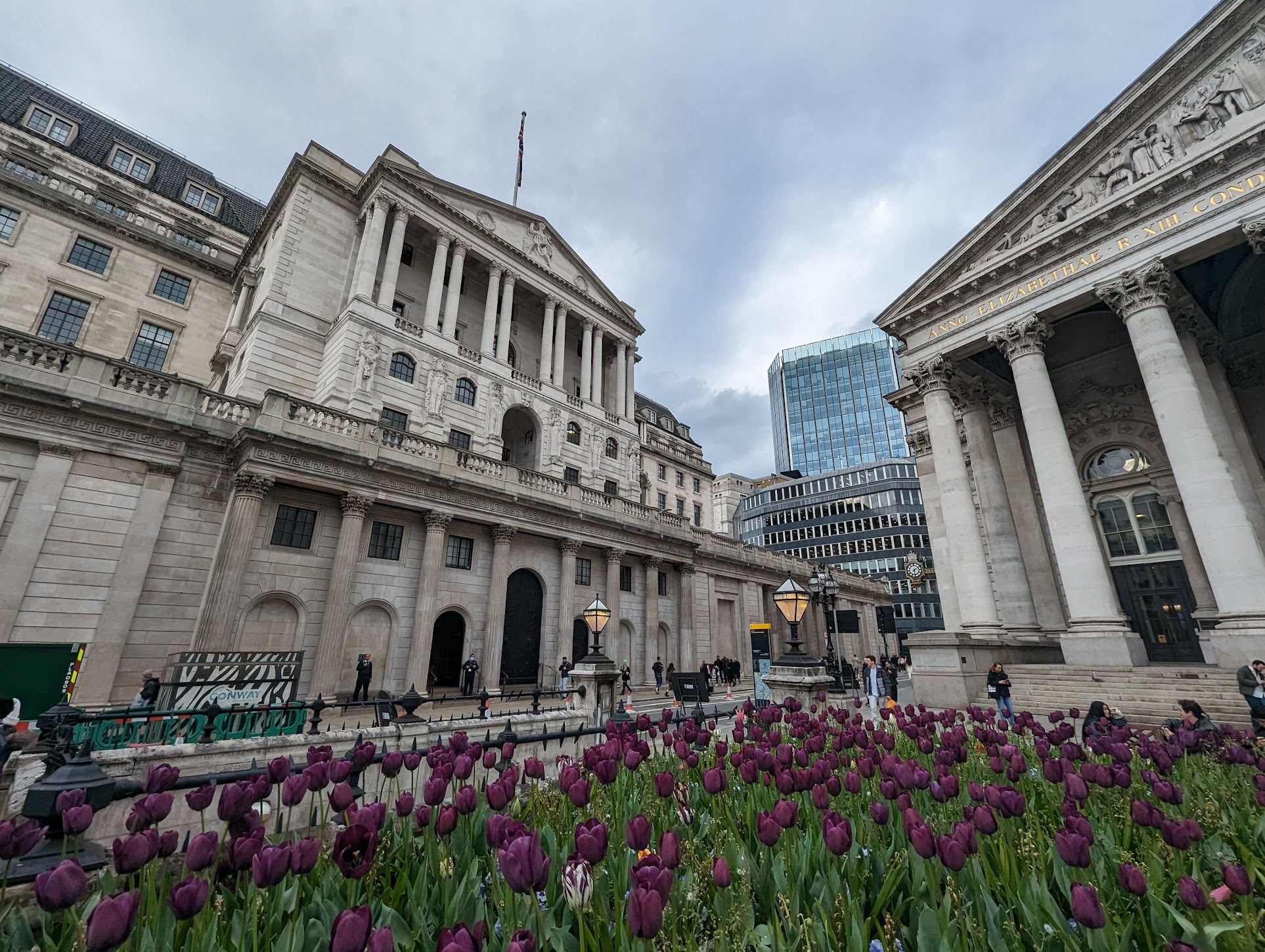
The Bank of England (credit: George Iordanov-Nalbantov)
The Bank of England could deliver two interest rate cuts before the end of the year, but only if a resolution to the conflict in Iran and the reopening of the Strait of Hormuz materialises within weeks, according to Peel Hunt’s chief economist Kallum Pickering.
Mr Pickering described current market pricing pointing to a single rate hike as “odd”, arguing it represented one of the least likely outcomes. He noted, however, that traders had begun shifting towards a “more balanced view” of inflation and growth risks, trimming expectations from three hikes to one.
The economist outlined two contrasting scenarios facing the Monetary Policy Committee (MPC). Should negotiations between US officials and Iranian leaders succeed in reopening the Strait, where disruption to trade has heightened fears of global fuel shortages, rate cuts remain plausible, City AM reports.
However, a prolonged conflict could force rate-setters to “take drastic action”, with Mr Pickering declining to rule out significant hikes in that event.
Views across the City remain divided. JP Morgan now anticipates a single hike in June, having previously forecast two, whilst RSM’s chief economist Thomas Pugh has warned of “pressure” on the Bank of England to raise rates, citing persistently elevated UK inflation and the risk of a wage-price spiral.
MPC external member Megan Greene acknowledged the difficulty of the bank’s position, warning that policymakers would need to make a “judgment call” rather than await definitive data, given the competing downside risks to growth and upside risks to inflation expectations.
Governor Andrew Bailey has sought to temper market expectations of further hikes. All eyes now turn to the MPC’s next meeting on 30 April, which will be accompanied by the bank’s latest monetary policy report, likely to shed further light on policymakers’ thinking regarding the energy price shock and its implications for the UK economy.

Share this article:

Subscribe to our newsletter to not miss articles like this one:
 SUBSCRIBE