Written by:

Bank of England under pressure to raise rates as inflation hits 3.1%
 Reading time: 5 minutes
Written by:
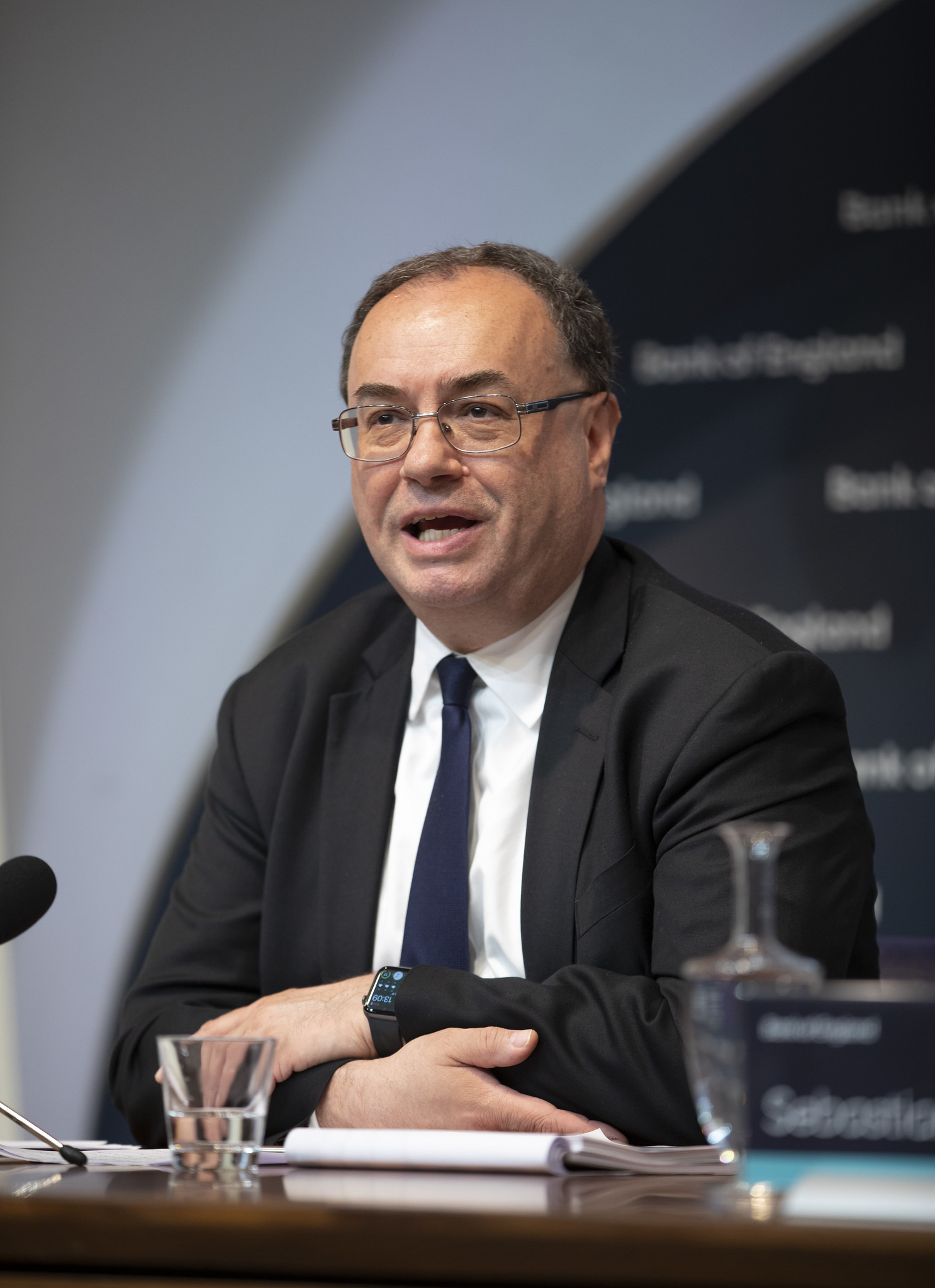
Andrew Bailley, Governor at the Bank of England
The Bank of England is under intense pressure to raise interest rates tomorrow, following a rout in global bonds fuelled by concerns over government borrowing and sticky inflation.
Inflation jumped to 3.1% in August from 2.9% in July and 2.6% in June, as fuel prices hit their highest in four years, with diesel hitting around £1.93 and petrol at £1.71 per litre on Tuesday, according to the Royal Automobile Club (RAC).
Inflation is expected to remain elevated as the impact of the war between Iran and the US-Israel coalition, which began in February and disrupted oil shipments through the Strait of Hormuz, continues to filter through to UK fuel and energy prices.
The rate of food inflation held steady at 1.3% in the 12 months to August, unchanged from July. The latest Office for National Statistics (ONS) figures showed a slight increase in prices, though at a much slower rate than a year ago.
Paul Dales, UK chief economist at Capital Economics, is predicting inflation to peak around 4.2% in January. He said: “Everyone knows that bigger rises in inflation are on their way.”
Economists are watching food inflation closely, which is expected to rise in 2027 due to extreme weather.
Borrowers are bracing for more mortgage woes ahead of the Bank of England’s interest rate decision. Mortgage rates have climbed to their highest level in nearly five months, after around 25 lenders hiked their deals last week.
The average two-year fixed-rate mortgage rose to its highest level since June, at 5.67%, while the five-year fix reached its highest level since April, at 5.72%.
It comes a day before the Bank of England’s Monetary Policy Committee is set to meet over the rate decision for September. It is expected to hold interest rates at 3.75% this week.
Emeritus Professor Joe Nellis, head of economic research at MHA, said: “UK inflation has spiked again in recent months, rising well above the Bank of England’s 2% target and moving in the wrong direction. With inflation at 3.1% in August, the battle against rising prices has returned firmly to the fore.
“The timing of this spike is critical, with the Monetary Policy Committee announcing its latest interest rate decision tomorrow. At the July meeting three of the nine MPC members voted to raise interest rates to 4%, and the latest inflation data will only add strength to the hawkish elements in the committee.
“In the context of a rate hike by the European Central Bank and an almost certain hike by the US Federal Reserve later today, the pressure is building on policymakers in the UK to follow suit.
“The Bank has warned that inflation will increase further as higher energy costs feed through in the coming months. The MPC remains likely to leave interest rates unchanged at 3.75% tomorrow, but the likelihood of a November increase is growing.
“This is bad news for an economy struggling to generate sustained growth. Higher interest rates will continue to put pressure on households facing a cost-of-living crisis, mortgage borrowers facing higher borrowing costs, and businesses considering future investment.
“Rising inflation also creates a headache for the new Government and Chancellor John Healey ahead of their first Budget. A significant part of UK government debt is index-linked, and persistent inflation can keep gilt yields and interest rates higher for longer, adding billions of pounds to debt-servicing costs and eroding the government’s limited fiscal headroom.
“These pressures are intensifying at a time when government spending shows no signs of slowing down. The triple lock’s role in pushing the state pension up by 3.9% in 2027 is just one, albeit important, demonstration of this.
“The Chancellor faces an increasingly uncomfortable cocktail of pressures: slow economic growth, rising inflation, higher borrowing costs, and intense pressure on public sector spending. This Government’s honeymoon period is on its last legs, as we await the difficult decisions ahead at the Autumn Budget.”
Richard Carter, head of fixed interest research at Quilter Cheviot, said: “With the situation in the Middle East looking increasingly fraught, the expectation is that inflation will continue to climb higher until the end of the year at a minimum.
“This is putting a huge amount of pressure on both the Bank of England and the government. With the BoE meeting tomorrow, today’s figures put a rate hike into the category of a genuine consideration, with at least one expected this year. Markets have begun to price in the potential for further rate hikes into 2027, highlighting that the UK has struggled to tame inflation recently and is not expected to do so soon this time around either.
“The expected pace of the rate hikes may be slightly exaggerated at this point by the market, but really the only thing potentially stopping the BoE from hiking this time around is the employment picture, which remains mixed at best.”
And Felix Feather, economist at Aberdeen, argued: “Overall, there’s nothing in this report to shift judgement on rates; we see the Bank of England delivering two hikes in November and February. But current market pricing probably overestimates the degree of the upcoming monetary policy adjustment.”

Share this article:

Subscribe to our newsletter to not miss articles like this one:
 SUBSCRIBE