

Fraser of Allander: Reckoning on public sector pay deferred until after the election
 Reading time: 4 minutes

The Scottish Government has deferred a looming crisis on public sector pay until after the 7 May election, according to a new report published by the Fraser of Allander Institute at the University of Strathclyde.
The report, part of a collaboration with Cardiff University and supported by the Nuffield Foundation, finds pay settlements have exceeded the Scottish Government’s own published pay policy every year since 2022. The three-year pay policy set out 12 months ago has been nearly exhausted in two years, with no acknowledgement of the issue in last month’s Budget.
Pay growth ahead of the amount set aside by the Scottish Government has been a major factor in successive in-year emergency reviews, and the lack of an integrated and sustainable approach seems set to create a crunch point after the election. The settlements for areas such as health look much too small to pay for deals already agreed with workers.

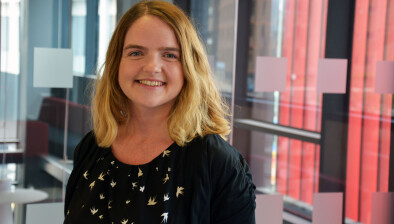
Dr João Sousa
Dr João Sousa, deputy director of the Fraser of Allander Institute, said: “The Scottish Government’s approach to pay is symptomatic of a broader can-kicking strategy. Its budget has only been financed in recent years on the back of windfalls, be they from better-than-expected tax forecasts or Barnett consequentials.
“But with a tight Block Grant settlement for the next few years, relying solely on non-recurring funding sources is not an option. The reckoning has already happened on capital, and whoever is in power after May will have to seriously grapple with implausible settlements in areas such as health and justice.”
The report also looks at the performance and funding of health, adult social care, colleges and universities. Health spending adjusted for the population’s age was 10% in Scotland than the UK average 20 years ago; it is now below that average. Meanwhile, the health service’s performance continues to struggle against its targets, with only modest progress recently.
Adult social care remains a challenging policy area. The Scottish Government attempted to introduce a National Care Service during the last Parliament, but this was eventually scrapped in the face of local authority opposition. Funding has increased, but it is extremely opaque still and that rise must be seen in the context of higher wages and increases in employer National Insurance Contributions. The amount of social care delivered may have actually decreased over the Parliament, even in the face of increasing demand on services.
Post-school education has seen a 15% real-terms cut in funding over the last Parliament, with university funding falling by 17% and colleges by 8%. This squeeze looks likely to continue, with a further 10% cut in the Spending Review plans.

Prof Mairi Spowage
Professor Mairi Spowage, director of the Fraser of Allander, said: “The health service and the adult social care system will be front and centre of the spending pressures faced by the incoming administration, and the post-school education system will be key to delivering the economy necessary to fund the public services that Scotland expects and needs.
“But the health settlement is tight and the NHS is already some way off meeting its performance targets. Adult social care funding has increased, but not as much as costs, and post-school education funding is falling in real terms.
“The next Scottish Parliament will need to make hard choices, and the electorate needs parties to be honest about the scale of the challenges and how they plan to tackle them.”
This report is the first output of a wider programme of work. It will be followed by a scene-setting report for Wales, led by the Wales Governance Centre at Cardiff University. There will be manifesto coverage on the Fraser of Allander Institute’s website, regular podcasts throughout the campaign period, and events in Scotland, Wales and London.

Share this article:

Subscribe to our newsletter to not miss articles like this one:
 SUBSCRIBE