
Iran war and £300m fraud charge knock HSBC off analyst forecasts
 Reading time: 3 minutes
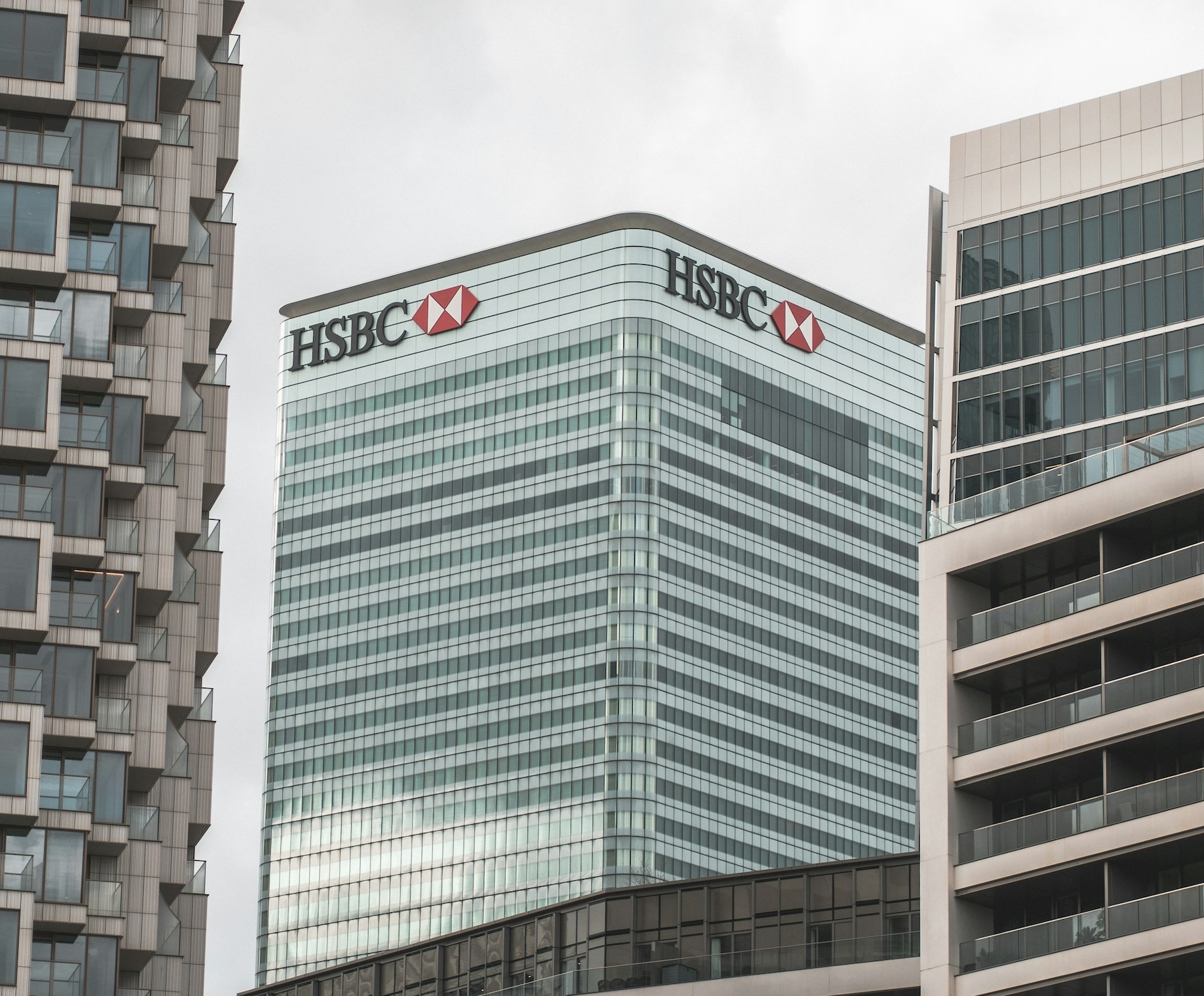
HSBC has reported a small drop in first-quarter profit after a sharp rise in credit charges, driven by a fraud-related exposure in its UK investment banking arm and the fallout from the conflict in the Middle East, overshadowed solid revenue growth across the lender’s wealth and interest income businesses.
The bank posted reported profit before tax of $9.4bn (c. £6.5bn) for the three months to 31 March 2026, down $0.1bn (c. £74 million) on the same period last year and falling short of the roughly $9.6bn (c. £7.1bn) pencilled in by analysts.
Profit after tax came in at $7.4bn (c. £5.5bn), $0.2bn (c. £148m) lower than in the first quarter of 2025. Despite the miss, group chief executive Georges Elhedery struck a confident tone, noting that each of the bank’s four divisions delivered an annualised return on tangible equity of more than 17% excluding notable items, and reiterating that HSBC remains on course to “achieving the targets we set out in February 2026”.
The standout drag on the quarter was a $1.3bn (c. £960m) charge for expected credit losses, $0.4bn (c. £300m) higher than a year earlier. Of that total, roughly $0.4bn related to a fraud-linked secondary securitisation exposure to a financial sponsor in the UK, booked in the bank’s Corporate and Institutional Banking division.
HSBC did not name the counterparty, but disclosed that it has around $3bn (c. £2.2bn) of exposure to securitisation financing of this kind. A further $0.3bn (c. £220m) of provisions reflected a worsening economic outlook following the onset of the Middle East conflict on 28 February. The bank has now lifted its 2026 guidance for credit losses to around 45 basis points of average gross loans, up from 40 basis points previously.
Revenue rose by 6% to $18.6bn (c. £13.7bn), helped by a strong showing in wealth and a one-off $0.2bn property disposal gain. Net new money in the wealth business reached $39bn (c. £28.8bn), comfortably ahead of the $23bn (c. £17bn) attracted a year earlier, with $34bn (c. £25bn) booked in Asia.
Net interest income rose 8% to $8.9bn (c. £6.6bn), helped by deposit growth and the reinvestment of HSBC’s structural hedge at higher yields. On the back of an improved rate outlook, the bank nudged up its 2026 banking net interest income guidance to around $46bn, from at least $45bn previously.
Operating expenses rose 8% to $8.7bn (c. £6.4bn), although on a target basis the increase was a more modest 3%. HSBC said it remained on track to deliver its $1.5bn (c. £1.1bn) annualised cost reduction by the end of June, six months earlier than planned. The annualised return on tangible equity came in at 17.3%, or 18.7% excluding notable items.
The common equity tier one capital ratio fell to 14.0% from 14.9%, reflecting the privatisation of Hang Seng Bank, which completed in January.
Shareholders will receive a first interim dividend of $0.10 per share, in line with last year, payable on 26 June.

Share this article:

Subscribe to our newsletter to not miss articles like this one:
 SUBSCRIBE